
Key takeaways
- Empty the collection bin or replace the bag on schedule. An overfilled container can reduce airflow and make emptying messier. Follow the unit’s instructions rather than waiting until suction noticeably drops.
- Clean or replace filters as directed. Washable filters must be completely dry before reinstallation. Using a damaged or damp filter can harm performance and, depending on design, the motor.
- Inspect the hose and floor tool. Kinks, cracks, clogs, worn cuffs, and packed brush rolls are common reasons a system seems weak. A powered carpet head may also have a belt or brush-roll parts that need periodic replacement.
- Clear clogs from the accessible end first. Check the tool, hose, and inlet before opening pipework. Avoid forcing sharp objects through the hose or using liquids unless the manufacturer explicitly permits them.
- Confirm parts availability before purchase. Bags, filters, hoses, inlet valves, and power-head components affect long-term ownership more than a small difference in advertised motor numbers.
Best Central Vacuum Systems for Large Homes
The best central vacuum system for large homes is a properly sized built-in unit paired with enough well-placed inlets—not simply the motor with the highest advertised air watts. For a home up to about 6,000 square feet, a single-motor system with a long hose and a thoughtfully designed inlet layout is often sufficient; larger homes, long pipe runs, or simultaneous users may call for a more powerful or dual-motor configuration. Beam, Nutone, and Vacu-Maid are established central-vacuum brands, but confirm current model specifications and local parts support before buying.
Quick comparison: what to size for
The figures below are planning ranges, not guaranteed limits for every model. Actual performance depends on pipe diameter, fittings, hose length, motor design, elevation changes, and the flooring tools being used. Have the manufacturer or installer verify a system against your home’s floor plan.
Our top picks
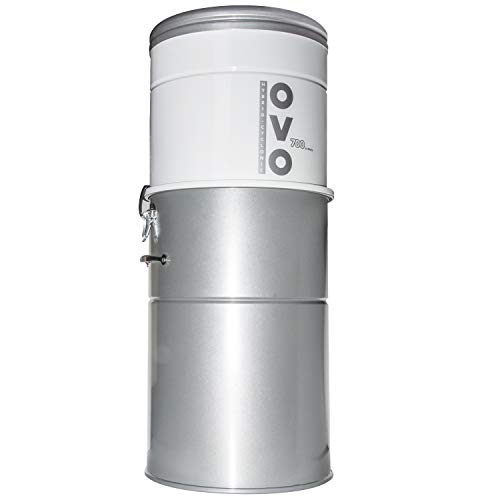


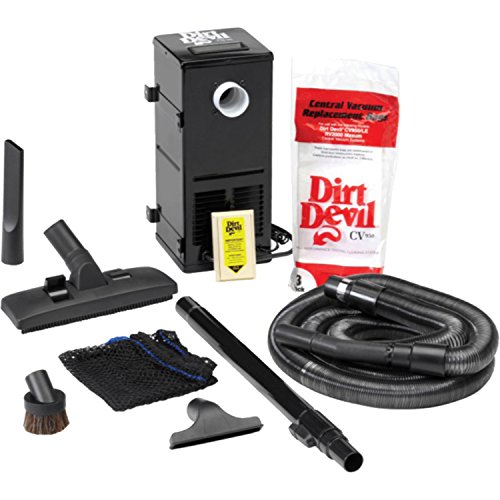
As an Amazon Associate we earn from qualifying purchases at no extra cost to you. Ratings are shown as listed on Amazon.
| Home and usage | Typical power configuration | Planning coverage | Inlet and hose plan | Best fit |
|---|---|---|---|---|
| Up to 3,000 sq. ft.; one user | Single motor; roughly 500–650 air watts | About 3,000 sq. ft. with a good layout | 3–4 inlets; 30–35 ft. hose | Compact, lower-cost whole-home installation |
| 3,000–6,000 sq. ft.; multiple floors | High-output single motor; roughly 600–700 air watts | About 4,000–6,000 sq. ft., subject to pipe layout | 4–6 inlets; 35–40 ft. hose | Most large family homes with one person vacuuming at a time |
| 6,000+ sq. ft.; long or complex pipe runs | High-output or dual-motor unit; compare manufacturer airflow and water-lift specs | Confirm using the system’s design chart | 6+ inlets or separate zones; hose length based on reach testing | Large, sprawling, or multi-level homes |
| Frequent fine-dust or workshop cleanup | Size to the floor plan; prioritize filtration and serviceability | As specified for the selected power unit | Dedicated inlet or utility inlet where practical | Homes where dust containment and easy filter maintenance matter |
Air-watt figures are not a complete performance comparison. Check airflow (often listed in cubic feet per minute), sealed suction or water lift, electrical requirements, filtration type, and the manufacturer’s maximum recommended coverage. A large coverage claim cannot compensate for poorly planned piping.
Choose by the problem your home presents
Best for a large but straightforward floor plan: a high-output single-motor unit
If the home has a conventional layout and one person vacuums at a time, a well-sized single-motor unit is usually the practical starting point. It can cost less to purchase and operate than a dual-motor model, while still supporting a long hose and several inlets. Compare the manufacturer’s recommended coverage with the actual conditioned floor area, and ask whether the stated number assumes one or multiple users.
Best for sprawling homes or long pipe runs: a system sized by a central-vacuum installer
In a large home with distant wings, several floors, or many bends in the pipe, the system’s resistance matters as much as motor count. Ask for a layout showing pipe route, inlet positions, estimated pipe length, bends, and any separate zones. A more powerful unit may be justified, but adding horsepower without checking the network can increase cost without solving a badly placed inlet or restrictive run.
Best for fine dust or a basement utility area: a filtration-first setup
Choose filtration based on how the unit handles exhaust and how often you are willing to maintain it. Many systems use a removable bag or a filter that must be cleaned; some designs exhaust outdoors, which can keep vacuum exhaust out of living areas if the installation permits. Check whether the unit is sealed, what particles its filter is rated to capture, and whether replacement bags or filters are readily available. Do not assume every central vacuum is HEPA-rated.
Inlet placement: test reach before the pipes go in
Inlet count is a rough guide; usable reach is what determines whether you can clean each room without moving the hose to another outlet. Manufacturers commonly pair central systems with hoses around 30–40 feet long. That length is not the same as a 30–40-foot radius: furniture, doorways, stairs, and corners reduce practical reach.
Before installation, mark proposed inlet locations on a floor plan and draw the hose’s usable path through each room. Test coverage from the proposed outlet to the farthest corner, including closets and hallways. Plan an inlet near the top of stairs if carrying a long hose between floors would be awkward. Keep outlets accessible rather than hidden behind doors or large furniture. A utility inlet in a garage or workshop is useful only if the unit and piping are designed for the material you intend to collect.
For a rough estimate, divide the home into reachable zones rather than dividing square footage by an assumed coverage figure. A 5,000-square-foot home might need five or six well-placed inlets, but a compact open layout may need fewer than a narrow, multi-wing home of the same area. The floor-plan reach test should decide.
Installation requirements and cost realities
A central vacuum typically needs a power unit mounted in a garage, basement, or utility room; compatible piping inside walls or accessible chases; inlet valves; wiring where required by the design; and an exhaust route if the chosen unit vents outdoors. New construction is the easiest time to install piping. Retrofitting an existing home may require access through closets, attic or basement spaces, or carefully selected wall cavities. Concrete slabs and finished walls can make routing substantially more difficult.
As a broad market guide, power units often cost several hundred to over a thousand dollars, while a complete professionally installed system can run from around $1,500 to several thousand dollars depending on home size, access, number of inlets, and equipment. These are general ranges, not quotes; obtain an itemized estimate that separates the unit, pipe and valves, labor, electrical work, and any wall repair.
Before choosing a location, confirm that the unit has appropriate clearance, an outlet and circuit that meet its electrical requirements, and a practical way to empty the canister or change the bag. Check noise expectations too: central units are quieter at the cleaning head, but the motor can still be audible in the utility area.
Ownership: what wears out and what to maintain
- Empty the collection bin or replace the bag on schedule. An overfilled container can reduce airflow and make emptying messier. Follow the unit’s instructions rather than waiting until suction noticeably drops.
- Clean or replace filters as directed. Washable filters must be completely dry before reinstallation. Using a damaged or damp filter can harm performance and, depending on design, the motor.
- Inspect the hose and floor tool. Kinks, cracks, clogs, worn cuffs, and packed brush rolls are common reasons a system seems weak. A powered carpet head may also have a belt or brush-roll parts that need periodic replacement.
- Clear clogs from the accessible end first. Check the tool, hose, and inlet before opening pipework. Avoid forcing sharp objects through the hose or using liquids unless the manufacturer explicitly permits them.
- Confirm parts availability before purchase. Bags, filters, hoses, inlet valves, and power-head components affect long-term ownership more than a small difference in advertised motor numbers.
A central vacuum can last for many years, but service life depends on use, maintenance, and whether replacement parts remain available. Ask about the motor warranty and service arrangements separately from the warranty on accessories and installation.
Bottom line
For most large homes, start with a high-output single-motor system if the manufacturer rates it for the floor area and the inlet plan keeps hose runs practical. Move to a dual-motor or zoned design when the home is exceptionally large, has long or complex piping, or needs simultaneous operation—and verify that the manufacturer supports that use. Prioritize a floor-plan reach check, adequate filtration, accessible maintenance, and local service over a headline coverage number alone.



Write Your Review
No reviews yet. Be the first to share your experience!