
Key takeaways
- Best for a balanced fit: A counter-depth French-door refrigerator from brands such as Bosch, GE, or KitchenAid. It sits closer to the cabinet fronts while keeping fresh food at eye level.
- Best for maximum storage: A standard-depth French-door or side-by-side model from brands such as LG, Samsung, or Whirlpool. These generally project farther into the room but offer more interior volume for the price.
- Best for a built-in look: A 36-inch built-in column or built-in French-door refrigerator from brands such as Sub-Zero, Thermador, or JennAir. These are designed around cabinetry and typically cost substantially more than freestanding models.
- Best when reliable access matters more than wide shelves: A side-by-side configuration. Its narrow compartments make it easier to separate frozen and fresh foods, though they can limit storage of wide trays and pizza boxes.
Best 36-Inch Refrigerators for Modern Kitchens
The best 36 refrigerator for most kitchens is a counter-depth, 36-inch French-door model with roughly 20–22 cubic feet of capacity; choose a standard-depth model if usable storage matters more than a flush look, or a 36-inch built-in if cabinetry integration is the priority. Before choosing a model, check its exact case width, depth with doors and handles, hinge clearance, water connection, and delivery path—“36 inch” describes a width class, not a guaranteed fit.
Shortlist by kitchen and household
- Best for a balanced fit: A counter-depth French-door refrigerator from brands such as Bosch, GE, or KitchenAid. It sits closer to the cabinet fronts while keeping fresh food at eye level.
- Best for maximum storage: A standard-depth French-door or side-by-side model from brands such as LG, Samsung, or Whirlpool. These generally project farther into the room but offer more interior volume for the price.
- Best for a built-in look: A 36-inch built-in column or built-in French-door refrigerator from brands such as Sub-Zero, Thermador, or JennAir. These are designed around cabinetry and typically cost substantially more than freestanding models.
- Best when reliable access matters more than wide shelves: A side-by-side configuration. Its narrow compartments make it easier to separate frozen and fresh foods, though they can limit storage of wide trays and pizza boxes.
Compare the fit before comparing features
The ranges below describe common 36-inch freestanding designs, not guaranteed dimensions for every model. Manufacturers may measure depth to the cabinet, doors, or handles, so compare the same measurement for the refrigerator and your kitchen.
Our top picks


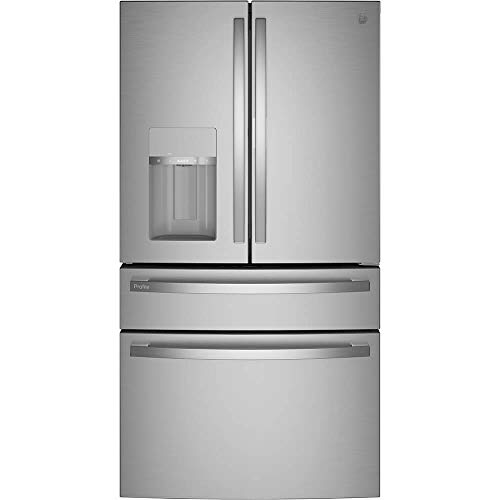
As an Amazon Associate we earn from qualifying purchases at no extra cost to you. Ratings are shown as listed on Amazon.
| Design | Typical width | Typical capacity | Typical depth at doors/handles | Good fit when |
|---|---|---|---|---|
| Counter-depth French door | About 35.5–36 in | About 20–23 cu. ft. | About 28–31 in | You want a neater cabinet line and can accept less interior depth. |
| Standard-depth French door | About 35.5–36 in | About 25–28 cu. ft. | About 33–36 in | Your household needs more room for groceries, leftovers, or bulk items. |
| Counter-depth side-by-side | About 35.5–36 in | About 20–23 cu. ft. | About 28–31 in | You prefer separate, easy-to-scan compartments and frequent freezer access. |
| 36-inch built-in | About 36 in nominal | Varies widely by configuration | Designed for built-in installation | You are planning cabinetry and installation around a premium integrated appliance. |
Capacity figures are not directly comparable as a measure of day-to-day usefulness. A deep shelf may hold large containers but hide items at the back; a counter-depth layout can make food easier to see while requiring more careful organization. Check shelf width, drawer layout, and door-bin placement in addition to the headline cubic feet.
Choose by the way your kitchen works
For a narrow walkway or island nearby
Start with counter-depth. A refrigerator that projects less into the room can preserve walking space, but its doors still need room to swing. Measure the depth with doors open, and check whether the handles or door edges collide with an island, wall, or neighboring cabinet. French-door models can be practical in tighter aisles because each fresh-food door opens separately; drawers still need clearance to pull out.
For a large household or bulk shopping
Consider standard-depth French door. The extra depth can make room for wide platters and larger grocery loads, but it can also make food harder to find if shelves are packed front to back. Look for adjustable shelves, full-extension drawers, and a layout that leaves frequently used items visible. If you regularly store wide frozen foods, confirm the freezer opening and drawer dimensions rather than relying only on total capacity.
For frequent freezer use
A side-by-side gives freezer items a vertical, shelf-based layout, which can help when you retrieve small packages often. The trade-off is a narrow freezer compartment. French-door models with a bottom freezer usually offer a wider drawer for bulky items, but stacked food can be less visible. Pick based on the foods you actually freeze, not just the door style.
For a planned remodel
A built-in is worth considering when the cabinetry, ventilation, electrical supply, and budget are being designed together. It is not a simple substitute for a freestanding refrigerator: installation requirements, finished side panels, door panels, and service access vary by model. Confirm specifications with the appliance installer and cabinetmaker before ordering.
Temperature control, ice, and ownership trade-offs
Temperature consistency depends on more than the control panel. Avoid overpacking vents, leave space for air to circulate, and use an appliance thermometer to check actual conditions after the refrigerator has stabilized. Frequent door opening, warm groceries, blocked vents, and a failing door gasket can all contribute to uneven temperatures. Models with separate fresh-food and freezer controls or dual-evaporator designs may help limit odor transfer and manage each compartment independently, but features and results vary by model.
Ice systems also affect usable space and maintenance. An in-door dispenser is convenient, but its mechanism can take up room in the door and may require a water line and filter. An internal ice maker keeps the exterior simpler, while a freezer ice maker may reduce freezer space. Check whether the filter is included, how often it needs replacement, and whether the ice maker can be switched off when not needed. A household without a nearby water connection should factor in plumbing work—or choose a model that does not require one.
For longer ownership, keep condenser areas and air pathways clear as directed in the manual, clean removable bins with mild products, and replace water filters on the schedule specified by the manufacturer. Door seals and ice components are common areas to inspect: wipe seals clean so they close evenly, and avoid forcing stuck ice or overloading drawers. A refrigerator that is difficult to access for service can be costly to maintain, so leave the installation clearances the manufacturer requires.
Measure the opening and delivery route
- Measure the opening in three places. Check width at the top, middle, and bottom, plus height at both sides. Use the smallest measurement.
- Check required side and top clearance. Follow the chosen model’s installation guide; a nominal 36-inch refrigerator may not fit a 36-inch opening once clearance is included.
- Measure depth consistently. Record cabinet depth, countertop overhang, and the distance to an island or walkway. Compare the refrigerator’s case depth, door depth, and depth with handles.
- Allow for door and drawer movement. Verify door-opening clearance, hinge geometry, and the space needed to remove drawers for cleaning.
- Trace the delivery path. Measure entry doors, hallways, stair turns, and elevator openings. Ask the delivery team whether doors can be removed and reinstalled if needed.
- Confirm utilities and leveling. Check outlet location, water-line position if applicable, floor strength, and the manufacturer’s leveling instructions before delivery.
What to budget for
As broad market ranges, freestanding 36-inch refrigerators commonly run from about $1,500 to $4,500, depending on capacity, finish, dispenser features, and brand. Premium configurations can cost more, and 36-inch built-ins often start around $5,000 and can exceed $10,000. Installation, water-line work, panel kits, haul-away, and replacement filters may add to the total, so compare the delivered and installed cost rather than the appliance price alone.
Bottom line
Choose a counter-depth French-door model for a balanced combination of fit, visibility, and usable fresh-food storage. Go standard-depth if capacity is your main concern and the room can accommodate the projection. Choose side-by-side for a shelf-organized freezer, or a built-in when cabinetry integration justifies the higher cost and more involved installation. In every case, the best 36 refrigerator is the one whose exact installation dimensions, door clearances, interior layout, and ice setup match your kitchen—not simply the one labeled 36 inches.







Write Your Review
No reviews yet. Be the first to share your experience!