
Key takeaways
- HERMS (Spike Trio, Ss Brewtech 3V, Blichmann BrewEasy): Wort is pumped through a coil in the hot liquor tank. Gentlest heating, best temperature stability, no scorching. Adds complexity and one more vessel to clean.
- RIMS-style / Pump Recirculation (Grainfather G70, BrewZilla, Clawhammer): Wort is pumped up and over the grain bed directly and heated by the main element. Simpler, but requires constant flow to avoid scorching and compacting the grain bed. A good controller that pulses the element is essential.
The best 10 gallon all grain brewing equipment systems for most serious home brewers are 3-vessel electric systems like the Spike Trio and Ss Brewtech eBrewing series for maximum control and scalability, while all-in-one units like the BrewZilla 65L Gen 4 and Blichmann BrewEasy offer a smaller footprint and simpler cleanup for brewers tight on space.
Choosing a true 10-gallon finished batch system is different from buying a 5-gallon kit with a bigger kettle. You need enough total kettle volume, heating power, and grain capacity to handle 22-26 lbs of grain and 13-14 gallons of pre-boil wort without boilovers or stuck mashes. The right system depends on your power available, space, and how often you brew.
Our top picks


As an Amazon Associate we earn from qualifying purchases at no extra cost to you. Ratings are shown as listed on Amazon.
Top 10-Gallon All-Grain Systems Compared
These are the most established platforms for 10-gallon finished batches in 2026. All use 304 stainless steel and electric heating, which has become the standard for indoor 10-gallon brewing due to ventilation and power efficiency.
| System | Type | Total Kettle Volume | Finished Batch Capacity | Material | Heating Power | Power Required | Recirculation & Control |
|---|---|---|---|---|---|---|---|
| Spike Trio 10-Gallon | 3-Vessel HERMS | 3x 20 gal (75.7L) | 10-12 gal | 304 SS, TC fittings | 4500W-5500W element in HLT/Boil Kettle | 240V / 30A | HERMS coil, 2x pumps, Spike panel with PID |
| Ss Brewtech 10 Gal eBrewing 3V | 3-Vessel HERMS/eBIAB | 3x 20 gal (75.7L) | 10 gal | 304 SS, 1.2mm wall | 5500W element | 240V / 30A | HERMS coil, 2x Riptide pumps, Blichmann-style controller |
| Blichmann BrewEasy 10 Gal | 2-Vessel HERMS | 20 gal Boil + 10 gal Mash tun | 10 gal | 304 SS, 1.5mm kettle wall | 240V 5500W Tower of Power or gas | 240V / 30A or propane | Gravity/HERMS recirculation, AutoSparge, single pump |
| Grainfather G70v2 | All-in-One | 18.5 gal (70L) | 10-11 gal | 304 SS, double wall | 3300W (220-240V model) | 220-240V / 15A | Built-in pump, conical recirculation, Bluetooth controller |
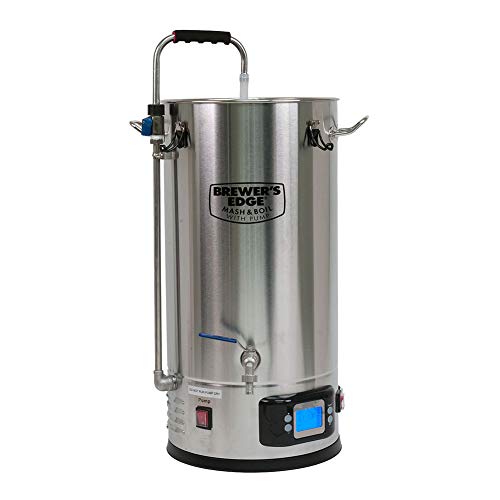
| BrewZilla 65L Gen 4 | All-in-One | 17.1 gal (65L) | 9-11 gal | 304 SS, 0.9mm wall | 3500W (220V) / 1500W (110V US model with adapter) | 110-240V | Central pump, RAPT controller, malt pipe |
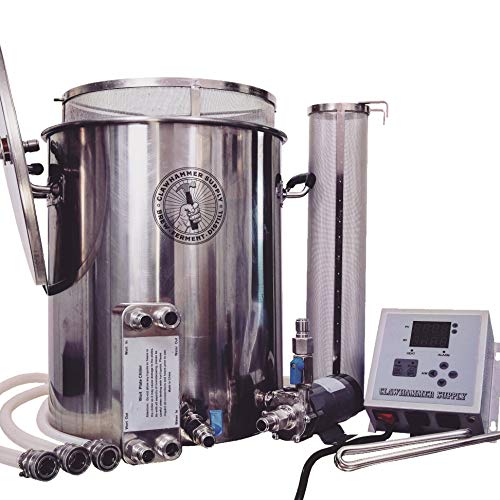
| Clawhammer Supply 20 Gal BIAB | BIAB Single Vessel | 20 gal (75.7L) | 10 gal | 304 SS, 1.2mm wall | 5500W element | 240V / 30A | Single pump recirculation, 304 SS basket, PID controller |
Decision Criteria: What Actually Matters at 10 Gallons
1. True Batch Capacity vs. Kettle Volume
A 10-gallon finished batch needs 13 to 14 gallons pre-boil. Many systems marketed as “10-gallon” only produce 10 gallons if you do a lower-gravity beer. Check the max grain bill, not just liquid volume. For beers above 1.075 OG, you need 20+ gallons of total vessel volume or you will be forced to add DME or do a reiterated mash. The 20-gallon kettles on the Spike Trio and Ss Brewtech handle 30+ lb grain bills comfortably, while 65L-70L all-in-one systems max out around 21-24 lbs before efficiency drops sharply.
2. Stainless-Steel Construction
Wall thickness and fitting type determine longevity. 0.9mm walls (BrewZilla) are lighter and heat faster but dent more easily. 1.2mm to 1.5mm walls (Spike, Ss Brewtech, Blichmann) resist warping at 5500W. Look for welded tri-clamp (TC) ports instead of weldless ball valves. TC fittings seal better, are easier to deep-clean, and do not develop slow leaks after repeated heat cycles. All systems listed use 304 stainless, but avoid thin 201 stainless kettles sometimes sold as budget 10-gallon options; they pit with acidic cleaners.
3. Heating Power and Electrical Reality
Heating power dictates brew-day length. A 5500W 240V element will bring 14 gallons from mash temp (152F) to boil in about 25-30 minutes. A 3300W-3500W element (Grainfather G70, BrewZilla 65L on 240V) takes 40-50 minutes for the same volume, and a 1500W 120V configuration takes over 90 minutes. If you only have 120V / 20A service in your brewery space, you are limited to lower-wattage all-in-one systems or will need an electrician to run a 240V / 30A GFCI circuit. This is the single biggest hidden cost of moving to 10 gallons.
4. Recirculation Features
Recirculation improves mash efficiency by 5-10% and keeps temperatures even, which is critical in a deep 10-gallon grain bed.
- HERMS (Spike Trio, Ss Brewtech 3V, Blichmann BrewEasy): Wort is pumped through a coil in the hot liquor tank. Gentlest heating, best temperature stability, no scorching. Adds complexity and one more vessel to clean.
- RIMS-style / Pump Recirculation (Grainfather G70, BrewZilla, Clawhammer): Wort is pumped up and over the grain bed directly and heated by the main element. Simpler, but requires constant flow to avoid scorching and compacting the grain bed. A good controller that pulses the element is essential.
5. Controls
PID controllers with temperature probes and pump switches (Spike, Ss Brewtech, Clawhammer) give you manual control and are easier to repair part-by-part. Integrated Bluetooth/WiFi controllers (Grainfather G70, BrewZilla RAPT) allow step mashing programs and phone monitoring, but if the board fails the whole system is down. For 10-gallon recirculated mashes, a controller that can hold +/- 1F and manage element duty cycle is non-negotiable.
6. Cleanup Demands
Cleanup time scales faster than batch size. A single-vessel all-in-one needs one vessel, one pump, and one malt pipe/basket cleaned – typically 30-40 minutes. A 3-vessel HERMS requires cleaning three kettles, two pumps, a HERMS coil, and 6-10 TC connections – typically 60-90 minutes, plus CIP time if you add a fermenter. If you brew twice a month, that extra hour matters more than the flexibility of separate vessels.
Which System Should You Choose? A Decision Matrix
| Your Situation | Best Fit | Why |
|---|---|---|
| Limited space (apartment, small garage), 120V only, brew 1-2x month | BrewZilla 65L Gen 4 or Grainfather G70v2 | Vertical single-vessel footprint of 20×20 inches, built-in pump and controller, easiest cleanup |
| Have 240V / 30A, want fastest brew day and highest efficiency for high-gravity beer | Spike Trio 10-Gallon or Ss Brewtech 10 Gal 3V | 5500W power + HERMS gives stable temps and fastest ramp times, handles 30+ lb grain bills |
| Want turnkey quality with minimal DIY, prefer fewer vessels but pro-grade fittings | Blichmann BrewEasy 10 Gal | 2-vessel design cuts one kettle to clean vs 3-vessel, AutoSparge simplifies lautering |
| Budget-conscious, comfortable with DIY and BIAB process | Clawhammer Supply 20 Gal BIAB | Single 20-gal kettle + basket + pump keeps cost and footprint lowest for true 10-gallon capacity |
| Brew very frequently (weekly) or plan to scale to 1 barrel | Spike Trio or Ss Brewtech eBrewing | Modular TC system lets you add larger kettles, second pump, and CIP later |
Worked Calculation: Brew-Day Time and Cost Per Use
Understanding total time helps justify the power setup. Use this example for 14 gallons of wort heated from 152F to 212F:
Formula: Time (hours) = (Gallons x 8.34 x Temp Rise in F) / (Watts x 3.412) / Efficiency. Use 0.85 efficiency for electric kettles.
- 5500W system: (14 x 8.34 x 60) / (5500 x 3.412) / 0.85 = 0.44 hours = ~26 minutes to boil
- 3300W system: Same volume = ~43 minutes to boil
- 1500W 120V system: Same volume = ~95 minutes to boil
On a full brew day, the 5500W system saves 45-70 minutes vs. 120V brewing. Over 20 brews a year, that is 15-23 hours saved. If you need to pay an electrician $300-$600 to install a 240V GFCI outlet, the cost per brew over 3 years (60 brews) is $5-$10 per brew for the upgrade, often recovered in time and propane savings if switching from gas. Electric brewing at 5500W costs roughly $1.50-$2.50 in electricity per 10-gallon batch, versus $12-$18 for propane with a gas burner.
Durability and Ownership Realities
At 10 gallons, what wears first is not the kettle but the small parts.
- Pumps: Magnetic drive pumps (Riptide, BrewZilla, Grainfather) last 3-5 years with regular cleaning. Running them dry or pumping trub with hop matter shortens seal life. Always prime before powering and backflush with hot PBW after each brew.
- Heating elements: 5500W ripple elements develop calcium scale if you have hard water. A 30-minute soak in 1 oz per gallon citric acid every 5-10 brews prevents hot spots and scorching. Never fire the element unless fully submerged.
- Seals and gaskets: Silicone gaskets on TC fittings and malt pipes compress over time. Keep spares for the kettle lid, element, and pump head. Leaks at the element TC are the most common cause of electrical faults.
- Controllers: Moisture is the biggest failure point. Even splash-proof panels should not be hosed down. Wipe down and store dry.
Common mistakes with 10-gallon systems: Milling too fine to chase efficiency and compacting the grain bed during recirculation, which stalls the pump; trying to do a full-volume 10-gallon BIAB in a 15-gallon kettle (you need headspace for the grain); and underestimating chiller needs. An immersion chiller that works for 5 gallons will take 40+ minutes to chill 11 gallons. A counterflow or plate chiller is almost mandatory at this scale and must be cleaned immediately after use to prevent protein buildup.
Cleaning routine: After knockout, recirculate 5 gallons of 140F PBW through pump, HERMS coil, and hoses for 15 minutes, rinse, then recirculate Star San or Saniclean. For all-in-one systems, remove the malt pipe and false bottom and scrub the element base where protein bakes on. This prevents the burnt-sugar flavor that develops when old wort caramelizes on the element.
Final Picks by Brewer Type
For the brewer who wants a professional, expandable platform and has 240V power, the Spike Trio 10-Gallon and Ss Brewtech 10-Gallon eBrewing 3V remain the benchmarks for best 10 gallon all grain brewing equipment systems. They cost more upfront and take more space, but deliver the most consistent mash control and easiest scalability.
For the brewer with limited space or who values a 60-minute cleanup over ultimate control, the Grainfather G70v2 is the most refined all-in-one for true 10-gallon batches, while the BrewZilla 65L Gen 4 offers similar capacity at a lower general market price. The Blichmann BrewEasy splits the difference, and the Clawhammer 20-Gallon BIAB is the most efficient use of money and floor space if you are comfortable managing a single-vessel recirculated mash.
Match your electrical service and grain-bill goals first, then choose footprint and control style. A properly sized system will hold its value for years and keep your brew days predictable.
FAQ
Can I brew 10 gallons on a 110V system?
You can, but only with all-in-one systems running at 1500W on 110V, which will have very long heat times. A faster 10-gallon brew requires 240V / 30A service for 4500W-5500W elements. Some brewers use two 1500W 120V circuits on separate breakers, but this is less efficient than a dedicated 240V circuit.
Do I need a 20-gallon kettle for 10-gallon batches?
Yes, for fermenter volume. You need 13-14 gallons pre-boil to end with 10-11 gallons in the fermenter after boil-off and trub loss. A 15-16 gallon kettle leaves only 1-2 gallons of headspace, which guarantees boilovers. A 17.1-gallon (65L) all-in-one is the absolute minimum; 20 gallons is more comfortable.
Is HERMS worth it over a simple BIAB recirculation?
HERMS provides gentler, more precise temperature control and eliminates scorching risk, which helps with repeatability on large grain beds. For most 10-gallon brewers, a well-tuned single-pump recirculation with a good controller is sufficient. Choose HERMS if you do step mashes often or brew high-adjunct beers that benefit from precise rests.

Write Your Review
No reviews yet. Be the first to share your experience!