
Our Top Picks
 RitFit M1 Pro Smith Machine with Weight StackPackage (BWB01 Bench + BP230)63 x 47.8 x 85.2 inches830 poundsCheck on Amazon


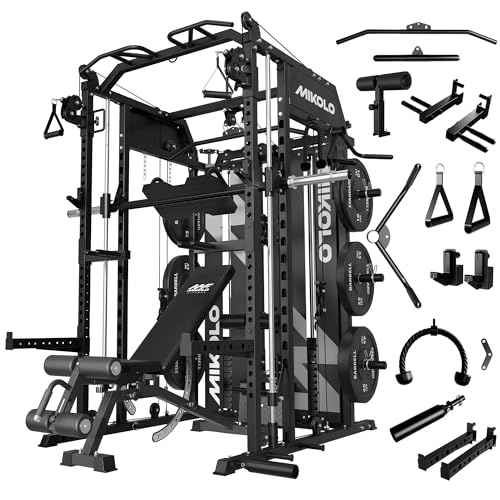
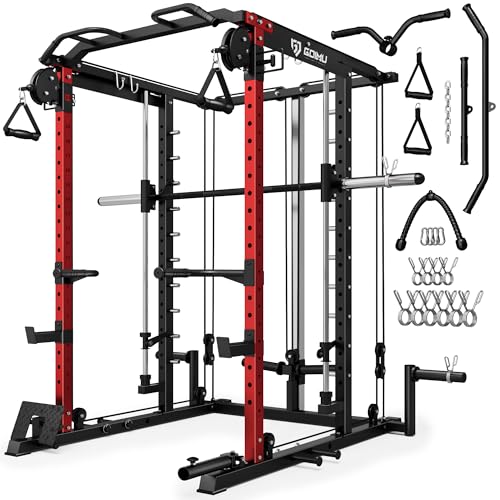

The Major Fitness Drone2 is the best Smith machine for most home gyms: it combines a full power cage and Smith bar with an aluminum pulley set, so one station covers squats, bench pressing, lat pulldowns and cable crossovers without the cable drag that plagues cheap steel-bushed pulleys. It suits lifters who want a single anchor piece for a garage or spare-room gym and who plan to keep it for years rather than upgrade in twelve months. If budget is the binding constraint, the JELENS SR01 delivers the same all-in-one concept at a far lower entry point. If you would rather pull a pin than load plates on a cable, the Mikolo and RitFit weight-stack packages are the ones worth your attention. This guide works through footprint, weight capacity, bar travel, safety stops, pulley attachments, rack functionality and assembly for twelve current models, with the numbers you need before you commit floor space.
Top 3 Picks
Best overall: Major Fitness Drone2
The Drone2 is the pick for anyone who wants a Smith machine and a power rack and a cable station in one footprint. The aluminum pulley set is the detail that separates it from budget cages — aluminum resists corrosion and holds a smoother glide under repeated cable work than the nylon or steel-bushed pulleys common at the entry level. It is a premium-tier purchase, so it makes sense if you are building the gym once and building it properly.
Best budget: JELENS SR01
The SR01 carries a 2000 LB rating, a multi-function power cage and a lat pulldown system at a budget price tier. It is the right answer for a first home gym where you want to learn whether Smith-style training fits how you actually lift before spending premium money. Expect thinner gauge steel and simpler pulley hardware than the premium picks — that is what the price tier buys.
Best premium: Mikolo Smith Machine with Weight Stack
The Mikolo weight-stack package pairs a power cage and Smith machine with a built-in stack, lat pulldown and cable crossover. The stack removes the constant plate loading and unloading that plate-loaded cable systems demand, which matters most if you train cable movements in high-rep sets or superset them with barbell work. It is the strongest pick here for cable-crossover-focused programming.
Quick Comparison
Every model below is a Smith machine or Smith-and-cage hybrid currently listed for home gym use. Specs are quoted from published listing names; where a listing does not state a figure, the entry describes the spec class rather than an invented number. Price tiers reflect general market positioning, not live pricing.
| Product | Best for | Key specs (as listed) | Price tier |
|---|---|---|---|
| Major Fitness Drone2 | Best overall | All-in-one Smith machine + power cage; aluminum pulley set; plate-loaded cable system | Premium |
| JELENS SR01 | Best budget all-in-one | 2000 LB rating; multi-function power cage; lat pulldown system | Budget |
| Mikolo Smith Machine with Weight Stack | Best cable crossover training | Built-in weight stack; lat pulldown + cable crossover; multi-station cage | Premium |
| RitFit M1 Pro | Best weight-stack package | Weight stack package; power cage + Smith machine | Premium |
| Goimu S1-V4 | Best budget cable crossover | 2000 LB rating; cable crossover system; all-in-one squat rack + Smith bar | Budget |
| pooboo Power Cage Smith Machine | Best mid-range value | 2000 LB rating; squat rack + cable system | Mid-range |
| SunHome Smith Machine with Weight Stack | Best premium lat pulldown | 2000 LB rating; weight stack; lat pulldown + cable crossover | Premium |
| SunHome Multifunction Home Gym Station | Best leg press combination | 138 LB weight stack; leg press; lat pulldown; Smith machine | Mid-range |
| Goimu DM01 Dual-Station | Best dual-station layout | 140 LB weight stack; lat pulldown + leg press; dual-station design | Mid-range |
| Unive Fitness Smith Machine | Best commercial-grade build | Commercial-grade all-in-one power cage; dual cable crossover; squat rack | Mid-range |
| OPPSDECOR All-in-One Adjustable | Best budget adjustable | Adjustable Smith machine; lat pulldown system | Budget |
| Mikolo 1:1 Ratio Space Saving | Best for small spaces | 1:1 cable ratio; space-saving design; 8 free attachments | Budget |
How We Chose
Selection here is research-based and built from published product listings and established category norms, not from physically exercising on each machine. The first filter was whether a model functions as a genuine all-in-one: Smith bar, rack or cage structure, and at least one cable station, so the reader is not buying three separate units and losing floor space to three footprints. The second was footprint realism — a machine only belongs on this list if its class of design can plausibly fit a garage, basement or spare room with normal residential ceiling height. The third was spec transparency: models that state a weight rating, a stack weight or a pulley ratio in the listing are easier to compare and easier to hold to a standard than models that state nothing.
From there we weighted four things. Pulley hardware quality, because the cable system is the component most likely to feel cheap first. Safety stop design, because Smith machines are often trained alone and the stop mechanism is the whole point of the format. Upgrade path, including whether the frame accepts attachments and whether the cable system is plate-loaded (infinitely expandable if you own plates) or stack-based (convenient but capped). And assembly reality — part count, anchoring requirements and whether two people are needed. Price tier is used as a positioning signal, not a ranking, and no per-product pricing appears here because listing prices move daily.
1. Major Fitness Drone2 – Best Overall
As an Amazon Associate we earn from qualifying purchases at no extra cost to you.

The Drone2 is aimed at the lifter who wants one machine to do almost everything and is willing to pay premium-tier money to get there once. It suits a garage or basement gym with roughly 60 to 70 square feet of dedicated floor and a ceiling that clears eight and a half feet with room for overhead pressing. It also suits anyone who trains cable movements seriously — face pulls, lat pulldowns, crossovers, triceps pushdowns — because the pulley hardware is the part of an all-in-one that reveals its price tier fastest.
Key specs as listed
- All-in-one home gym squat rack and Smith machine in a single frame
- Aluminum pulley set — a step above the nylon and steel-bushed pulleys common in budget cages
- Plate-loaded cable system, so cable resistance expands with the plates you already own
- Integrated rack structure that supports rack-mounted work and future attachments
- Premium price tier; weight capacity not stated in the listing name
Strengths. The aluminum pulley set is the headline. Aluminum sheaves and housings resist corrosion in a humid garage far better than painted steel, and they tend to hold a smoother glide over thousands of cable repetitions. Because the cable system is plate-loaded, your cable resistance ceiling is your plate collection — buy more plates and the lat pulldown and crossover stations scale with you. The cage structure means the machine is not just a Smith bar on two posts; it is a rack you can grow into with a landmine, dip bars or a pull-up bar, which is the single biggest reason to buy an all-in-one instead of a standalone Smith machine.
Pros
- Aluminum pulleys resist rust and stay smooth longer than budget pulley hardware
- Plate-loaded cables have effectively no resistance ceiling
- One frame replaces a Smith machine, power rack and cable station
- Premium build tier typically means thicker gauge steel and better welds
Cons
- Premium tier pricing — the most expensive positioning on this list
- Requires a ceiling and floor check before purchase; not a low-clearance machine
- Plate-loaded cables mean buying plates separately if you do not already own them
- Assembly is a two-person job and a full afternoon
How it compares. Against the Mikolo weight-stack machine, the Drone2 wins on pulley longevity and on unlimited cable resistance, while the Mikolo wins on convenience — you never load a plate to do a set of pulldowns. If your cable work is mostly high-rep accessory training done in supersets, the stack is genuinely faster. If your cable work is progressive and heavy, or your garage runs humid, the Drone2’s aluminum pulleys and plate-loaded design are the better long-term structure. Against the RitFit M1 Pro, both are premium all-in-ones; the Drone2 leans on its pulley hardware and rack functionality, while the RitFit leans on delivering a complete weight-stack package in one purchase.
2. JELENS SR01 – Best Budget

The SR01 is the entry point into the all-in-one category, and it is aimed squarely at the first-time home gym buyer who wants to find out whether Smith-style training suits them before spending premium money. It suits a garage, spare bedroom or basement corner where the budget is firm and the priority is getting a functional squat rack, Smith bar and lat pulldown under one frame. It also suits someone who already owns a barbell and plates and wants a cable and Smith station without a second mortgage.
Key specs as listed
- 2000 LB rating stated in the listing — a high rating class for a budget-tier cage
- Multi-function power cage structure with an integrated Smith bar
- Lat pulldown system built into the frame
- All-in-one home gym squat rack configuration
- Budget price tier
Strengths. The value proposition is straightforward: you get the three functions — Smith bar, cage, lat pulldown — for the price of one premium machine’s pulley set. The stated 2000 LB rating puts it in the same declared capacity class as several mid-range and premium competitors, which is worth noting, though a declared rating is a structural claim rather than a measure of how refined the machine feels in use. For a lifter working in the beginner to intermediate range, the SR01 covers squat, bench, row, pulldown and press patterns without gaps.
Pros
- Lowest barrier to entry for a true all-in-one frame
- 2000 LB stated rating class
- Smith bar, cage and lat pulldown in one footprint
- Leaves budget for plates, a bench and flooring — which matter as much as the rack
Cons
- Budget-tier pulley hardware; expect more cable drag and more frequent inspection
- Thinner gauge steel and simpler welds than premium tier, typically
- Fewer attachment points and less accessory ecosystem than premium cages
- Fit and finish tolerances are usually looser at this tier
How it compares. Against the Goimu S1-V4, both are budget all-in-ones with a 2000 LB stated rating; the SR01 emphasizes the power cage and lat pulldown, while the S1-V4 emphasizes a cable crossover system. If crossover work and dual-cable movements are central to your plan, the Goimu’s crossover orientation is the closer fit. If you mostly want a squat rack with a Smith bar and a single pulldown stack, the SR01 is the simpler, more direct purchase. Against the OPPSDECOR adjustable machine, the SR01 is the more conventional cage design; the OPPSDECOR leans on adjustability, which suits buyers who want the Smith bar geometry to change with the movement.
3. Mikolo Smith Machine with Weight Stack – Best for Cable Crossover Training
This Mikolo is the pick for a lifter whose programming is built around cables — crossovers, pulldowns, cable rows, face pulls, unilateral work — and who wants a Smith machine and power cage underneath it. It suits a home gym where the user trains four or more sessions a week and does not want to spend those sessions loading and unloading plates on a cable station. The built-in weight stack is the whole point, and it is worth paying premium-tier money for if cable volume is high.
Key specs as listed
- Smith machine and power cage home gym system in one frame
- Built-in weight stack for cable resistance rather than plate-loaded cables
- Lat pulldown and cable crossover stations
- Multi-function station layout supporting multiple movement patterns
- Premium price tier; stack weight not stated in the listing name
Strengths. A weight stack changes how you train. Changing resistance between sets takes a pin instead of a plate shuffle, which makes drop sets, supersets and short-rest hypertrophy work genuinely practical. Cable crossover is also the movement most often compromised on plate-loaded all-in-ones, because the two sides are fed by a single plate horn or a shared carriage; a dedicated stack with a proper crossover layout keeps both sides independent. The cage structure underneath means you still get rack-mounted barbell work, and the Smith bar gives you the fixed-path option for solo training.
Pros
- Pin-select resistance makes supersets and drop sets fast
- Cable crossover layout supports independent-side training
- No plate loading between cable sets
- Smith bar and power cage included, so it is still a complete rack
Cons
- Stack weight caps your cable resistance ceiling; expansion means buying a heavier stack or an add-on plate kit
- Premium tier pricing
- Heavier and bulkier than plate-loaded equivalents once the stack is included
- Stack weight is not stated in the listing name, so confirm it before buying if cable strength work matters to you
How it compares. Against the Major Fitness Drone2, this is a convenience-versus-ceiling trade. The Mikolo makes every cable set faster to set up and better suited to crossover work; the Drone2 removes the resistance cap and uses aluminum pulleys that hold up better in humid rooms. Against the RitFit M1 Pro, both are premium weight-stack packages; the Mikolo’s emphasis is the crossover station and multi-station cage layout, while the RitFit is positioned as a complete weight-stack package power cage. If crossover training is the deciding factor, this Mikolo is the more specific answer.
4. RitFit M1 Pro – Best Weight-Stack Package

The RitFit M1 Pro suits the buyer who wants one delivery to contain everything: the Smith machine, the power cage and the weight stack, with no separate plate shopping for the cable side. It is a good fit for a home gym where the cable station will be used for lat pulldowns, rows, triceps work and accessory pressing, and where the user values a consistent, repeatable resistance source over an expandable one. It also suits anyone upgrading from a standalone Smith machine who now wants rack functionality and a cable station in the same footprint.
Key specs as listed
- Smith machine with weight stack package
- Power cage home gym configuration
- Built-in stack feeding the cable stations
- Premium price tier
Strengths. The package framing is the strength. Buying a Smith machine, a cage and a weight stack as one unit avoids the compatibility guesswork of assembling three separate pieces, and it usually means the pulley routing, cable lengths and stack housing were designed together rather than adapted. A stack also keeps cable resistance consistent session to session — the same pin position is the same load every time, with no variation from plate placement or carriage friction changes. For a home gym with limited floor space, one integrated frame is a better use of the room than a Smith machine plus a separate cable tower plus a separate rack.
Pros
- Complete package — no separate stack purchase or assembly
- Consistent, repeatable cable resistance
- Integrated design rather than mixed-brand adaptation
- Smith bar, cage and cable station in one footprint
Cons
- Premium tier pricing
- Stack weight caps cable resistance unless the manufacturer offers a heavier option
- Heavier shipping weight and a longer assembly session than a plate-loaded frame
- Fewer details stated in the listing name than some competitors, so verify dimensions before purchase
How it compares. Against the Mikolo weight-stack machine, both are premium packages with built-in stacks. The Mikolo positions itself around the cable crossover and multi-station cage, while the RitFit M1 Pro is positioned as the weight-stack package power cage — a more general-purpose framing. If your priority is a specific crossover station, look at the Mikolo; if your priority is a complete stack-fed cage without an emphasis on one movement, the RitFit is the cleaner match. Against the SunHome weight-stack machine, both carry a 2000 LB stated rating on the frame side; the SunHome states that rating explicitly in its listing name, which makes it easier to compare on paper.
5. Goimu S1-V4 – Best Budget Cable Crossover

The S1-V4 is for the budget buyer who specifically wants a cable crossover system and is not willing to give up the Smith machine or the squat rack to get it. It suits a garage gym where crossover work, chest flys, cable rows and unilateral cable pressing are part of the routine, and where the total budget has to also cover plates, a bench and flooring. It is a strong choice for a lifter in the first two years of home training who wants the broadest movement menu at the lowest cost.
Key specs as listed
- 2000 LB stated rating
- Power cage structure with an integrated Smith bar
- Cable crossover system built into the frame
- All-in-one squat rack configuration
- Budget price tier
Strengths. Getting a cable crossover at a budget tier is unusual, because crossover stations need two independent cable paths, more pulleys and more frame width than a single lat pulldown. The 2000 LB stated rating puts the frame in a competitive declared capacity class for the money. For a beginner, the crossover opens up chest, back and shoulder work that a Smith bar alone cannot cover, and it does so without a second machine. The Smith bar itself remains the safest way for a solo lifter to bench and squat heavy without a spotter.
Pros
- Cable crossover at a budget price tier
- 2000 LB stated frame rating
- Smith bar, squat rack and crossover in one unit
- Leaves budget for the plates and bench you still need
Cons
- Budget-tier pulleys will show drag sooner than aluminum hardware
- Crossover width adds footprint compared with a lat-pulldown-only cage
- Simpler attachment ecosystem than premium cages
- Cable resistance is limited by how many plates you own
How it compares. Against the JELENS SR01, this is a crossover-versus-pulldown distinction. The SR01 is a straightforward multi-function cage with a lat pulldown system; the S1-V4 adds a dedicated crossover path. If your routine is mostly pulldowns, rows and Smith pressing, the SR01 is simpler and likely cheaper. If you want to train flys and independent-side cable work from day one, the S1-V4 is worth the extra width. Against the pooboo power cage, both state a 2000 LB rating, but the pooboo sits a tier higher on price and generally brings correspondingly better hardware; the S1-V4 is the budget answer to the same question.
6. pooboo Power Cage Smith Machine – Best Mid-Range Value

The pooboo power cage Smith machine targets the buyer who has outgrown budget hardware but is not ready to spend premium money — the middle of the market where most home gyms actually land. It suits a lifter training three to five sessions a week who wants a 2000 LB rated frame, a Smith bar and a cable system without the premium-tier price. It also suits someone replacing a cheap entry-level rack after a year or two of use, when the shortcomings of budget pulleys have become obvious.
Key specs as listed
- 2000 LB stated rating
- Power cage and Smith machine in one frame
- Cable system integrated into the rack
- Squat rack configuration
- Mid-range price tier
Strengths. Mid-range is where the value curve is steepest. You typically get thicker gauge steel, better welds, a stiffer frame under heavy Smith bar travel and improved pulley hardware over budget tier, without paying for the aluminum pulleys and premium finishing of the top picks. A 2000 LB stated rating at this price point is a reasonable declared capacity for serious intermediate training. The integrated cable system means the machine covers accessory work without a separate tower, which keeps the footprint to one frame and one assembly job.
Pros
- Better frame stiffness and hardware than budget tier for a moderate step up
- 2000 LB stated rating class
- Cable system included in the rack footprint
- Usually the best balance of price, durability and features for a serious home lifter
Cons
- Not aluminum pulley hardware, so cable feel will not match the premium picks
- Fewer stated specifics in the listing name than some competitors
- Still requires a ceiling and floor check before ordering
- Cable resistance depends on your plate collection
How it compares. Against the Goimu S1-V4, the pooboo costs more and generally buys better build quality for the same declared 2000 LB rating class. If you are on a strict budget, the S1-V4 is the value play; if you can stretch, the pooboo is the more durable long-term frame. Against the Unive Fitness machine, the pooboo is the more conventional home-gym positioning, while the Unive leans on a commercial-grade build claim and a dual cable crossover. If you want the heaviest-duty feel and dual cables, the Unive is the closer fit; if you want straightforward mid-range value, the pooboo is the simpler purchase.
7. SunHome Smith Machine with Weight Stack – Best Premium Lat Pulldown System

This SunHome is for the lifter who wants a premium weight-stack machine with a serious lat pulldown and crossover setup, and who values the pin-select convenience of a stack over the expandability of plate-loaded cables. It suits a home gym with a dedicated room, a solid floor and a ceiling that clears roughly nine feet. It is also a good fit for someone who trains back volume heavily — pulldowns, straight-arm pulldowns, cable rows — and wants a station built around that.
Key specs as listed
- 2000 LBS stated rating
- Built-in weight stack for cable resistance
- Lat pulldown system
- Cable crossover capability
- Power cage and squat rack structure
- Premium price tier; stack weight not stated in the listing name
Strengths. Combining a 2000 LBS stated frame rating with a built-in stack and both pulldown and crossover functions puts this machine at the top of the cable-focused segment. A stack makes lat pulldown training frictionless: you sit down, pin the weight and pull, which is exactly the repetition pattern that builds back volume. The cage structure underneath supports Smith pressing and squatting, so the machine is not purely a cable station. Premium tier positioning generally corresponds to heavier steel and better finishing, which matters if the machine will live in an unconditioned garage.
Pros
- 2000 LBS stated rating with a weight stack included
- Lat pulldown and crossover from a single stack-fed system
- Pin-select resistance for fast back and accessory work
- Premium build tier with Smith bar and cage included
Cons
- Premium price tier
- Stack weight is not stated in the listing name — verify before purchase if you need heavy cable loading
- Taller and heavier than plate-loaded frames; ceiling clearance is a real constraint
- Longer assembly and harder to move once built
How it compares. Against the RitFit M1 Pro, both are premium stack-fed cages. The SunHome states a 2000 LBS rating and explicitly names lat pulldown and cable crossover functions; the RitFit is positioned more generally as a weight-stack package. If you want the stated rating and the named pulldown and crossover stations on paper, the SunHome is easier to compare and defend. Against the SunHome Multifunction station with the 138 LB stack, the two share a brand but differ in intent: this one is the heavier-rated, cable-first machine, while the Multifunction model is built around a leg press and multi-station layout at a mid-range tier.
8. SunHome Multifunction Home Gym Station – Best for Leg Press and Multi-Station Workouts

This SunHome model is for the buyer who wants a leg press in the same machine as the Smith bar, lat pulldown and cable stations — a genuine multi-station home gym rather than a rack with cables bolted on. It suits a lifter who trains legs seriously but does not have room for a separate leg press, and who wants one machine to cover pressing, pulling, leg work and cable accessories. It is a strong fit for a basement gym where the floor plan is one large station.
Key specs as listed
- 138 LB weight stack
- Leg press station
- Lat pulldown system
- Smith machine with squat rack structure
- Multifunction home gym workout station layout
- Mid-range price tier
Strengths. The 138 LB stack is the number that matters most here. It is enough for high-rep cable work, lat pulldowns, triceps pushdowns and lateral raises, and enough for beginners and intermediate lifters on most accessory movements — but it will feel light for anyone doing heavy low-rep cable rows or heavy lat pulldowns. The leg press is the real differentiator: it adds a lower-body movement pattern that a standard Smith machine cannot replicate, and it does so without a second footprint. If your training is bodybuilding-oriented rather than powerlifting-oriented, a multi-station machine like this covers more of your program per square foot than a bare rack.
Pros
- 138 LB stack is adequate for high-rep accessory and isolation work
- Leg press station adds a movement most Smith machines lack
- Lat pulldown, cable work and Smith bar in one footprint
- Mid-range tier pricing for a multi-station machine
Cons
- 138 LB stack caps heavy cable training — a real limitation for strong lifters
- Multi-station machines are wide and awkward in small rooms
- More assembly steps than a simple cage
- Leg press on a home multi-station is generally lighter duty than a dedicated commercial leg press
How it compares. Against the Goimu DM01 dual-station, the two are close in concept: both pair a Smith machine with a stack, a lat pulldown and a leg press. The SunHome states a 138 LB stack, the Goimu DM01 states 140 LB — a two-pound difference that is functionally irrelevant, so the decision should come down to frame dimensions, station layout and price tier rather than stack weight. The Goimu is explicitly framed as a dual-station machine, which suits two people training at once or one person alternating between stations; the SunHome is framed as a single multifunction station. Against the SunHome weight-stack machine at the premium tier, this model trades frame rating and stack size for a leg press and a lower price tier.
9. Goimu DM01 Dual-Station – Best Dual-Station Layout for Two Users

The Goimu DM01 is for households where two people train, or for a single lifter who wants to move between a Smith bar station and a cable or leg press station without rebuilding anything. It suits a couple’s home gym, a shared garage setup, or anyone who likes to superset lower-body machine work with upper-body cable work. It is a mid-range machine with a 140 LB stack, so it fits intermediate training well and beginner training generously.
Key specs as listed
- 140 LB weight stack
- Lat pulldown station
- Leg press station
- Dual-station design
- All-in-one home gym configuration
- Mid-range price tier
Strengths. Dual-station design is the selling point. Two stations mean two people can work at once, or one person can run a circuit without dismantling a setup between movements — squat on the Smith bar, move to the leg press, then to the lat pulldown without re-racking anything. The 140 LB stack covers the full range of isolation and moderate cable work, and the all-in-one frame keeps the whole arrangement to one assembly and one footprint. For a two-person household splitting one gym, that is a meaningful practical advantage over a single-station rack.
Pros
- Two stations support two users or fast circuit training
- 140 LB stack suits high-rep and isolation work well
- Leg press and lat pulldown included
- One frame, one assembly, one footprint
Cons
- 140 LB stack limits heavy low-rep cable training
- Dual-station frames are wide; measure the room before ordering
- Mid-range hardware, not aluminum pulley class
- More complex assembly than a single-station cage
How it compares. Against the SunHome Multifunction station, the two are near-twins in specification: 140 LB versus 138 LB stack, both with lat pulldown and leg press, both mid-range. The genuine differentiator is the dual-station framing, which favors the Goimu DM01 if two people will use the machine or if you want to alternate stations without setup changes. Against the Unive Fitness machine, the Goimu is the more multi-station, machine-based layout, while the Unive leans on a commercial-grade build claim and a dual cable crossover system — a better match if cable crossover work and heavier-duty construction matter more than having a leg press.
10. Unive Fitness Smith Machine – Best Commercial-Grade Build

The Unive Fitness machine is aimed at the lifter who wants the closest thing to a commercial-gym feel at home: heavier construction, dual cable crossovers and a frame built to take repeated heavy use. It suits an experienced lifter training four to six sessions a week, and it suits a garage or dedicated room where the machine will essentially never be moved. It is a mid-range purchase that buys build quality rather than a weight stack or a leg press.
Key specs as listed
- Commercial-grade all-in-one home gym power cage
- Squat rack structure with Smith machine
- Dual cable crossover system
- Mid-range price tier
Strengths. Dual cable crossovers mean two independent cable paths with their own weight sources, which is what makes true crossover, independent unilateral pressing and cable fly work possible without a compromise. The commercial-grade framing implies heavier gauge steel, stiffer uprights and a frame that will not shimmy under heavy Smith bar travel — the quality that separates a machine you keep for a decade from one you replace in three years. For a lifter whose program is built on barbell and cable work rather than machine stations, this is a more useful configuration than a leg press multi-station.
Pros
- Dual cable crossover supports independent-side training
- Commercial-grade build claim suggests heavier steel and stiffer uprights
- Smith bar and squat rack included
- Configuration suits barbell-and-cable programming rather than machine circuits
Cons
- No weight stack or leg press station
- Dual crossover frames are wide; needs real floor space
- Mid-range tier with a commercial-grade claim — verify gauge and capacity details
- Heavy shipping and a demanding assembly session
How it compares. Against the pooboo power cage, the Unive is the heavier-duty option with dual cables; the pooboo is the more conventional mid-range value pick. If you want crossover capability and a stiffer frame, the Unive is the closer fit. Against the Goimu DM01, the trade is clear: the Unive gives you dual cables and build quality, while the Goimu gives you a leg press and a 140 LB stack. Choose based on whether your program is built around cables or around machine stations.
11. OPPSDECOR All-in-One Adjustable – Best Budget Adjustable

The OPPSDECOR machine is for the lifter who wants the Smith bar path to change with the movement rather than being locked to one angle. It suits a budget-conscious buyer who trains a variety of pressing angles — incline, flat, decline — and who wants a lat pulldown station without paying mid-range or premium money. It also suits a smaller room, since an adjustable machine can often be configured to suit the space rather than the other way around.
Key specs as listed
- Adjustable Smith machine
- All-in-one configuration
- Lat pulldown system
- Budget price tier
Strengths. Adjustability is the value here. A fixed Smith bar locks you to one path, which is fine for squats and flat pressing but limiting for incline work and some rowing variations. An adjustable design lets the bar track suit the movement, which broadens what a single machine can do. Combined with a lat pulldown and a budget tier price, it covers a wide movement menu for the money. For a beginner who is still figuring out which lifts they enjoy, that flexibility is worth more than a higher weight rating.
Pros
- Adjustable bar path supports multiple pressing angles
- Lat pulldown system included
- Budget price tier
- Broad movement coverage for the money
Cons
- Adjustable mechanisms add moving parts — more points to inspect and maintain
- Budget-tier steel and pulley hardware
- Adjustable designs can feel less rigid under heavy loads than fixed frames
- Fewer stated specs in the listing name than competitors
How it compares. Against the JELENS SR01, both are budget all-in-ones, but the philosophy differs: the SR01 is a fixed multi-function power cage, while the OPPSDECOR is adjustable. A fixed cage is typically stiffer and simpler; an adjustable machine is more versatile. If you squat and flat press and little else, the SR01 is the better structure. If you press at multiple angles and want one machine to cover them, the OPPSDECOR is the more flexible purchase. Against the Mikolo 1:1 space-saving machine, the OPPSDECOR emphasizes adjustability while the Mikolo emphasizes a compact footprint and a 1:1 cable ratio.
12. Mikolo 1:1 Ratio Space Saving – Best for Small Spaces

This Mikolo is for the small-room problem: an apartment, a spare bedroom, a narrow basement or a garage bay that has to share space with a car. It suits a lifter whose constraint is floor area rather than budget, and who wants a Smith machine, a 1:1 cable ratio strength trainer and a set of attachments in the smallest possible envelope. It is a budget-tier machine, so it is also the right answer for someone furnishing a first home gym in a rented space.
Key specs as listed
- 1:1 cable ratio strength trainer
- Space-saving design
- 8 free attachments included
- Smith machine and power cage home gym configuration
- Budget price tier
Strengths. The 1:1 cable ratio is the spec worth understanding. At 1:1, the load you select is the load you feel — one pound of plate or stack equals one pound of resistance, with no mechanical advantage from the pulley arrangement. That makes the resistance predictable and comparable to free weights, and it makes small jumps in load meaningful. Many cable systems use a 2:1 ratio, which halves the effective resistance and doubles the cable travel per rep. A 1:1 trainer gives you a more direct, more honest load reading, which matters if you track your numbers. The space-saving design and the included eight attachments mean you get a broad movement menu without buying extras.
Pros
- 1:1 cable ratio gives predictable, direct resistance
- Space-saving footprint suits apartments and shared rooms
- 8 attachments included — no immediate add-on purchases
- Budget price tier
Cons
- Compact frames generally trade stability and weight rating for size
- Budget-tier steel and pulley hardware
- Smaller footprint usually means less room to move around the bar
- Fewer stated capacity figures in the listing name
How it compares. Against the OPPSDECOR adjustable machine, this Mikolo trades adjustability for a smaller footprint and a stated 1:1 cable ratio. If your room is genuinely tight, the Mikolo is the more sensible purchase; if your room is adequate and you want pressing-angle variety, the OPPSDECOR is more flexible. Against the JELENS SR01, the SR01 is the larger, more conventional cage with a higher stated rating, while this Mikolo is the compact, attachment-inclusive option. For a small room, footprint beats capacity on almost every practical measure.
How to Choose
Choosing a Smith machine comes down to seven measurable things: footprint, ceiling height, weight capacity, bar travel, safety stops, pulley system and assembly. Get those right and the brand decision becomes easy.
Start with footprint and ceiling height
This is the constraint that eliminates machines before anything else matters. Measure the room, then subtract clearance for walking around the machine, loading plates on both sides and lying on a bench with your feet planted. A useful rule: leave at least 24 inches of working clearance on the plate-loading side and 18 inches behind the machine, plus 36 inches in front for bench and squat setups. If you cannot stand behind the bar with a loaded plate in each hand, the machine is too close to a wall.
Ceiling height is the second hard limit. Smith machines are tall because the bar has to travel above head height for standing presses and because the cage uprights sit above the bar’s top position. Approximate class ranges look like this:
| Machine class | Typical footprint (W × D × H) | Minimum ceiling | Best for |
|---|---|---|---|
| Compact space-saving Smith machine | Approx. 45–55 in × 55–65 in × 78–84 in | 7 ft 6 in | Apartments, spare bedrooms, shared rooms |
| Standard all-in-one Smith machine + cage | Approx. 50–60 in × 65–80 in × 82–88 in | 8 ft | Garages and basements with one dedicated bay |
| Multi-station with weight stack or leg press | Approx. 60–75 in × 75–90 in × 84–90 in | 8 ft 6 in | Dedicated gym rooms and two-person households |
| Dual-cable-crossover all-in-one | Approx. 65–85 in × 70–85 in × 84–90 in | 8 ft 6 in | Lifters who prioritize cable crossover work |
Treat those as class ranges, not guarantees. Always check the specific listing’s stated dimensions, and remember that the height figure usually excludes any pull-up bar or top crossmember accessory, which can add several inches.
Weight capacity: read the rating, then read the steel
A stated rating such as 2000 LB or 2000 LBS is a declared structural capacity for the frame. It is a useful comparison point — several machines on this list share that class — but it is not a promise about how the machine feels under load. What actually determines rigidity is steel gauge, upright thickness, weld quality and the bracing between uprights. A 2000 LB rated budget frame and a 2000 LB rated commercial-grade frame will feel very different under a heavy squat. If you train above roughly 300 LB on the bar, prioritize build quality over the headline rating.
Bar travel and bar path
Smith bar travel is the vertical range the bar can move. You need enough travel to squat to depth, press overhead and row from the floor. Fixed-path machines lock the bar to one angle, usually a near-vertical path with a slight forward lean. That is excellent for squats, bench pressing and rows, and less suited to incline work. Adjustable machines let the bar path change, which adds versatility at the cost of extra moving parts and, usually, some rigidity. If your program is squats, flat bench and rows, a fixed path is fine. If you press at multiple angles, adjustability earns its keep.
Safety stops are the reason to buy a Smith machine
Smith machines exist largely so a solo lifter can train heavy without a spotter. The safety stops — the pins or hooks that catch the bar at a set height — are therefore the most important feature on the machine. Look for stops that can be set at fine increments, because a stop set too low is useless and one set too high cuts your range of motion. Ideally, you can set the stop just below your bottom bench press position and just below squat depth. Check that the stops engage positively and cannot be knocked out of position by the bar. This is also a general safety point: if you are new to strength training, returning after a long break, or managing an injury, consult a qualified trainer or medical professional before starting a heavy program.
Pulley systems, ratios and attachments
Three things matter on the cable side. First, pulley material: aluminum sheaves and housings resist corrosion and stay smooth longer than nylon or steel-bushed hardware, which is the single clearest upgrade signal in this category. Second, the load source: plate-loaded cables have no resistance ceiling but require loading plates; a built-in weight stack is faster but capped by stack weight. Third, the ratio. A 1:1 ratio means selected load equals felt load, with cable travel roughly equal to the distance you pull. A 2:1 ratio halves the felt load and doubles the cable travel, which is why a 2:1 system can feel light and why a 1:1 system feels direct. If you track your training numbers, a 1:1 system is easier to compare with free weights.
Attachments matter too. A machine that includes a lat bar, a straight bar, a rope, a V-handle and ankle straps saves you a separate purchase. Count the attachments in the listing — a machine with eight included attachments has a broader movement menu out of the box than one with two.
Rack functionality and upgrade path
The reason to buy an all-in-one rather than a standalone Smith machine is the rack around it. A cage structure lets you add a pull-up bar, dip bars, a landmine, band pegs, a barbell and J-hooks, and a bench. Ask three questions: does the frame have attachment points I can use later? Does the frame accept a standard barbell and J-hooks so I can train free-weight movements too? And is the cable system expandable if I outgrow it? A machine that answers yes to all three is a ten-year purchase. One that answers no is a two-year purchase.
Assembly, anchoring and flooring
Every machine on this list ships flat and requires assembly. Budget on two people and four to six hours for a full cage with a stack, and two people and two to four hours for a simpler plate-loaded frame. Sort hardware into labeled containers before you start, and assemble the frame on the floor where the machine will live — a fully built machine is heavy and awkward to slide. Most manufacturers recommend anchoring the frame to the floor or a wall for stability; this matters most for a Smith machine, where the bar path is fixed by the frame. Use rubber flooring under the machine to protect the floor and damp vibration, and leave the anchoring decision until after you have confirmed the bar path is vertical and the frame is square.
Maintenance: what wears first
The cable system wears first. Cables fray, pulleys develop play, and guide rods on stack machines pick up grit. Inspect cables monthly for fraying or kinks and replace them at the first sign of damage rather than waiting for failure. Lubricate guide rods with a light silicone or manufacturer-approved lubricant, not grease, and wipe them down so dust does not collect. Check all frame bolts after the first week of use and again after the first month — new machines settle, and a loose bolt is what makes a frame feel wobbly. Inspect safety stop mechanisms every session, because that is the component protecting you. Smith bar bushings or linear bearings are the other wear point; if the bar starts to bind or develop side-to-side play, the bearing assembly usually needs service or replacement.
Decision matrix: match the machine to your situation
| Your situation | What matters most | Best fit from this list |
|---|---|---|
| First home gym, tight budget, want everything in one frame | Value, broad movement coverage, low entry price | JELENS SR01 or Goimu S1-V4 |
| Small apartment or shared room, area is the limit | Footprint, included attachments, cable ratio | Mikolo 1:1 Ratio Space Saving |
| Serious intermediate, 3–5 sessions a week, wants durability | Frame stiffness, pulley quality, upgrade path | Major Fitness Drone2 or pooboo Power Cage |
| Cable-focused programming: crossovers, flys, unilateral work | Independent cable paths, pulley smoothness | Mikolo Weight Stack or Unive Fitness |
| High-volume cable training, hate loading plates | Weight stack, pin-select resistance | Mikolo Weight Stack, RitFit M1 Pro or SunHome Weight Stack |
| Leg training priority, no room for a separate leg press | Leg press station, stack weight | SunHome Multifunction or Goimu DM01 |
| Two people training in the same gym | Dual stations, layout, width | Goimu DM01 Dual-Station |
| Want pressing-angle variety from one machine | Adjustable bar path, budget | OPPSDECOR All-in-One Adjustable |
Frequently Asked Questions
What ceiling height do I need for a Smith machine?
Most full-size Smith machines and all-in-one cages need roughly eight feet of ceiling, and multi-station or stack-equipped models often want eight and a half. Compact space-saving models can fit under about seven and a half feet. Measure to the lowest obstruction, not the average ceiling, and remember that a pull-up bar or top crossmember adds height above the stated frame dimension. If you plan to press overhead, you need clearance for the bar plus your hands above your head.
Is a Smith machine as effective as free weights?
A Smith machine removes the balance and stabilizer demand that free weights impose, so it is not a direct substitute for barbell training in terms of skill development. It is, however, highly effective for building muscle and strength in the trained movement patterns, and it lets a solo lifter train heavy without a spotter. Many home lifters use a Smith machine for the big compound lifts and free weights for accessory work — a good all-in-one cage lets you do both.
Should I choose plate-loaded cables or a built-in weight stack?
Choose plate-loaded if you want unlimited resistance and already own plates, or if your garage is humid and you want fewer precision parts to maintain. Choose a weight stack if you value speed — pin-select resistance makes supersets and drop sets far more practical — and if the stack weight covers your cable training. Check the stated stack weight before buying; a stack in the 140 LB range is plenty for isolation and high-rep work but limiting for heavy low-rep cable rows.
How much floor space should I allow?
Budget roughly 60 to 70 square feet for a standard all-in-one Smith machine, and 80 to 100 square feet for a multi-station or dual-crossover model. Add working clearance of at least 24 inches on the plate-loading side, 18 inches behind, and 36 inches in front for bench and squat positions. If the machine shares a room, tape the footprint on the floor with painter’s tape and walk around it for a day before you order.
Can I assemble a Smith machine on my own?
It is possible but not advisable. Full cages with a stack involve hundreds of parts and large, awkward panels, and the frame needs to be lifted and aligned while bolts are started. Two people turn a six-hour frustration into a manageable afternoon. Whatever you do, do not fully tighten any bolt until the frame is square and all major sections are connected — tightening early is the most common assembly mistake and the usual cause of a wobbly finished machine.
Does a Smith machine need to be bolted to the floor?
Most manufacturers recommend anchoring, and it matters more for a Smith machine than for a free-standing rack because the bar path is fixed by the frame — any frame movement translates into bar movement. If you cannot drill into









Write Your Review
No reviews yet. Be the first to share your experience!