
Key takeaways
- The best digital mixers for most live-and-studio buyers are the Allen & Heath CQ-20B for compact wireless control, Yamaha DM3 for a small professional rig, Behringer WING for large channel counts and routing, and PreSonus StudioLive 32SC for a hybrid…
The best digital mixers for most live-and-studio buyers are the Allen & Heath CQ-20B for compact wireless control, Yamaha DM3 for a small professional rig, Behringer WING for large channel counts and routing, and PreSonus StudioLive 32SC for a hybrid live-recording workflow.
The right choice depends less on the number of faders than on three practical questions: how many sources you need at once, whether built-in effects can replace outboard equipment, and how reliably you want to control the mixer from a phone, tablet, or computer. A 16-channel mixer may be ideal for a solo act or small venue, while a band recording multitrack sessions can quickly outgrow it.
Our top picks

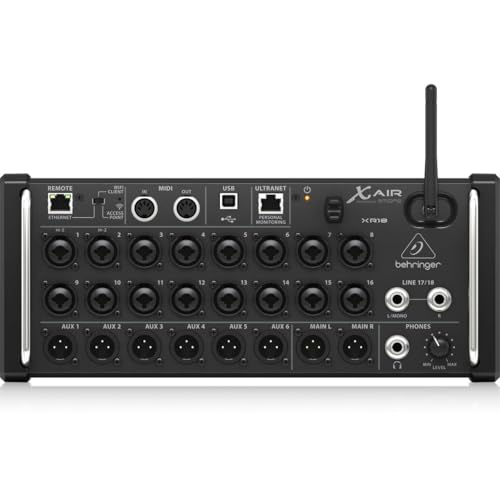
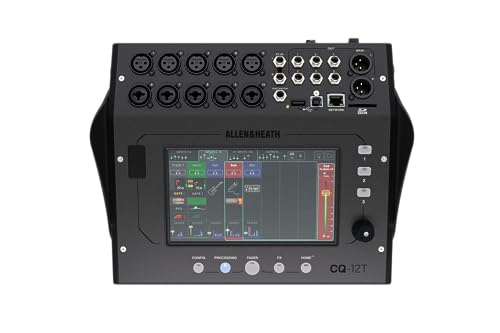

As an Amazon Associate we earn from qualifying purchases at no extra cost to you. Ratings are shown as listed on Amazon.
Quick comparison of the best digital mixers
| Mixer | Inputs and expansion | Built-in effects | App or remote control | Approx. weight | Best fit |
|---|---|---|---|---|---|
| Allen & Heath CQ-20B | 16 mic/line inputs, 4 stereo inputs; 24×22 USB audio | 28 effects algorithms; automatic gain assistance | CQ MixPad app over Wi-Fi | Approx. 2.4 kg | Small bands, houses of worship, mobile rigs |
| Yamaha DM3 | 16 mic/line inputs; Dante-enabled versions add network audio | Premium Rack effects, SPX-style processing, channel processing | DM3 StageMix and Editor software | Approx. 6.5 kg | Professional small venues and installed systems |
| Behringer WING | 48 channels; 24 preamps on the console; AES50 expansion | Over 70 effects including reverbs, delays, modulation, and dynamics | WING CoPilot, WING Edit, and mobile control options | Approx. 11.4 kg | Large live shows and complex routing |
| PreSonus StudioLive 32SC | 32-channel mixer; 16 analog mic inputs; AVB networking | Fat Channel processing plus reverbs, delays, and other effects | UC Surface, QMix-UC, and Universal Control | Approx. 6.8 kg | Live sound, rehearsal rooms, and multitrack recording |
| Soundcraft Ui24R | 20 mic inputs; 24-channel digital mixer; USB recording | Lexicon reverbs and delays; dbx dynamics and Digitech processing | Browser-based control from tablets and computers | Approx. 5.1 kg | Rack-mounted bands and venues without a built-in screen |
Channel figures are not directly interchangeable. A manufacturer may count stereo channels, USB returns, or network inputs alongside physical microphone sockets. Before buying, count your actual sources: vocal microphones, drum microphones, guitar and bass feeds, keyboards, playback, talkback, and spare channels for future use.
Best choices by venue and workflow
Best for small venues and mobile bands: Allen & Heath CQ-20B
The CQ-20B is a strong choice when portability and simple operation matter more than a large control surface. Its 16 microphone/line inputs cover a typical vocal group, acoustic instruments, stereo keyboard, and playback system. The 24×22 USB interface also makes it useful for recording rehearsals or sending a multichannel session to a computer.
Its main advantage is speed. The CQ MixPad application provides remote mixing, while automatic gain assistance can help a less experienced operator set usable input levels. The trade-off is that the mixer is designed around app control rather than a traditional bank of physical faders. Keep a charged tablet available, and use a dedicated, reliable wireless network for a busy venue rather than depending on an unpredictable public connection.
Best compact professional mixer: Yamaha DM3
The Yamaha DM3 suits engineers who want a small console with a familiar professional workflow. It has a color touchscreen, physical faders, scene management, detailed channel processing, and a compact footprint. The Dante version is especially attractive for installed systems or studios that already use Dante network audio, although the extra networking capability is unnecessary for a simple bar gig.
The DM3 is less generous than the WING or StudioLive 32SC in raw channel count, but it is a polished fit for corporate events, theaters, houses of worship, and small touring systems. Yamaha’s processing and effects are useful for vocals, speech, monitor mixes, and acoustic instruments without requiring a rack of external processors.
Best for large channel counts: Behringer WING
The WING is the better match for a full drum kit, several monitor mixes, multiple stereo instruments, playback, guest microphones, and a recording feed. It provides 48 channels and can expand through AES50-compatible stage boxes. The channel-strip design is highly flexible, with user-selectable sources, extensive routing, and a large selection of effects.
This flexibility is also its learning curve. New users can lose time tracing signal paths through layers of buses, matrices, sends, and returns. It is worth creating a show file before the event, labeling every source, and saving separate scenes for soundcheck, performance, and emergencies. The WING makes sense when you will use its routing power regularly; it is unnecessary complexity for a two-vocal acoustic act.
Best for recording and live production together: PreSonus StudioLive 32SC
The StudioLive 32SC is designed for users who want live mixing and computer-based production in the same ecosystem. Its 32-channel architecture, AVB networking, USB connectivity, scene recall, and integrated Fat Channel processing can support rehearsals, events, and multitrack recording without changing the entire setup.
Its 16 analog microphone inputs may be enough for many bands, but a large drum setup may require stage boxes or network expansion. This is an important distinctio



Write Your Review
No reviews yet. Be the first to share your experience!