
Our Top Picks
Pros & cons
- Built-in Roku interface gives direct access to major streaming apps
- Auto focus and auto keystone correction set up the image automatically
- Dual 5W speakers with Dolby Audio provide sound without extra gear
- Requires a Roku account and internet connection to activate
- Streaming features depend on a stable WiFi connection
 【Built-in APPS & Electric Focusing & 210° Rotation】Mini1920 x 10804096 x 2160 pixelsLEDCheck on Amazon
Pros & cons
- Built-in streaming apps work without needing an extra streaming stick
- Wireless phone mirroring skips the cable for compatible phones
- Electric focus and 210-degree rotation simplify image setup
- 300 ANSI lumen brightness is modest for well-lit rooms
- Wireless phone mirroring convenience depends on phone compatibility
 TMY 1080P Full HD Portable Mini ProjectorBuilt-In Speaker3.5mm Jack, Bluetooth, HDMI, USB1280 x 720Check on Amazon
Pros & cons
- Includes an 80-inch foldable projector screen at no extra cost
- Two-way Bluetooth lets you send or receive audio from speakers
- Built-in HDMI and USB ports support plug-and-play with many devices
- Native resolution is 720p, with 1080p achieved through support scaling
- Phone or tablet use requires a separate HDMI adapter cable

The best 1080p projector on a budget is one with a true native 1920 × 1080 panel, so start with the native resolution—not the “supports 1080p” line in a listing. A native 1080p projector uses a 1920 × 1080 display panel, while a lower-resolution model may only accept a 1080p video signal and then reduce it to the panel’s actual resolution. That distinction affects subtitles, menus, game text and fine detail, especially as the image gets larger.
For most buyers, the Aurzen Roku TV D1R is the strongest all-around choice in this group because it combines listed 1080p Full HD resolution with built-in Roku TV, auto focus, auto keystone, Dolby Audio and dual 5W speakers. The HAPPRUN Native 1080P projector is the alternative for shoppers who prefer officially licensed Google TV, while the iWIMIUS model is aimed at buyers who value a portable stand and built-in Dolby Audio. The Aurzen D1R air deserves attention when USB-C portability is the priority, and the YGSKK offers a broad feature list with Wi-Fi 6, Bluetooth 5.3, electric focus and a rotating base.
There are important limits to budget projection. A projector’s image depends on room darkness, wall or screen quality, placement and the source device, not just the resolution printed on the box. Streaming support also varies: some models have a recognized smart-TV platform, while others rely on built-in apps, casting or an HDMI streaming device. This guide therefore separates confirmed product information from details that should be checked on the current listing before ordering.
Updated October 2026 — Quick answer: the best 1080p projector on a budget for most buyers is the Aurzen Roku TV D1R, thanks to built-in Roku TV, auto focus and auto keystone. The YGSKK is the pick for features per dollar, the NexiGo PJ40 Pro for a brighter Google TV image, and the BenQ TH575 for gaming. Confirm a stated native 1920 × 1080 panel before you buy, because many cheap models only accept a 1080p signal.
Quick Answer: Our Top Budget 1080p Projector Picks
- Best overall: Aurzen Roku TV D1R — The most complete setup, with listed 1080p Full HD, Roku TV, auto focus, auto keystone, Dolby Audio and dual 5W speakers.
- Best for Google TV: HAPPRUN Native 1080P Bluetooth Projector — A fit for shoppers specifically seeking an officially licensed Google TV projector; verify the current brightness, ports and audio specifications.
- Best for flexible placement: iWIMIUS Smart Mini Projector — Its listing identifies native 1080p, Wi-Fi 6, Bluetooth 5.2 and a 360-degree adjustable stand.
- Best USB-C portability: Aurzen Roku TV D1R air — The portable Aurzen option to investigate when power-bank or USB-C operation matters; confirm the required power-delivery specification before purchase.
- Best feature-rich budget alternative: YGSKK Wi-Fi 6 Projector — Lists native 1080p, up to 300 ANSI lumens, built-in apps, electric focus, a 210-degree rotating base and compatibility with multiple HDMI and USB sources.
How We Researched This Guide
This guide is based on the product information available for each model, including manufacturer or marketplace feature descriptions, stated resolution, connectivity, smart-platform claims and the patterns those specifications suggest for different types of buyers. The ranking emphasizes the features that most affect everyday use: native Full HD resolution, ease of setup, streaming convenience, placement flexibility, audio options and portability.
We did not treat every marketing phrase as an independently verified performance result. In particular, brightness claims, app compatibility and wireless features can vary by operating mode, source, region or software version. Where the listing does not identify a specification, the guide explains what to confirm rather than filling in the gap. That is especially important for the HAPPRUN, iWIMIUS and TMY listings, where the listing information is limited or sources disagree.
The term “native” also deserves careful attention. The HAPPRUN product title identifies it as native 1080P, and the iWIMIUS and YGSKK titles or feature text likewise identify native 1080p. The listing for the Aurzen Roku TV D1R explicitly states 1080P Full HD, and Aurzen’s own pages give a native 1920 × 1080 panel for both the D1R and the D1R air. The TMY is the exception to watch: its own site lists its V08 model with an 80-inch screen as native 720p, so confirm that the listing you open clearly states native 1920 × 1080 rather than only 1080p support.
How to Choose a Budget 1080p Projector
1. Confirm Native 1080p Resolution
Native resolution is the first filter because it determines how much detail the projector can actually reproduce. For this guide, the target is a 1920 × 1080 panel. That is different from a projector that accepts a 1920 × 1080 signal but displays it on a lower-resolution panel.
Look for wording such as native 1080p, native 1920 × 1080 or an explicit Full HD panel specification. Treat phrases such as “supports 1080p,” “4K compatible” and “plays 4K video” as source compatibility claims unless the listing also states the projector’s native resolution. The YGSKK, for example, identifies native 1080P and separately says it is compatible with 4K input. That means the 4K statement should not be mistaken for a native 4K display.
Avoid choosing solely from a large projected-image claim. A model may advertise a very large image while offering limited brightness or a lower-resolution panel. At larger sizes, a native 1080p image can preserve more readable text and cleaner fine detail than a lower-resolution alternative, but the room and brightness still determine whether that detail is enjoyable to watch.
2. Match Brightness to the Room
Brightness determines how easily the image remains visible when the room is not fully dark. These listings use different brightness information, and several do not provide a figure for this guide. That makes direct comparisons unreliable unless the current product pages use the same measurement standard.
The YGSKK listing states up to 300 ANSI lumens. The Aurzen Roku TV D1R feature information here does not provide a lumen figure, so buyers should check the current listing rather than assume that similar-looking models perform alike. For the HAPPRUN, iWIMIUS and D1R air, confirm the claimed brightness and whether it is expressed in ANSI lumens or another terminology.
More brightness is not a substitute for controlling ambient light. Curtains, a darker viewing room and a suitable screen can make a larger practical difference than a headline specification. If you plan to watch outdoors, remember that evening darkness, nearby lights and the screen surface will affect the result. A projector intended for a bedroom or backyard movie night should not be evaluated as though it were a television in a bright room.
3. Choose the Right Streaming Setup
Smart features can make a projector feel either simple or frustrating. The Aurzen Roku TV D1R has Roku TV built in and lists apps including Netflix, Prime Video, Hulu, YouTube and the Roku Channel. It also states that a Roku account and internet connection are required for activation. That is convenient for households that want a familiar streaming interface without adding a stick or extra remote, but it still depends on account setup and internet access.
The HAPPRUN product title identifies officially licensed Google TV. Buyers who already use Google services may prefer that platform, but the listing does not provide the complete app, audio, port or brightness details. Check whether the apps you use are officially supported in your region and whether voice functions require a separate account or network connection.
The YGSKK listing describes built-in apps such as Prime Video, YouTube and Hulu, along with an app store. It does not list Netflix among the built-in apps in the listing. That does not automatically rule it out, because an HDMI streaming device may provide another route, but it is a reason to confirm app support before purchase.
For the iWIMIUS and D1R air, the listing does not identify the complete smart-app lineup. Check whether streaming is handled natively, through casting, through a streaming stick or through an external HDMI source. “Smart projector” is not a universal standard; the actual interface and app licensing matter more than the label.
4. Consider Focus, Keystone and Placement
Automatic adjustments are valuable when a projector moves between rooms or outdoor locations. The Aurzen Roku TV D1R lists auto focus and auto keystone, designed to simplify the process of getting a sharp, aligned image after placement. The YGSKK lists electric focusing controlled from the remote and a 210-degree rotating base, which can help when projecting toward different surfaces or even the ceiling.
The iWIMIUS listing identifies a 360-degree adjustable stand. That feature may suit bedroom use, temporary setups and users who do not want to place the projector perfectly level on a table. A stand can improve positioning, but it does not eliminate the need for a clear projection path or a suitable surface.
Keystone correction is useful, but it should not be treated as a replacement for proper placement. Whenever possible, position the lens squarely toward the screen or wall. Extreme digital correction can alter the usable image area and may complicate alignment. Before buying, check whether focus is manual, electric or automatic; whether keystone correction is automatic or manual; and whether the stand or mount is included.
5. Be Realistic About Image Size and the Screen
A larger image is not automatically a better image. The Aurzen D1R lists a 60- to 150-inch image range, while the YGSKK lists a 50- to 200-inch range. The TMY listing, a related budget projector, describes a 32- to 220-inch display range and includes an 80-inch foldable screen. These advertised ranges indicate possible setup flexibility, not a guarantee that every size will look equally bright or detailed.
For everyday viewing, select a size that suits the room and the available light. A smaller image can look more convincing when brightness is limited, while an oversized image may appear dim or washed out. A smooth, neutral-colored screen or wall is preferable to a textured or strongly colored surface. If you plan to move the projector outdoors, consider how the screen will be supported and whether wind, wrinkles or nearby lighting will affect the image.
Do not assume that a screen is included. The TMY listing specifically says an 80-inch foldable screen is included, but the ranked picks in this guide do not all provide that information. Check the box contents before assuming you can start watching without buying or supplying a screen.
6. Evaluate Built-In and Wireless Audio
Projector speakers are convenient, but their usefulness depends on the room and the kind of content you watch. The Aurzen Roku TV D1R lists Dolby Audio and dual 5W speakers. The YGSKK describes built-in stereo speakers and Bluetooth 5.3 for pairing with Bluetooth speakers, headphones or other audio devices. The iWIMIUS title identifies Dolby Audio, but the listing does not specify its speaker configuration.
Bluetooth can reduce cable clutter, but check which Bluetooth profiles and audio functions are supported. A projector may pair with a speaker or headphones while handling video playback differently from a television. If you plan to use external sound regularly, look for an audio-out connection or a clearly described wireless-audio feature.
Audio is particularly important outdoors, where built-in speakers may struggle against surrounding noise. A model with convenient Bluetooth support may be a better fit than one with a longer list of video features but limited audio connections. Also remember that “Dolby Audio” describes audio support or processing; it does not by itself establish a specific speaker loudness or bass performance.
7. Check Connections and Source Compatibility
Consider how you will actually watch content. The YGSKK lists HDMI, USB and an audio interface, and says it is compatible with TV sticks, TV boxes, DVD players, laptops, USB flash drives, Switch, PS5 and PCs. The Aurzen D1R feature information lists HDMI, USB and audio out. Those connections provide alternatives if a built-in app is unavailable or if you want to connect a game console or laptop.
Phone mirroring requires special attention. The YGSKK uses a J-Share setting and says the phone and projector need to be on the same network; it also says Android phones need a program while iPhones can use screen mirroring without downloading an application. The TMY information warns that phone connections may require an HDMI adapter, and that the adapter is not included. These examples show why “phone compatible” is not the same as wireless mirroring for every device.
Before buying, list your intended sources: streaming stick, laptop, game console, USB drive, phone or disc player. Then confirm the required port, cable and adapter. A projector can have excellent native resolution and still be inconvenient if your preferred source needs an accessory that is not included.
8. Think About Portability and Power
Portable projectors vary in how easily they can move and where they can be powered. The Aurzen Roku TV D1R is described as a portable outdoor projector, but its listed power information specifies 100–240V AC at 50/60Hz. The D1R air is the model to investigate when USB-C power is central to your setup; confirm the required USB-C power-delivery source and whether your power bank can provide it.
A compact body alone does not guarantee travel convenience. Check the power adapter, stand, remote, cables and any required streaming accessories. A projector that needs a wall outlet may be ideal for a bedroom shelf but less suitable for camping or a backyard without nearby power. Conversely, a USB-C model may be easier to place but still require an adequate power source for stable operation.
Also check the network requirements for outdoor use. Built-in apps generally need internet access, while an HDMI-connected device may have its own connection requirements. Plan the complete setup rather than evaluating portability from the projector’s size alone.
LCD, DLP, or 3LCD? Projector Technology on a Budget
Listings rarely explain how a projector creates its image, but the underlying technology goes a long way toward explaining why two “1080p” projectors can look so different. Most budget models fall into one of three groups:
| Technology | Where you find it | Strengths | Watch out for |
|---|---|---|---|
| Single-panel LCD with LED light | Most compact budget and mini projectors | Low cost, quiet, long-life LED, compact | Modest real brightness, softer corners, lower contrast |
| DLP (single chip) | Brand-name home-theater and gaming models | Sharp detail, high brightness, often low input lag | Some viewers see “rainbow” color flashes; lamp models are louder |
| 3LCD | Epson home and portable models | Equal color and white brightness, no rainbow effect | Larger chassis, usually costs more than mini LCD models |
Single-panel LCD minis, which make up most of this guide, are the reason native 1080p has become so affordable. Their weak spot is light output. A single LCD panel blocks a lot of light, so they need a darker room to look their best, and edge focus can be slightly softer than the center. DLP and 3LCD models cost more but deliver far more usable brightness. That makes them the better choice for large screens, living rooms with some ambient light, and gaming.
The light source matters too. LED engines in mini projectors run cool and are typically rated for tens of thousands of hours, so most owners never replace them. Lamp-based projectors such as the BenQ TH575 are brighter for the money but need a replacement lamp after several thousand hours, depending on the brightness mode. Factor that running cost in if you plan to watch every day.
Budget Projector Mistakes to Avoid
- Confusing supported resolution with native resolution: Confirm the panel’s actual resolution, not just the highest input signal it accepts.
- Trusting a large image claim without considering brightness: A stated maximum size does not mean the image will look equally strong at that size.
- Assuming every streaming app is licensed: Check the exact built-in app list, especially for services you use every day.
- Ignoring account and internet requirements: Roku TV activation and smart-app use require the appropriate setup and connectivity.
- Forgetting phone adapters: Wireless mirroring varies by phone, operating system and projector; cables or adapters may be required.
- Using extreme keystone correction: Automatic alignment is helpful, but placing the projector squarely toward the screen generally gives a cleaner setup.
- Buying for audio alone: Built-in speakers are convenient, but outdoor viewing or larger rooms may call for Bluetooth or wired external audio.
- Assuming missing specifications: When a listing does not state brightness, native resolution, ports or included accessories, verify those details before ordering.
Detailed product breakdowns
1. Aurzen Roku TV D1R Smart Portable Outdoor Projector
The Aurzen Roku TV D1R is the most fully specified option in this group for buyers who want a projector that behaves more like a television than a traditional HDMI-only projector. Its built-in Roku TV platform provides access to major streaming services without requiring a separate streaming stick, while automatic focus and keystone correction are intended to simplify setup. The listing also identifies a Full HD 1080p image, Dolby Audio, and dual built-in speakers.
Key specifications from the listing:
- 1080p Full HD resolution
- Built-in Roku TV interface and apps
- Internet connection and a Roku account required for activation; creating an account is free
- Access to services and content including Netflix, Prime Video, Hulu, YouTube, the Roku Channel and more
- More than 500 listed free TV channels, including live news, weather and sports coverage
- Automatic focus and automatic keystone correction
- Listed screen size range of 60 to 150 inches
- Dolby Audio and dual 5W speakers
- Wi-Fi and Bluetooth connectivity
- 100-240V AC, 50/60Hz power supply
- Check recent owner reviews on the product page for real-world feedback.
Strengths: Roku is the clearest advantage. Buyers who already understand Roku’s home screen can move between services without adding a dongle, extra streaming remote or separate media player. The Roku mobile app can also be used for control, typing and voice commands. Automatic focus and keystone correction should be useful for casual room-to-room or indoor-to-outdoor setup, especially when the projector is not placed perfectly straight. The dual 5W speakers and Dolby Audio support give it a self-contained entertainment setup for viewers who do not want to begin with an external soundbar.
Trade-offs: Activation depends on both internet access and a Roku account, so it is not the best match for someone seeking a completely offline projector. The listing does not state input lag, the connection inventory or whether every app is available in every region. Aurzen’s own page rates the D1R at about 280 ANSI lumens on a native 1920 × 1080 panel, which points to dark-room use. The listed 60- to 150-inch range also does not explain which image size is most suitable under different room-lighting conditions. Buyers should verify those details before choosing it for daytime viewing, console gaming or a particular mounting location.
Best for: Living rooms, bedrooms and backyard movie sessions where built-in streaming and quick setup matter more than advanced installation controls.
Skip it if: You do not want to create a Roku account, need a projector for bright-room use, or require published gaming-latency and brightness specifications.
View the Aurzen Roku TV D1R on Amazon
2. Official Licensed Google TV HAPPRUN Native 1080P Bluetooth Projector
The HAPPRUN is presented as an officially licensed Google TV projector with native 1080p resolution. That combination should appeal to buyers who prefer Google’s streaming interface and app ecosystem rather than Roku. However, the listing contains no feature details beyond the product name, so this pick requires more verification than the better-documented models in the list. HAPPRUN also sells several similarly named Google TV projectors whose brightness ratings differ widely from model to model, so confirm that the listing you open matches the model you expect.
Key specifications from the available data:
- Native 1080p is stated in the product name
- Officially licensed Google TV is stated in the product name
- Bluetooth connectivity is stated in the product name
Strengths: The stated native 1080p designation is important for buyers who want Full HD detail rather than a lower-resolution panel that merely accepts a 1080p signal. Official Google TV may provide a familiar route to streaming, app discovery and account-based personalization. Bluetooth could also make it possible to pair compatible wireless audio equipment, although the listing does not specify the supported Bluetooth version, profiles or whether Bluetooth works with speakers, headphones or both.
Trade-offs: There are not enough listed specifications to make a confident judgment about brightness, image size, focus controls, keystone correction, speaker output, ports, wireless networking or power requirements. The listing should be checked for the exact native panel resolution, brightness measurement standard, supported streaming apps and any account or internet requirements. Buyers should also distinguish between “officially licensed Google TV” and generic Android software, since those platforms can offer different app access and update arrangements.
Best for: Buyers who specifically want Google TV and native 1080p, and who are willing to confirm the remaining specifications before purchase.
Skip it if: You need a projector whose brightness, audio, connections and setup features are documented clearly in advance.
View the HAPPRUN Native 1080P Projector on Amazon
3. iWIMIUS Smart-Mini-Projector with Wi-Fi 6, Bluetooth 5.2 and 360-Degree Stand
The iWIMIUS model is positioned as a portable native 1080p projector with a rotating stand and built-in wireless features. Its product title also mentions 4K support, Dolby Audio and Netflix compatibility. The adjustable stand is the defining design feature: it is intended to make placement more flexible than a conventional fixed-base mini projector.
Key specifications from the available data:
- Native 1080p resolution
- 4K support is stated in the product title
- Wi-Fi 6
- Bluetooth 5.2
- Dolby Audio
- 360-degree adjustable stand
- Netflix compatibility is stated in the product title
Strengths: A 360-degree stand can help when projecting toward a wall, screen or ceiling, particularly in a bedroom or flexible lounge setup. Wi-Fi 6 and Bluetooth 5.2 provide modern wireless specifications, although the actual benefit will depend on the home network and connected devices. Native 1080p should preserve Full HD detail, while the stated 4K support suggests the projector may accept higher-resolution content even though the listing does not say that it displays 4K natively. Dolby Audio and stated Netflix compatibility add useful features for movie-focused buyers.
Trade-offs: The data does not provide brightness, speaker wattage, image-size range, throw distance, focus method, keystone controls, ports or power details. The phrase “4K support” should not be treated as a native 4K resolution claim; buyers should verify whether it means input compatibility only. The title also does not explain whether Netflix is officially licensed, built in through a specific platform or accessed by another method. Buyers should confirm app support, remote functionality and the physical stability of the rotating stand.
Best for: Bedroom viewing, ceiling projection and portable setups where flexible image direction is more important than a comprehensive published specification sheet.
Skip it if: You need measured brightness information, a clearly documented streaming platform or a projector designed specifically for competitive gaming.
View the iWIMIUS Smart-Mini-Projector on Amazon
4. Aurzen Roku TV D1R air USB-C Powered Smart Portable Projector
The Aurzen D1R air is the portable member of the Aurzen Roku TV group in this ranking. The listing title says little beyond Roku TV, white finish and USB-C power, but Aurzen’s own product page for the D1R air fills in the basics: a native 1920 × 1080 panel rated at 300 ANSI lumens, Roku TV built in, and power from a USB-C PD source rather than an internal battery. Treat these as manufacturer figures and compare them with the live listing before ordering.
Key specifications (from the maker’s product page):
- Native 1920 × 1080 resolution
- 300 ANSI lumens (manufacturer figure)
- Built-in Roku TV; a free Roku account and internet connection are needed for activation
- Real-time auto focus and auto keystone correction
- Two 5W base speakers with Dolby Audio support
- Image size of 40 to 150 inches, with up to 80 inches recommended
- Needs a USB-C PD 3.0 source rated 65W or higher at 20V; there is no built-in battery
Strengths: A native Full HD panel with Roku TV, auto focus and auto keystone in a compact body makes this the easiest Aurzen to move between rooms, a campsite or a backyard. Because it runs from USB-C PD, a laptop-class charger or a high-output power bank can power it away from a wall outlet.
Trade-offs: The 65W requirement is the catch: a phone charger or a small power bank will not run it, and the cable and source both need to support 20V PD. At 300 ANSI lumens it is a dark-room projector, and the maker recommends staying near 80 inches for the best result. It still depends on a Roku account and internet connection for activation.
Best for: Travelers, campers and households that want a compact Roku projector and already own a 65W-class USB-C charger or a high-output PD power bank.
Skip it if: You plan to power it from a phone charger or a small battery pack, or you need enough brightness for a room with ambient light.
View the Aurzen Roku TV D1R air on Amazon
5. YGSKK Wi-Fi 6 and Bluetooth 5.3 Mini Projector
The YGSKK is one of the most comprehensively described budget models here. It combines a native 1080p panel with built-in apps, wireless phone connection, electronic focus and a 210-degree rotating base. The listing also states compatibility with 4K content, but that should be understood as a signal or playback compatibility claim rather than native 4K display resolution.
Key specifications:
- Native 1080p resolution
- Up to 300 ANSI lumens, according to the listing
- Wi-Fi 6, compatible with Wi-Fi 6, 5GHz and 2.4GHz networks
- Bluetooth 5.3
- Built-in apps including Prime Video, YouTube and Hulu; app store included
- 4K-compatible input through HDMI or USB as described in the listing
- Wireless smartphone connection through the J-Share setting
- Listed image size range of 50 to 200 inches
- HDMI, USB and audio interfaces
- Electric focus controlled from the remote
- 210-degree rotating base
- Built-in stereo speakers
- Check recent owner reviews on the product page for real-world feedback.
Strengths: The feature mix is strong for a basic portable projector. Native 1080p is the key picture specification, while electronic focus allows adjustments from the remote instead of requiring a manual lens ring. The rotating base can direct the image toward a wall or ceiling. Wi-Fi 6 and Bluetooth 5.3 are current wireless standards, and the HDMI, USB and audio connections support a broad range of devices, including laptops, game consoles, TV sticks and USB drives. iPhone screen mirroring is described as not requiring an additional app, while Android users may need a program.
Trade-offs: The listing does not identify Netflix among the built-in apps, so Netflix viewers should verify the supported method before buying. The stated 300 ANSI lumens is still a specification to interpret alongside room lighting and image size; larger images generally demand more controlled darkness for satisfying contrast. The listing’s 50- to 200-inch range is broad, but it does not provide throw distance or explain the most practical size. Buyers should also confirm whether 4K playback is limited to accepting an external signal and whether wireless mirroring supports every phone model.
Best for: Budget buyers who want native 1080p, remote-controlled focus, flexible placement and direct connections for streaming devices or consoles.
Skip it if: Netflix must run natively from the projector, or if you need strong daytime performance and independently verified brightness.
View the YGSKK Mini Projector on Amazon
6. TMY 1080P Full HD Portable Mini Projector with 80-Inch Screen
The TMY stands out because it includes an 80-inch foldable projection screen. Its listing describes 1080P Full HD video support, broad HDMI and USB compatibility, Bluetooth audio features and a large stated projection range. However, the listing wording says “1080P supported” rather than clearly stating that the imaging panel is native 1080p, and TMY’s own site lists its V08 model with an 80-inch screen as native 720p (1280 × 720) that accepts a 1080p signal. Because the sources disagree, check the specification table on the live listing before treating this as a Full HD pick; it is best seen as a screen-bundle pick, not a sharpness pick.
Key specifications from the listing:
- 1080P Full HD video support is stated
- 80-inch foldable screen included
- Bluetooth connection to external speakers or soundbars
- Bluetooth speaker mode for streaming audio from a phone or tablet
- HDMI and USB ports
- Compatible with streaming sticks, laptops, disc players, game consoles and USB drives
- Listed image range of 32 to 220 inches
- Projection distance listed as 1.5 to 6 meters
- 16:9 aspect ratio
- 10,000:1 contrast ratio and 10,000-hour lamp life stated in the listing
- Check recent owner reviews on the product page for real-world feedback.
Strengths: The included screen is practical for buyers who do not already have a suitable wall or screen. Bluetooth is unusually versatile here because the projector can send sound to external equipment or operate as a Bluetooth speaker when not displaying video. HDMI and USB make it compatible with a wide range of source devices, and the foldable screen is useful for travel, backyard viewing and temporary movie nights.
Trade-offs: Buyers should verify the native panel resolution rather than relying on the 1080P support wording. The claimed 32- to 220-inch range also does not identify the preferred image size or brightness conditions. Phone and tablet connections require additional equipment: the listing says iOS devices need an official Lightning-to-HDMI adapter, while Android compatibility depends on MHL support or a Chromecast-type device. An HDMI cable and phone adapters are not necessarily included. The listing does not specify ANSI lumens, focus controls or keystone correction.
Best for: Families and first-time projector buyers who value an included 80-inch screen and plan to use HDMI sources, streaming sticks or game consoles.
Skip it if: Native 1080p is non-negotiable and the listing cannot confirm it, or if you want direct wireless phone streaming without adapters.
View the TMY 1080P Full HD Projector on Amazon
Step-Up Picks: Brighter Brand-Name 1080p Projectors
The six projectors above are compact, affordable, and easy to set up, but most are designed for dark rooms and modest image sizes. If your budget can stretch a little further, these brand-name native 1080p models add meaningful brightness, better-documented specifications, or low input lag for gaming. They cost more, so treat them as the next tier up rather than direct rivals to the cheapest minis.
7. NexiGo PJ40 Pro — Best Budget Google TV Step-Up
As an Amazon Associate we earn from qualifying purchases at no extra cost to you.

The NexiGo PJ40 Pro is a good middle ground between the budget minis in this guide and true home-theater projectors. Its listing states native 1080p resolution, built-in Google TV, 4K input support, AI image enhancement, and an 800 ANSI lumen rating. That brightness figure is measured to the ANSI standard, which makes it easier to compare than the vague “lumens” claims on many cheap models. It is one of the more budget-friendly options here.
Google TV gives you a mainstream streaming interface without an extra stick, and the higher rated output helps in a dim living room rather than only a blackout bedroom. NexiGo sells several PJ40 versions with different smart platforms and features, so make sure the listing you choose says “PJ40 Pro” if Google TV matters to you.
Pros
- Native 1080p with built-in Google TV
- 800 ANSI lumen rating is clearly stated
- Accepts 4K sources for downscaled playback
Cons
- Still needs a dim room for the best picture
- Several similar PJ40 versions are easy to confuse
8. Epson EpiqVision Flex CO-FH02 — Best for Brighter Rooms on a Budget
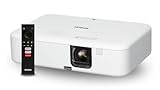
Epson’s EpiqVision Flex CO-FH02 is a Full HD 1080p smart streaming projector built on Epson’s 3LCD technology. It is rated around 3,000 lumens, several times the output of the typical mini projector, and it has a built-in Android TV interface and speaker. That brightness is the main reason to choose it: LED mini projectors struggle with any ambient light, while the CO-FH02 can hold a watchable image with some light in the room. It sits in the mid-range for this guide.
3LCD projectors produce equal color and white brightness and do not show the “rainbow” color flashes some viewers notice on single-chip DLP models. The trade-offs are size and setup. It is a conventional box projector rather than a pocket-sized mini, so check the listing for its focus, keystone and stand details instead of assuming the self-setup features of the minis above.
Pros
- Much brighter than typical budget minis
- 3LCD design avoids the rainbow effect
- Built-in Android TV and speaker
Cons
- Larger and less portable than mini projectors
- Setup features differ from the auto-focus minis; check the listing
9. BenQ TH575 — Best for Gaming and Big, Bright Images
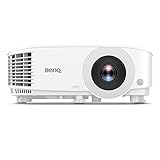
The BenQ TH575 is the pick for gamers and for anyone who wants a large, bright image in a room that is not fully dark. Its listing states native 1080p, 3,800 lumens, and a low-latency mode rated around 16ms. That is responsive enough for fast console and PC games, where most budget smart projectors feel sluggish. It is one of the pricier options in this guide.
It is a DLP projector with a traditional lamp, so expect a larger chassis, more fan noise than an LED mini, and an eventual lamp replacement. This version has no built-in streaming platform, so plan on an HDMI streaming stick or a console as your source. Check the listing to see exactly what is included in the box. If you are sensitive to DLP rainbow artifacts, try to see one in person first.
Pros
- High brightness for larger screens and some ambient light
- Low input lag suits gaming
- Established home-entertainment brand
Cons
- No built-in streaming on this version
- Lamp-based, so louder and needs eventual replacement
Also Consider: More Native 1080p Projectors With Google TV or Higher Brightness Claims
These three listings state native 1080P in their titles and add either a Google TV platform or a higher brightness claim. Small-brand brightness figures are manufacturer claims, not independent measurements, so compare them only with other ANSI-rated numbers and expect real-world output to be lower than the headline.
WEMAX Google TV Smart Projector — Best for Licensed Netflix on Google TV

The WEMAX is aimed at buyers who want Netflix to work without a streaming stick. Its title names Google TV, licensed Netflix and a native 1080P FHD panel, which together address the two most common complaints about cheap smart projectors: unofficial apps and fake Full HD. Brightness, ports and speaker details are not in the title, so check them on the live listing.
- Smart platform: Google TV
- Netflix: licensed, as stated in the title
- Resolution: native 1080P FHD, as stated in the title
Pros: a licensed streaming platform; a stated native panel; no separate stick needed.
Cons: brightness and port details are not in the title; confirm app support in your region.
Skip it if… you need a published lumen rating or a built-in screen.
XENPONAD Smart Projector with Google TV — Best Low-Cost Google TV Option

The XENPONAD pairs Google TV with a native 1080P panel and a 1000 ANSI lumen claim at the low end of this guide’s price range. The “4K” in its name refers to input support, not the panel, which the title lists separately as native 1080P. It makes sense for a dark bedroom or a casual movie night, and it is a cheaper way to test whether a projector suits you before spending on a brand-name step-up.
- Smart platform: Google TV
- Resolution: native 1080P
- Brightness: 1000 ANSI lumens, as claimed in the title
- Input: 4K signal support in the product name
Pros: Google TV at a low price tier; a native 1080P panel; a stated ANSI figure.
Cons: a 1000 ANSI claim at this price deserves skepticism; limited detail on ports and speakers; a less established brand.
Skip it if… you want proven brightness for a lit room; look at the Epson EpiqVision Flex CO-FH02 or BenQ TH575 instead.
LYNCAST X7 Smart Projector — Best for a Brighter Image on a Tight Budget

The LYNCAST X7 leads with a 1500 ANSI lumen claim, native 1080P and 4K/8K input support. It also lists 125% sRGB, which is a color-gamut claim rather than a guarantee of accurate color. The title does not name its smart platform, so confirm which apps are included before you order.
- Resolution: native 1080P
- Brightness: 1500 ANSI lumens, as claimed in the title
- Input: 4K/8K signal support
- Color: 125% sRGB claim
Pros: a high stated brightness; a native 1080P panel; wide input support.
Cons: the smart platform is not named in the title; brightness and color figures are manufacturer claims.
Skip it if… you need an officially licensed streaming platform out of the box.
Brighter and Google TV 1080p Projectors Compared
Best 1080p projector on a budget: brighter and Google TV picks, stated specifications
| Projector | Resolution | Stated brightness | Smart platform | Best for |
|---|---|---|---|---|
| NexiGo PJ40 Pro | Native 1080p | 800 ANSI lumens | Google TV | Dim living rooms |
| Epson EpiqVision Flex CO-FH02 | Full HD 1080p (3LCD) | About 3,000 lumens | Android TV | Rooms with some light |
| BenQ TH575 | Native 1080p (DLP) | 3,800 lumens | None built in | Gaming, large images |
| WEMAX Google TV Smart Projector | Native 1080P FHD | Check listing | Google TV, licensed Netflix | Netflix without a stick |
| XENPONAD Smart Projector | Native 1080P | 1000 ANSI (claimed) | Google TV | Low-cost Google TV |
| LYNCAST X7 | Native 1080P | 1500 ANSI (claimed) | Not named in title | Brighter image, tight budget |
1080p Projector Comparison
All six options in the main list are presented as 1080p-class projectors, but the available product information is not equally detailed. Native resolution is explicitly stated in the iWIMIUS and YGSKK listings, while several other listings use “Native 1080P” in the product name or title. Before buying, confirm the resolution, brightness method, operating system, and included accessories on the live listing, especially for products with limited specifications shown here.
| Projector | Best for | Resolution information | Smart features | Focus and placement | Audio and connectivity | What to verify |
|---|---|---|---|---|---|---|
| Aurzen Roku TV D1R | Simple indoor or outdoor streaming | 1080P Full HD; listed for a 60- to 150-inch image | Roku TV built in; Roku account and internet connection required for activation | Auto focus, auto keystone, and zoom | Dolby Audio and dual 5W speakers; Wi-Fi and Bluetooth | Confirm current app availability, placement range, and included accessories |
| HAPPRUN Native 1080P Bluetooth Projector | Buyers who want official Google TV | Native 1080P stated in the title | Officially licensed Google TV stated in the title | Check listing | Bluetooth stated in the title | Brightness, ports, speakers, focus system, and included remote |
| iWIMIUS Smart Mini Projector | Portable placement and wireless connections | Native 1080P; supports 4K input according to the title | Compatible with Netflix according to the title | 360-degree adjustable stand | Dolby Audio; Wi-Fi 6 and Bluetooth 5.2 | Brightness, app licensing, image-size range, and physical inputs |
| Aurzen Roku TV D1R air | Portable use with USB-C power | Native 1920 × 1080 on the maker’s page; 40 to 150 inches | Roku TV built in | Auto focus and auto keystone (maker’s page) | Two 5W speakers with Dolby Audio; needs a 65W+ USB-C PD source, no built-in battery | Confirm the listing matches the maker’s specs (300 ANSI lumens) and that your charger or power bank supplies 65W PD |
| YGSKK Wi-Fi 6 Projector | Feature-rich bedroom or occasional outdoor use | Native 1080P; compatible with 4K input; up to 300 ANSI lumens claimed | Built-in apps, including Prime Video, YouTube, and Hulu; app store included | Electric focus and a 210-degree rotating base | Wi-Fi 6, Bluetooth 5.3, HDMI, USB, audio output, and built-in speakers | Confirm app licensing, phone compatibility, and the power supply |
| TMY 1080P Full HD Portable Mini Projector | Buyers who want an included screen | 1080P Full HD supported; TMY’s own site lists its V08 as native 720p; image range listed from 32 to 220 inches | Requires a streaming stick or another source for streaming apps | Projection distance listed from 1.5 to 6 meters | Bluetooth, HDMI, USB, and built-in speakers | Confirm native panel resolution, screen dimensions, and phone adapter requirements |
Best Pick by Need
Best for the simplest streaming experience
The Aurzen Roku TV D1R is the clearest choice when convenience matters more than adding accessories. Roku TV is built in, and the listing identifies popular apps such as Netflix, Prime Video, Hulu, YouTube, and the Roku Channel. It also includes auto focus and auto keystone, so routine setup should require fewer manual adjustments. A Roku account and internet connection are required for activation, so this is not the best fit for someone who wants a completely offline projector.
Best for Google TV households
The HAPPRUN is the logical option for buyers specifically seeking official Google TV. That platform can be a better match for households already familiar with Google’s interface, account system, or voice-search features. However, the available listing information for this listing is limited. Confirm the projector’s native resolution, brightness, speaker configuration, ports, focus controls, and wireless features before treating it as a direct alternative to the more fully documented models.
Best for flexible placement and ceiling viewing
The iWIMIUS model stands out for its 360-degree adjustable stand. That feature is useful when a normal tabletop position is inconvenient or when you want to aim the image toward a wall, screen, or ceiling. The listing also identifies native 1080P resolution, Wi-Fi 6, Bluetooth 5.2, Dolby Audio, and 4K-input support. Buyers should distinguish 4K compatibility from 4K projection: the available information identifies a native 1080P projector, so compatible 4K content is not the same as a native 4K display.
Best for USB-C-powered portability
The Aurzen Roku TV D1R air is the model to investigate if your main priority is moving the projector between rooms, campsites, or outdoor locations. Its product name identifies USB-C power, which can simplify use away from a wall outlet. Before purchase, check that your intended power bank, vehicle adapter, or portable battery can deliver the required USB-C PD output. The maker’s page calls for a 65W-or-higher USB-C PD source at 20V and lists no built-in battery, so a phone charger or small power bank will not do. Its native 1920 × 1080 panel is rated at 300 ANSI lumens, so plan on a dark room.
Best for built-in apps plus adjustable projection
The YGSKK combines a broad feature list with useful placement controls. It claims native 1080P resolution, up to 300 ANSI lumens, built-in Prime Video, YouTube, and Hulu, Wi-Fi 6, Bluetooth 5.3, electric focus, and a 210-degree rotating base. That makes it appealing for bedroom use, casual movie nights, and situations where the projector cannot sit directly in front of the wall. The listing does not identify Netflix among its built-in apps, so Netflix users should confirm the current app situation or plan to connect another source.
Best for an included projection screen
The TMY includes an 80-inch foldable screen, giving buyers a ready-made surface for movie nights rather than requiring a blank wall. It also provides HDMI and USB ports, Bluetooth, and compatibility claims covering streaming sticks, game consoles, computers, disc players, and USB drives. The important trade-offs are that it is not presented as a fully integrated streaming platform and that its native panel may be 720p (TMY’s own site lists its V08 that way), so it suits a ready-made movie night better than detail-sensitive viewing. Phone and tablet connections may require separate adapters, and the available information says those adapters are not included.
Best 1080p Projector on a Budget by Use
If you only read one section, start here. The Aurzen Roku TV D1R, the YGSKK Wi-Fi 6 Mini Projector and the NexiGo PJ40 Pro are the three picks that cover most buyers: Roku simplicity, features per dollar and a brighter Google TV image. Each line below lists the key specs separated by dots.
- Best for simple Roku streaming: Aurzen Roku TV D1R · 1080p Full HD · Roku TV · auto focus and auto keystone · dual 5W speakers
- Best features per dollar: YGSKK Wi-Fi 6 Mini Projector · native 1080p · up to 300 ANSI lumens · electric focus · 210-degree rotating base
- Best Google TV step-up: NexiGo PJ40 Pro · native 1080p · Google TV · 800 ANSI lumens · auto keystone · 20W speakers
- Best for licensed Netflix on Google TV: WEMAX Google TV Smart Projector · native 1080P FHD · Google TV · licensed Netflix
- Best for rooms with some light: Epson EpiqVision Flex CO-FH02 · Full HD 1080p · about 3,000 lumens · 3LCD · Android TV
- Best for gaming: BenQ TH575 · native 1080p · 3,800 lumens · about 16ms input lag · DLP lamp
- Best with an included screen: TMY 1080P Full HD Portable Mini Projector · accepts 1080p (native panel unconfirmed) · 80-inch foldable screen included · HDMI and USB
Setup and Care Tips
- Confirm native resolution before ordering. “Supports 1080p” means the projector can accept a 1080p source; it does not necessarily mean the imaging panel is 1920 by 1080. Look specifically for “native 1080P” or an explicit 1920 x 1080 specification.
- Control the room light. Small budget projectors generally produce their best-looking image in a darkened room. Close blinds, turn off nearby lamps, and avoid judging picture quality from a brightly lit wall.
- Use an appropriate screen or wall. A clean, matte, light-colored surface usually gives a more consistent result than a textured or strongly colored wall. The TMY includes an 80-inch foldable screen; other models may require you to provide the surface.
- Keep the lens clear. Dust, fingerprints, and smoke residue can reduce clarity. Use a clean, soft lens cloth and follow the manufacturer’s cleaning instructions. Do not spray cleaner directly onto the lens.
- Leave ventilation space. Do not cover the projector’s vents or place it against bedding, clothing, or other soft material. Adequate airflow helps the unit manage heat during longer movies.
- Square the projector before using correction. Place the lens as close to perpendicular to the screen as practical. Keystone correction is convenient, but heavy digital correction can reduce the usable image area and detail.
- Check wireless requirements. Roku activation requires an account and internet connection. Phone mirroring may require the phone and projector to share a network, while some phones need an adapter or a separate app.
- Plan audio realistically. Built-in speakers are convenient for casual viewing, but Bluetooth speakers or headphones may be preferable outdoors or in larger rooms. Confirm whether your chosen model supports the audio connection you want.
- Use the correct power source. The USB-C-powered D1R air needs a 65W-or-higher USB-C PD source at 20V and has no built-in battery. A USB-C connector alone does not guarantee that every power bank will run it.
Frequently Asked Questions
What does native 1080p mean on a projector?
Native 1080p means the projector’s imaging panel is designed for 1920 by 1080 pixels. That is different from a projector that has a lower-resolution panel but accepts a 1080p video signal. Native resolution generally matters most for subtitles, menus, computer text, and fine details. Check the detailed specification rather than relying only on “Full HD supported.”
Can these projectors display 4K video?
Some listings may say that a projector supports or is compatible with 4K input. That means the device can accept a 4K source and process it for display; it does not make a native 1080p projector a native 4K projector. The iWIMIUS and YGSKK listings provide examples of 4K-input compatibility alongside native 1080P claims.
Do I need a streaming stick?
Not necessarily. The Aurzen D1R includes Roku TV, the YGSKK lists built-in apps, and the HAPPRUN title identifies official Google TV. The iWIMIUS and the other smart models should be checked for the exact apps and licensing included. The TMY is described mainly as a source-connected projector, so a streaming stick, computer, game console, or another HDMI device may be needed for streaming.
Will Netflix work on every projector with built-in apps?
No. “Built-in apps” is not the same as guaranteed Netflix support. App availability depends on the operating system, licensing, and software updates. The Aurzen listing specifically names Netflix among Roku’s popular apps, while the YGSKK listing names Prime Video, YouTube, and Hulu but does not list Netflix. Verify the current app support before buying.
Can I connect an iPhone or Android phone directly?
It depends on the model and phone. The YGSKK describes wireless phone connection through its J-Share setting, with iPhone screen mirroring and an Android program. The TMY instructions say phone or tablet use may require a suitable HDMI adapter, and those adapters are not included. Confirm compatibility for your exact phone before assuming wireless mirroring will work.
Are these projectors suitable for outdoor movie nights?
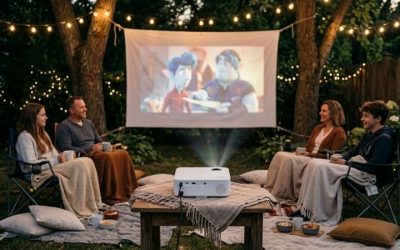
Several are described as portable or outdoor projectors, including the Aurzen D1R, D1R air, iWIMIUS, YGSKK, and TMY. Outdoor use still requires a dark environment, a stable surface, suitable power, and a screen or clean wall. Protect the projector from moisture, dew, dust, and temperature extremes, and plan separate audio if the built-in speakers are not loud enough for the space.
How large should I make the image?
Use the manufacturer’s recommended image range and prioritize brightness over maximum size. Larger images spread the available light over more area, so a very large picture can look dimmer and less punchy. The Aurzen D1R lists a 60- to 150-inch range, the TMY lists 32 to 220 inches, and the YGSKK lists 50 to 200 inches; these ranges are not a guarantee of equally bright results at every size.
Which specifications should I verify before checkout?
Confirm native resolution, brightness rating and measurement standard, throw distance, image-size range, focus and keystone controls, operating-system app support, available ports, speaker details, power requirements, and included accessories. For the products with limited information here, also verify whether “built-in apps” are officially licensed and whether a screen, HDMI cable, phone adapter, remote, or power supply is included.
Are budget 1080p projectors good for gaming?
Casual and slower-paced games are fine on most of them, but many budget smart projectors have noticeable input lag that makes fast shooters, fighting games, and rhythm games feel sluggish. If gaming is a priority, look for a published input-lag figure and a dedicated game mode. The BenQ TH575, rated around 16ms, is the clearest gaming choice in this guide.
How many lumens does a budget 1080p projector need?
For a dark bedroom and an image of roughly 80–100 inches, a few hundred ANSI lumens can be enough. For a living room with some ambient light, or for screens larger than 100 inches, aim for well over 1,000 lumens. That usually means stepping up to DLP or 3LCD models such as the Epson CO-FH02 or BenQ TH575. Only compare figures measured to the same standard, such as ANSI or ISO, since generic “lumens” claims are often inflated.
Is a 1080p projector still worth buying instead of 4K in 2026?
Yes, on a budget. A native 1080p projector shows real Full HD detail, while low-cost projectors labeled “4K” usually just accept a 4K signal and display it at a lower native resolution. At typical home viewing distances and image sizes, a bright, well-set-up native 1080p projector often looks better than a dim budget “4K” model. True 4K projection still costs considerably more.
How long does a budget projector’s light source last?
LED light sources in most mini projectors are typically rated for tens of thousands of hours, which works out to many years of nightly viewing. Lamp-based projectors need a replacement lamp after several thousand hours, depending on the brightness mode, so check the rated lamp life and replacement cost before buying one for daily use.
What is the best 1080p projector on a budget?
For most buyers the best 1080p projector on a budget is the Aurzen Roku TV D1R, because it adds Roku TV, auto focus and auto keystone to a 1080p Full HD image. Choose the YGSKK for features per dollar, the NexiGo PJ40 Pro for a brighter Google TV image, or the BenQ TH575 for gaming.
Is Google TV or Roku better on a budget projector?
Neither is better for everyone; pick the interface you already use at home. Roku TV is simple and app-focused, as on the Aurzen Roku TV D1R, while Google TV adds recommendations and voice search, as on the NexiGo PJ40 Pro and WEMAX. Check that your apps, especially Netflix, are officially supported on the exact listing.
Can a budget projector work in a room with some light?
Most compact LED minis need a dark room, because their real brightness is modest. For a room with some ambient light, step up to a brighter 3LCD or DLP model such as the Epson EpiqVision Flex CO-FH02 or BenQ TH575, and use curtains and a screen or smooth wall to help any model.
Final Verdict
The Aurzen Roku TV D1R is the strongest all-around recommendation from the available information. It combines 1080P Full HD output, Roku TV, auto focus, auto keystone, Dolby Audio, and dual 5W speakers in one straightforward package. It is especially well suited to buyers who want a large-screen movie setup without adding a streaming stick or managing a complicated interface. Its Roku activation requirement and need for a dark viewing environment are the main practical considerations.
The YGSKK is the most feature-packed alternative on the documented list, with native 1080P, a claimed 300 ANSI lumens, built-in apps, Wi-Fi 6, Bluetooth 5.3, electric focus, and a rotating base. Choose it when flexible positioning and wireless features matter more than a familiar Roku interface. The iWIMIUS is another strong placement-focused option because of its 360-degree stand and native 1080P claim.
For portability, consider the USB-C-powered Aurzen D1R air, which needs a 65W-class USB-C PD source because it has no built-in battery. For a ready-made movie-night bundle, the TMY’s included 80-inch screen is useful, although buyers should plan on an external streaming source and confirm the native panel resolution. The HAPPRUN remains worth considering if you specifically want licensed Google TV, but its missing specifications make a careful listing check essential.
Whichever model you choose, do not confuse 1080p input support with a native 1080p panel. That single distinction has a major effect on text and fine detail, and it is the most important specification to confirm before buying a budget projector.

Write Your Review
No reviews yet. Be the first to share your experience!