
Our Short List of 3

- Screen: 55 inches, 4K Ultra HD, OLED evo, self-lit pixels
- Refresh: high refresh panel, up to 144Hz in supported use, variable refresh support
- HDR: Dolby Vision, HDR10, HLG, Filmmaker Mode
- Processor: alpha 9 AI Processor Gen 7

- Screen: 55 inches, 4K Ultra HD, Mini-LED ULED with quantum dot colour
- Refresh: native 165Hz panel, variable refresh and auto low latency support
- HDR: Dolby Vision IQ, HDR10 Plus, HDR10, HLG, IMAX Enhanced
- Platform: Google TV
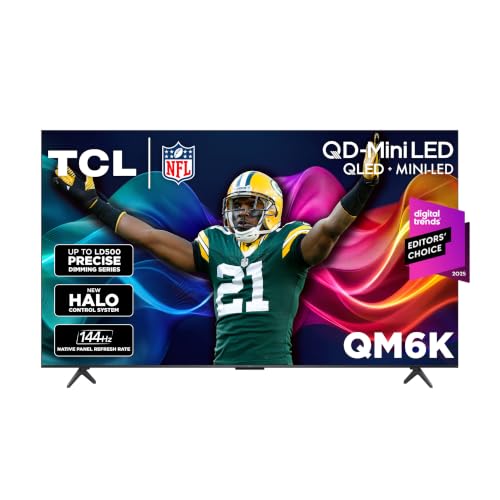
- Screen: 55 inches, 4K Ultra HD, QD-Mini-LED with Halo Control dimming
- Refresh: 120Hz to 144Hz class panel, variable refresh and auto low latency support
- HDR: Dolby Vision, HDR10 Plus, HDR10, HLG on the series
- Platform: Google TV with voice remote
All 3 Picks at a Glance
| Product | Specs | Action |
|---|---|---|
| 1. LG OLED evo C4 55-Inch |
| Check price on Amazon |
| 2. Hisense U8QG 55-Inch Mini-LED |
| Check price on Amazon |
| 4. TCL QM6K 55-Inch QD-Mini-LED |
| Check price on Amazon |
Key takeaways
- Compare five 55-inch 4K TVs on panel type, refresh rate, HDR formats and smart platform, from OLED and Mini-LED to Crystal UHD, in one specs-first guide.
As an Amazon Associate we earn from qualifying purchases.
Disclosure: This article contains affiliate links to Amazon. If you buy through those links, the publisher may earn a commission at no additional cost to you.
A 55-inch television sits in a useful middle ground. It is large enough to make films, sport and games feel immersive in a typical living room, bedroom or small media room, yet it still fits on furniture and wall mounts that would struggle with a much larger screen. It is also the size where almost every major panel technology is available side by side, which makes comparison both rewarding and confusing. On a single shopping page you can find self-lit OLED, bright Mini-LED with local dimming, and simpler direct-lit LED models, all at the same diagonal and all described with similar headline language.
This guide takes a specs-first approach. It compares five 55-inch models on the things that stay true for the life of the set: panel type, native refresh rate, HDR format support, gaming inputs, smart platform, audio hardware and physical fit. Check those points against the services and devices you already own, so the television works smoothly with your soundbar, console and room lighting from the first evening.
Quick Picks
- Best OLED for films and gaming: LG OLED evo C4 55-inch, model OLED55C4PUA, for self-lit pixels, Dolby Vision and four HDMI 2.1 inputs.
- Best bright-room Mini-LED flagship: Hisense U8QG 55-inch, for a Mini-LED backlight, a native high refresh panel and Google TV.
- Best premium OLED alternative: Samsung S95F 55-inch, for a QD-OLED style picture approach, Samsung Vision AI processing and Tizen.
- Best Mini-LED for console play: TCL QM6K 55-inch, for QD-Mini-LED, a 144Hz class panel and Google TV with hands-free voice support on the series.
- Best straightforward everyday set: Samsung U8000F 55-inch, for Crystal UHD simplicity, a slim design and an familiar Tizen interface.
1. LG OLED evo C4 55-Inch
- Screen: 55 inches, 4K Ultra HD, OLED evo, self-lit pixels
- Refresh: high refresh panel, up to 144Hz in supported use, variable refresh support
- HDR: Dolby Vision, HDR10, HLG, Filmmaker Mode
- Processor: alpha 9 AI Processor Gen 7
The LG C4 is the reference point for many buyers at this size, and the reason is its panel. Each pixel produces its own light, so a dark scene can show true black next to a bright highlight without a backlight halo around the edge. That per-pixel control helps night scenes in films, shadow detail in games and subtitles on dark backgrounds look clean. LG pairs the panel with its alpha 9 AI Processor Gen 7, Brightness Booster processing on this series, and support for Dolby Vision, HDR10 and HLG, so most major streaming services and disc formats are covered.
Motion and gaming are strong points on paper. The panel is listed with a high refresh capability up to 144Hz in supported PC use, a very low pixel response time, variable refresh support, and compatibility with NVIDIA G-Sync and AMD FreeSync Premium. Four HDMI 2.1 inputs mean a console, a gaming PC, a soundbar using eARC and a disc player can stay connected at once without a switch box. The built-in audio is a 2.2-channel system, and the set runs webOS, with the Magic Remote for point-and-click navigation, plus voice assistant and casting support.
Key specs
Pros
Cons
View it here: LG OLED55C4PUA on Amazon
2. Hisense U8QG 55-Inch Mini-LED
- Screen: 55 inches, 4K Ultra HD, Mini-LED ULED with quantum dot colour
- Refresh: native 165Hz panel, variable refresh and auto low latency support
- HDR: Dolby Vision IQ, HDR10 Plus, HDR10, HLG, IMAX Enhanced
- Platform: Google TV
The Hisense U8QG takes the opposite route to picture quality. Instead of self-lit pixels, it uses a Mini-LED backlight with many local dimming zones behind a quantum dot layer. That design aims for high peak brightness and strong contrast in rooms where curtains stay open during the day. Hisense lists this 2025 model with a native 165Hz panel, variable refresh support extending to higher rates at lower resolutions in game mode, and HDR support that includes Dolby Vision IQ, HDR10 Plus, HDR10 and HLG, plus IMAX Enhanced certification on the series.
For sport and gaming, that combination matters. A high native refresh rate helps keep a moving ball or a fast camera pan looking stable, while local dimming tries to keep a bright stadium floodlight from washing out the rest of the frame. The audio hardware is also more ambitious than average for a built-in system, listed as a multi-channel arrangement with a subwoofer channel on the series. Google TV is the platform, which brings a familiar home screen for Android households, Chromecast built in, and voice control through the remote.
Key specs
Pros
Cons
View it here: Hisense 55U8QG on Amazon
3. Samsung S95F 55-Inch OLED
Samsung’s S95F is its premium OLED entry at this size for 2025. It uses an OLED panel with a glare-free finish that Samsung promotes for rooms where lamps and windows reflect on a glossy screen. Processing is handled by the NQ4 AI Gen 3 processor under the Samsung Vision AI banner, which covers upscaling of lower resolution sources, motion handling and picture adjustments based on content type. HDR support is built around HDR10 Plus and Samsung’s OLED HDR Pro processing, with HLG for broadcast content.
The platform is Tizen in its current One UI form, with Samsung TV Plus free channels, a Gaming Hub, and SmartThings control. Audio includes Dolby Atmos support and object tracking sound, and the set can pair with compatible Samsung soundbars using Q-Symphony so the television speakers keep working alongside the bar. For gaming, the series lists high refresh support through Motion Xcelerator and HDMI 2.1 inputs with variable refresh and auto low latency mode.
Key specs
- Screen: 55 inches, 4K Ultra HD, OLED with glare-free finish
- Refresh: high refresh support with Motion Xcelerator processing
- HDR: HDR10 Plus, HDR10, HLG, OLED HDR Pro processing
- Processor: NQ4 AI Gen 3 with Samsung Vision AI
- Platform: Tizen with One UI, Samsung TV Plus, Gaming Hub
- Audio: Dolby Atmos support, Object Tracking Sound, Q-Symphony ready
- Connectivity: HDMI 2.1 inputs, eARC, Wi-Fi, Bluetooth, SmartThings
Pros
- Glare-free finish helps in rooms with windows opposite the screen
- OLED contrast combined with strong upscaling for broadcast and older content
- Gaming Hub is convenient for households mixing console and cloud play
- Q-Symphony pairing is useful if you already own a Samsung soundbar
Cons
- No Dolby Vision, which matters if your main streaming library relies on it
- Tizen app selection differs from Google TV, so check niche services first
- Premium positioning means the simpler models in this guide may fit basic needs
View it here: Samsung QN55S95F on Amazon
4. TCL QM6K 55-Inch QD-Mini-LED
- Screen: 55 inches, 4K Ultra HD, QD-Mini-LED with Halo Control dimming
- Refresh: 120Hz to 144Hz class panel, variable refresh and auto low latency support
- HDR: Dolby Vision, HDR10 Plus, HDR10, HLG on the series
- Platform: Google TV with voice remote
The TCL QM6K is a 2025 QD-Mini-LED model built around TCL’s Halo Control system, which is the company’s name for its combined approach to the LED chip, lens, local dimming zones and panel contrast. The aim is precise backlight control with less visible halo around bright objects. TCL lists this series with a native refresh range in the 120Hz to 144Hz class depending on source, Game Accelerator support for higher variable refresh rates at lower resolutions, and HDR coverage that includes Dolby Vision and HDR10 Plus on the series.
Google TV is the platform, with a voice remote and Alexa support alongside Google services. Audio is a step beyond basic stereo, with an Onkyo-designed speaker system and a built-in subwoofer on this series, plus Dolby Atmos and DTS Virtual X processing. That makes the QM6K a sensible single-box option where a separate soundbar is not planned at first. Four HDMI inputs are listed for the series, including eARC and HDMI 2.1 gaming features.
Key specs
Pros
Cons
View it here: TCL 55QM6K on Amazon
5. Samsung U8000F 55-Inch Crystal UHD
The U8000F is the simplest television in this guide, and that is its appeal. It is a 2025 Crystal UHD model with a direct-lit LED panel, Samsung’s Crystal Processor 4K for upscaling, and a slim MetalStream design that keeps the set looking tidy on a stand or on a wall. It covers the everyday basics well: 4K resolution, HDR10 Plus, HDR10 and HLG support, a 60Hz class panel for broadcast, streaming and casual play, and the Tizen platform with Samsung TV Plus, streaming apps and SmartThings control.
This is not a set built around competitive gaming or dark-room film sessions. Its strengths are predictable operation, a familiar remote and interface, and a picture setup that needs little adjustment for news, series and daytime sport. Motion handling relies on processing rather than a high native refresh panel, so fast sport will look less stable than on the 120Hz and higher models above. For a guest room, bedroom or household that watches mainly streamed series and broadcast channels, those trade-offs can be entirely reasonable.
Key specs
- Screen: 55 inches, 4K Ultra HD, Crystal UHD LED
- Refresh: 60Hz class panel with motion processing
- HDR: HDR10 Plus, HDR10, HLG
- Processor: Crystal Processor 4K
- Platform: Tizen with Samsung TV Plus and SmartThings
- Design: MetalStream slim design
- Audio: built-in stereo speakers, pairing support for Samsung soundbars
- Connectivity: three HDMI class inputs on the series, eARC, Wi-Fi, Bluetooth
Pros
- Simple, familiar operation for everyday streaming and broadcast viewing
- Slim design fits bedrooms, guest rooms and smaller living rooms neatly
- Tizen brings free channels and SmartThings control without extra hardware
- Upscaling helps lower resolution channels look cleaner on a 4K panel
Cons
- 60Hz class panel is less suited to fast sport and high frame rate gaming
- No Dolby Vision and no local dimming for demanding dark scenes
- Built-in audio is basic, so a soundbar improves dialogue clarity
View it here: Samsung UN55U8000F on Amazon
How to Choose a 55-Inch TV
Begin with the room, not the model list. Measure the viewing distance and the width of the stand or the wall space. A 55-inch set is roughly forty-eight inches wide, and most viewers sit between six and nine feet away for mixed viewing. Then note the light. A room with large windows opposite the screen favours a bright Mini-LED panel or a glare-free OLED finish. A room used mainly for evening films favours OLED contrast or a Mini-LED set with careful local dimming.
Next, choose the panel for your main content. OLED gives per-pixel control and the most stable picture from wide seats. Mini-LED gives higher peak brightness and strong performance with sport and bright rooms, at the cost of some halo and narrower viewing angles. A basic LED set gives simple, reliable viewing for broadcast and streaming, with lower motion performance. There is no single correct answer, only a correct match for your room and habits.
Then check refresh rate and gaming inputs honestly. If you own a current console or a gaming PC and play fast titles, look for a native panel above 60Hz, HDMI 2.1 bandwidth on at least one or two inputs, variable refresh and auto low latency mode. If you only watch broadcast and streaming video, a 60Hz panel is sufficient, because films and series do not use high frame rates. Spend your attention on HDR and upscaling instead.
HDR formats deserve a direct check. Dolby Vision and HDR10 Plus are competing dynamic formats that adjust picture settings scene by scene. Samsung sets in this guide use HDR10 Plus and do not include Dolby Vision. LG, Hisense and TCL models here include Dolby Vision, and the Hisense and TCL models also list HDR10 Plus. Look at the services and disc player you use most, and pick the television that covers those formats rather than collecting logos you will never feed.
Finally, pick the platform your household will enjoy daily. Google TV suits Android households, webOS suits viewers who like the Magic Remote pointer, and Tizen suits Samsung phone owners who want SmartThings control built in. Confirm your niche apps are present, check that the stand feet fit your furniture, and confirm the VESA pattern if you plan to wall mount.
FAQs
Is 55 inches big enough for a living room?
For seating around six to nine feet from the screen, 55 inches gives an immersive picture for films and sport without dominating the room. If your seating is much farther away, or the room is wide with seats at strong angles, measure carefully and consider how panel viewing angles will affect the far seats before deciding.
Which panel is better for a bright room, OLED or Mini-LED?
Mini-LED usually holds brightness better under strong daylight, and a glare-free OLED finish can also work well. The deciding factors are where the windows sit, whether curtains can control midday light, and whether most viewing happens during the day or in the evening.
Do I need a high refresh rate if I do not play games?
For films, series and broadcast channels, a 60Hz panel covers the source material. A higher native refresh rate mainly helps console and PC gaming and can make fast sport look more stable. Buy it for a device you own now, not for a device you might buy one day.
Should I plan for a soundbar with a 55-inch TV?
Most flat televisions have limited speaker space. Models in this guide with multi-channel or subwoofer equipped built-in audio go further on their own, but a soundbar still improves dialogue clarity at low volume in almost every case. Check that the television has HDMI eARC so the bar connects with a single cable and follows the television remote.
What should I check on the listing before ordering?
Confirm the size in the listing title is exactly 55 inches, confirm the full model number matches the model discussed here, and check the included remote, stand and cable list on that page. Model families often share a product page across several sizes, so the size selector needs to show the 55-inch variant before you complete an order.
Conclusion
The five sets divide cleanly by priority. Choose the LG C4 for dark-room contrast and gaming inputs, the Hisense U8QG for bright-room Mini-LED performance, the Samsung S95F for a premium OLED picture with a glare-free finish, the TCL QM6K for balanced Mini-LED picture and Google TV, or the Samsung U8000F for simple everyday viewing. Match panel to room light, refresh rate to devices, HDR formats to services and platform to household, and a set chosen on those grounds will serve well for years.





Write Your Review
No reviews yet. Be the first to share your experience!