
Key takeaways
- Pro: Strong sustained write performance for video recording
- Pro: Backed by SanDisk’s recovery software and warranty reputation
- Con: Write speeds trail the higher-end 245 MB/s model noticeably
Phones, handhelds, dashcams, and action cameras have all pushed internal storage limits. A 1TB microSD card solves the capacity problem in a single slot, but it also introduces a new one: not every card with that capacity delivers the throughput your device needs. Owners routinely report cards that hit rated read speeds on empty drives yet throttle badly once the card is nearly full or after sustained writing.
What separates a worthwhile 1TB microSD purchase from a disappointing one in 2026 comes down to three things: whether the card maintains speed under load, how it performs with apps installed directly on it, and whether it costs a fair premium over smaller capacities. The eight cards below span from under $160 to $270, and the price gaps do not always track with real-world performance differences.
Our top picks



As an Amazon Associate we earn from qualifying purchases at no extra cost to you.
Quick Picks
| Product | Best for | Price |
|---|---|---|
| SANDISK 1TB Extreme (190 MB/s) | General use and 4K video capture | $169 |
| Lexar 1TB Play Blue | Budget 4K and app storage | under $200 |
| SANDISK 1TB Extreme (245 MB/s) | Professional-grade sustained transfers | under $300 |
| Amazon Basics 1TB microSDXC | Lowest-cost entry into 1TB capacity | under $200 |
| SANDISK 1TB Ultra | Basic file storage and dashcams | under $200 |
| TEAMGROUP A2 Pro Plus | Nintendo Switch and Steam Deck | under $200 |
| Silicon Power 1TB Superior Gaming | Steam Deck, ROG Ally, and Switch | under $200 |
| Lexar 1TB Blue | Reliable everyday expansion | under $200 |
How We Picked
We narrowed this list by comparing published speed ratings, application performance class (A2 vs. A1), sustained write claims, and per-GB price across the 1TB tier. We also weighed long-term owner feedback on sustained performance and compatibility with specific devices. Cards with identical UHS-I bus ratings can differ meaningfully in real throughput, so we prioritized those with documented consistency from buyers over time.
The 8 Best 1Tb Micro Sd Card in 2026
SANDISK 1TB Extreme (190 MB/s)
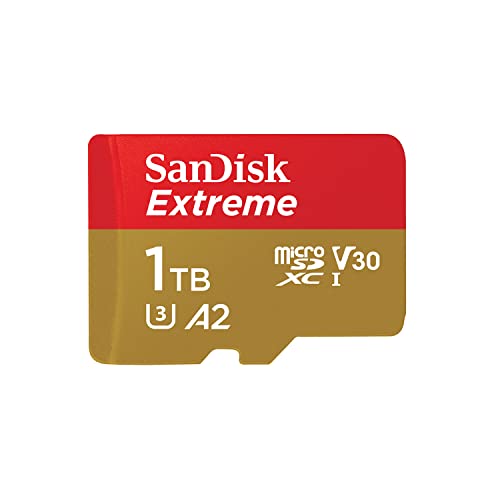
The price-per-speed leader in SanDisk’s own lineup. At $169 it undercuts the faster 245 MB/s variant by a full hundred dollars while still clearing the threshold that most phones and cameras need for 4K capture. Owners praise its reliability over months of continuous dashcam recording and its consistent read speeds near the rated 190 MB/s.
- Pro: Strong sustained write performance for video recording
- Pro: Backed by SanDisk’s recovery software and warranty reputation
- Con: Write speeds trail the higher-end 245 MB/s model noticeably
Skip it if you routinely offload large files via USB and care about transfer time above all else.
Lexar 1TB Play Blue
For under $200 this is the cheapest 1TB card on our list, and it earns that slot with an A2 rating, V30 video class, and UHS-I U3 bus. For Switch owners and phone users who install apps to the card, the A2 spec matters more than peak MB/s. Owner reports highlight fast app load times and stable behavior under continuous 1080p recording.
- Pro: Lowest price in the 1TB tier with full A2 and V30 specs
- Pro: Reliable performance for handheld gaming consoles
- Con: 160 MB/s read rating is the lowest among cards here
Skip it if you need maximum read throughput for large file transfers or 4K at high bitrates.
SANDISK 1TB Extreme (245 MB/s)
The speed flagship of this group. SanDisk’s proprietary bus protocol pushes read rates to 245 MB/s, well above standard UHS-I limits, and owners confirm real-world transfers approaching that figure. The under-$300 price is steep — roughly $110 above the 190 MB/s sibling — so it only makes sense if you routinely move multi-hundred-gigabyte footage off the card without a card reader bottleneck.
- Pro: Fastest read speed on this list by a wide margin
- Pro: Same durability and warranty pedigree as other Extreme cards
- Con: Priciest option, with diminishing returns over cheaper 1TB cards
Skip it unless you transfer large files frequently and your reader supports the proprietary protocol.
Amazon Basics 1TB microSDXC
Amazon Basics entered the high-capacity card space and priced this one for under $200, which places it mid-range despite a read rating of only 100 MB/s. The A2 and U3 specs are present, so app loading works fine, but the raw throughput gap is significant. Owners report it handles Switch game installs and phone photo storage without complaint, though 4K video workflows feel sluggish.
- Pro: A2 and U3 ratings at a mid-tier price point
- Pro: Amazon’s return policy provides a low-risk trial
- Con: 100 MB/s read is the slowest rated speed on this list
Skip it for video capture or frequent large transfers; it is best as a simple capacity upgrade.
SANDISK 1TB Ultra
For under $200 the Ultra sits just above the Play Blue in price but trades A2 performance for a 150 MB/s read rating. It is the right card for users who store files, photos, and compressed video but do not install apps directly to the card. Dashcam owners specifically call out its thermal stability during hours-long recording sessions.
- Pro: Cool running behavior during sustained video recording
- Pro: Well-known SanDisk reliability track record at this tier
- Con: No A2 rating means slower random access for installed apps
Skip it if you install apps or games to the card; the missing A2 class is a real drawback.
TEAMGROUP A2 Pro Plus
Priced for under $200, this card targets handheld gamers with an A2, V30, U3 spec set and a rated write speed of 110 MB/s — a figure few competitors publish. Nintendo Switch and Steam Deck owners report load times on par with pricier options and stable frame delivery from card-based game installations. The included full-size adapter is a small bonus for multi-device users.
- Pro: Published write speed of 110 MB/s supports sustained game loading
- Pro: Competitive price with full A2 and V30 certifications
- Con: Brand is less established than SanDisk or Lexar in long-term reliability data
Skip it if brand reputation and extended warranty support outweigh raw specs for you.
Silicon Power 1TB Superior Gaming
For under $200 this card positions itself squarely between the TEAMGROUP and the Lexar Play Blue in price, and it shares their A2, V30, and U3 credentials. Owner feedback from Steam Deck and ROG Ally users highlights consistent read performance and no thermal throttling during extended play. The “Superior Gaming” label is marketing-forward, but the underlying spec sheet backs it up.
- Pro: Stable sustained performance in gaming handhelds
- Pro: Competitive price with a full-size adapter in the box
- Con: Published read speed is not listed as prominently, making comparison harder
Skip it if you want a card with the most transparent and well-documented speed specifications.
Lexar 1TB Blue
This card shares the same 160 MB/s read rating as the Play Blue but costs under $200 — a $42 premium for what appears to be a near-identical spec sheet. The difference likely comes down to NAND selection and controller firmware tuning for sustained writes. Owners praise long-term stability and broad device compatibility, but value-conscious buyers will question whether the markup is justified.
- Pro: Lexar’s mature controller firmware and consistent behavior over time
- Pro: Broad compatibility across phones, cameras, and consoles
- Con: Noticeably pricier than the Play Blue for similar rated speeds
Skip it if budget matters more than marginal firmware-level consistency improvements.
Buying Guide
Read Speed vs. Real-World Throughput
Rated read speed assumes an empty drive and a compatible reader. Most 1TB cards here list between 100 and 245 MB/s, but sustained performance can drop once the card exceeds 70 percent capacity. Look for owner reports that mention file size and fill level, not just the initial unboxing speed. Cards with published write ratings give you a second data point that many manufacturers omit.
Application Performance Class and Gaming
The A2 rating guarantees minimum random read and write IOPS, which translates directly to faster game loads and app launches on handhelds like the Switch and Steam Deck. A U3 or V30 rating is necessary for sustained 4K video writes but does nothing for app responsiveness. If you install software to the card, prioritize A2 over peak sequential speed.
Bus Interface and Device Compatibility
All eight cards use the UHS-I bus, which tops out at 104 MB/s under the SD specification. SanDisk’s 245 MB/s card breaks this ceiling via a proprietary extension that only works with SanDisk readers — in a phone or camera it falls back to standard UHS-I speeds. Confirm your device supports any advertised proprietary protocol before paying a premium for it.
Our Verdict
Our top pick is the SANDISK 1TB Extreme at 190 MB/s ($169). It balances speed, price, brand trust, and sustained performance better than anything else on this list. The budget pick is the Lexar 1TB Play Blue for under $200, which delivers A2 and V30 at the lowest cost and handles gaming and video without drama. If you install a large game library to a Steam Deck and want confirmed write throughput, the TEAMGROUP A2 Pro Plus for under $200 is the one to reach for.
FAQ
Can a 1TB microSD card replace internal storage?
In Android phones that adopt storage mode, yes — installed apps and media live on the card as if it were internal storage. On Nintendo Switch and Steam Deck, games run from the card without issue, though system files remain on internal storage. The practical limit is speed class: only A2-rated cards keep app launch times acceptable.
Why do two cards with the same read rating cost very different amounts?
Price differences among same-rated cards typically reflect NAND quality, controller firmware tuning, sustained write performance (which many manufacturers leave unpublished), and brand warranty coverage. A card rated 160 MB/s may maintain that figure through a full-capacity transfer or throttle to half speed; published specs do not tell you which.
Is a UHS-II or UHS-III card necessary?
No device currently using microSD slots for gaming or phone storage requires beyond UHS-I throughput in practice. UHS-II adds a second row of pins and demands compatible hardware, which most phones and handhelds lack. A well-tuned UHS-I card at 160-190 MB/s covers every workload these devices present.
How long should a 1TB microSD card last?
Most cards in this tier are rated for a minimum number of full-drive write cycles — commonly around 1,000 or more for consumer models. In dashcam or phone photo storage use, that translates to several years of daily writing. Gaming handhelds are gentler because game data is read far more than written.

Write Your Review
No reviews yet. Be the first to share your experience!