
Our Short List of 3

- Best for: A first rod for a standard window where you want a published load rating and every part in one box.
- Rod diameter: 1 inch
- Adjustable length: 36 to 72 inches
- Color: Nickel
- Material: Metal
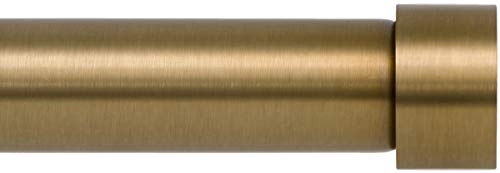
- Best for: Wider windows where you want a low-profile end cap look and a center support included for the longer span.
- Rod diameter: 1 inch
- Adjustable length: 48 to 86 inches
- Color: Warm Gold
- Material: Metal

- Best for: Heavier lined or blackout panels on a standard window, where the maker’s 30 pound rating gives margin over basic rods.
- Rod diameter: 1 inch
- Adjustable length: 36 to 72 inches
- Fit range: Windows 24 to 68 inches per the listing
- Tube wall thickness: 0.6 millimeter
All 5 Picks at a Glance
| Product | Specs | Action |
|---|---|---|
| Amazon Basics 1-Inch Curtain Rod with Round Finials |
| Check price on Amazon |
| Ivilon Drapery Window Curtain Rod, End Cap Style |
| Check price on Amazon |
| KAMANINA 1 Inch Curtain Rod with Netted Texture Finials |
| Check price on Amazon |
 Umbra Twilight Double Curtain Rod Set |
| Check price on Amazon |
 Kenney Tension Rod |
| Check price on Amazon |
Key takeaways
- Compare five budget curtain rods by span, diameter, and mounting style, from a no-drill tension rod to a wrap-around double rod for layered panels.
A budget curtain rod fails in predictable ways: it sags under lined panels, stops short of the window edge so light leaks in, or arrives without the brackets needed to hang it. The real decision is matching three numbers to your window: the span the rod must cover, the diameter your curtain header and fabric weight need, and the load the maker says the set can carry. Getting those right matters more than the finish, because a rod that bends or pulls out of the wall costs more to replace than a plain rod that fits.
This guide serves renters furnishing a first apartment, homeowners redoing several rooms at once, and anyone replacing a bent or undersized rod. The five picks cover a standard wall-mounted single rod, a wider end-cap design, a heavier-rated decorative rod, a wrap-around double rod for layered panels, and a no-drill tension rod. Each one was chosen from the name and specifications published on its Amazon product page, including span, diameter, mounting type, and included hardware.
Quick Picks
As an Amazon Associate we earn from qualifying purchases
| Product | Best for | Key spec from title |
|---|---|---|
| Amazon Basics 1-Inch Curtain Rod with Round Finials | Standard bedroom and living room windows | 1 inch rod, 36 to 72 inches |
| Ivilon Drapery Window Curtain Rod, End Cap Style | Mid-width windows with a low-profile look | 1 inch pole, 48 to 86 inches |
| KAMANINA 1 Inch Curtain Rod with Netted Texture Finials | Heavier panels on standard windows | 1 inch rod rated to 30 pounds |
| Umbra Twilight Double Curtain Rod Set | Layering sheers behind blackout panels | Wrap-around double rod, 48 to 88 inches |
| Kenney Tension Rod | Renters who cannot drill holes | Tension mount, 28 to 48 inches |
How to Choose
Measure the Span Before You Pick a Length
Start with the window itself, not the rod. Measure the frame from outside edge to outside edge, then add overlap on both sides so the panels can stack clear of the glass and block light at the edges. A common target is a rod that extends several inches past the frame on each side. Then compare that total against the rod’s stated range: a 36 to 72 inch rod suits most single windows, while wide living room glass may need an 86 or 88 inch model. Buying the next size up is safer than stretching a short rod to its limit.
Match Diameter to Curtain Weight and Header Style
Diameter decides both strength and how a curtain hangs. A 1 inch pole is the standard budget choice because grommets, ring clips, and back tabs are sized around it, and the thicker tube resists sagging under lined or blackout panels. Slimmer rods in the 5/8 and 3/4 inch range work for sheers and lightweight café curtains but flex sooner on wide spans. The skinny 7/16 inch tension rod in this guide is for valances and sheers only. If your panels are heavy, favor a 1 inch rod and check the maker’s stated load figure before ordering.
Choose Between Wall Mount, Wrap-Around, and Tension
Mounting style shapes the whole install. A standard wall-mounted rod screws brackets into the wall above the frame, which gives the strongest hold and the most freedom in placement. A wrap-around design curves the panel ends back against the wall, closing the side gap that leaks light around blackout curtains. A tension rod skips hardware entirely and wedges inside the frame, which suits renters and tiled or narrow casings, but it holds by friction and suits light fabrics only. Pick the mount your walls and lease allow, then confirm the span fits that mounting position.
Check the Hardware in the Box
Budget sets differ in what they include, and a missing center bracket can turn a cheap rod into a sagging one. Look for finials, brackets, screws, and anchors listed as included components, plus a center support on spans past roughly six feet. The Amazon Basics and Ivilon sets in this guide list their hardware, and the Ivilon description notes center brackets are included for longer runs. Also confirm bracket projection: deeper brackets clear blinds and trim, while shallow ones keep panels close to the wall. If hardware is not listed, budget for a separate bracket pack.
The 5 Best Options
Amazon Basics 1-Inch Curtain Rod with Round Finials
- Best for: A first rod for a standard window where you want a published load rating and every part in one box.
- Rod diameter: 1 inch
- Adjustable length: 36 to 72 inches
- Color: Nickel
- Material: Metal
A first rod for a standard window where you want a published load rating and every part in one box.
Measure before ordering, because a window plus overlap that runs past 72 inches needs the next size up, and a telescoping rod is least rigid at full extension under heavy panels.
This is the straightforward pick for a standard window: a 1 inch metal pole in a nickel finish with simple round finials that suit most rooms. It telescopes from 36 to 72 inches, which covers the typical bedroom or living room window with room for overlap on both sides. Amazon publishes a maximum recommended load of 21.8 pounds, enough for ordinary lined panels and most blackout sets at this span, and the box includes the rod, finials, brackets, and wall mounting hardware, so a basic install needs nothing extra beyond tools.
Ivilon Drapery Window Curtain Rod, End Cap Style
- Best for: Wider windows where you want a low-profile end cap look and a center support included for the longer span.
- Rod diameter: 1 inch
- Adjustable length: 48 to 86 inches
- Color: Warm Gold
- Material: Metal
Wider windows where you want a low-profile end cap look and a center support included for the longer span.
Warm gold reads more yellow than an antique brass, so compare it against your room’s existing hardware finishes before committing to several matching sets.
Where decorative finials would look busy, this Ivilon set uses flat end caps for a cleaner line, and the warm gold finish warms up rooms where nickel or black feels cold. The 1 inch pole adjusts from 48 to 86 inches, a step up in span from the Amazon Basics rod, which makes it the better fit for wider bedroom windows and sliding doors. Ivilon describes the metal pole as strong enough for heavy drapery and notes that center brackets are included in the set for longer runs, which is exactly where thinner budget rods tend to bow.
KAMANINA 1 Inch Curtain Rod with Netted Texture Finials
- Best for: Heavier lined or blackout panels on a standard window, where the maker’s 30 pound rating gives margin over basic rods.
- Rod diameter: 1 inch
- Adjustable length: 36 to 72 inches
- Fit range: Windows 24 to 68 inches per the listing
- Tube wall thickness: 0.6 millimeter
Heavier lined or blackout panels on a standard window, where the maker’s 30 pound rating gives margin over basic rods.
The capacity figure comes from the maker’s listing copy, so stay within it, use every bracket supplied, and anchor into studs or rated wall anchors rather than plain drywall.
KAMANINA builds this rod around capacity: the listing specifies a 1 inch diameter tube with a 0.6 millimeter wall and rates the set for up to 30 pounds, the highest figure among the single rods here. It telescopes from 36 to 72 inches for windows the listing sizes at 24 to 68 inches, and the netted texture finials give it a more decorative finish than plain ball or cap ends. In antique bronze it suits traditional rooms and heavier drapes that would make a slimmer rod deflect, provided the brackets go into studs or sound anchors.
Umbra Twilight Double Curtain Rod Set
- Best for: Bedrooms and media rooms where sheers sit behind blackout panels and side light leakage is the main complaint.
- Configuration: Double rod set
- Adjustable length: 48 to 88 inches
- Front rod diameter: 3/4 inch
- Back rod diameter: 5/8 inch
Bedrooms and media rooms where sheers sit behind blackout panels and side light leakage is the main complaint.
Both rods are slimmer than a 1 inch single pole, so keep the front panel in the light to medium range; very heavy lined drapes belong on a full-diameter single rod instead.
The Twilight set solves a different problem: light leaking around the sides of blackout panels. Two rods ride on shared brackets, a 3/4 inch front rod for the main panel and a 5/8 inch back rod for a sheer, and the curved wrap-around ends return the fabric to the wall instead of leaving a gap at each side. This 48 to 88 inch size in nickel covers most bedroom windows, and Umbra’s design keeps the layered look tidy because both rods mount once, in one set of holes, rather than two separate installs.
Kenney Tension Rod
- Best for: Renters, dorm rooms, and café curtains where drilling is banned and the fabric is light.
- Mounting type: Tension mount inside the frame, no holes
- Adjustable length: 28 to 48 inches
- Rod diameter: 7/16 inch
- Finish: Brass
Renters, dorm rooms, and café curtains where drilling is banned and the fabric is light.
Tension holds by friction alone, so measure the inside frame width carefully and keep panels lightweight; a heavy blackout curtain will eventually pull a tension rod down.
For a window you are not allowed to drill into, this Kenney rod removes hardware from the equation entirely. It wedges inside the frame by spring tension and adjusts from 28 to 48 inches, with soft plastic tips that the listing says will not mark or damage the mounting surface. At 7/16 inch in diameter it is a light-duty rod, and Kenney positions it for lightweight draperies, sheers, and valances rather than full panels. In a brass finish it disappears into traditional trim, and at just over three ounces it is the easiest rod here to move between rooms.
Which One Fits Your Situation
You Rent and Cannot Drill Into the Walls
Take the Kenney tension rod. It wedges inside the window frame with no screws, no brackets, and nothing to patch when you move out, and its soft plastic tips are made to leave the casing unmarked. Keep the fabric light — sheers, café curtains, or a valance — because a 7/16 inch tension rod holds by friction and is not built for full-length lined panels.
Your Bedroom Never Gets Properly Dark
Choose the Umbra Twilight double set. The wrap-around ends curve your blackout panel back to the wall, closing the side gaps where light usually spills in, and the second rod carries a sheer for daytime privacy. It mounts once on shared brackets, so a layered setup does not mean two separate installs or two rows of holes above the window.
Your Panels Are Heavy and the Window Is Standard Width
The KAMANINA rod is the safer match. Its listing rates the set for up to 30 pounds, the highest figure among these single rods, and the 1 inch tube with a 0.6 millimeter wall is built to resist the sag that shows up with lined drapes. Anchor the brackets into studs or rated anchors so the wall, not the rod, is never the weak point.
You Have a Wide Window and a Plain Look in Mind
Pick the Ivilon end cap rod. Its 48 to 86 inch span reaches windows the standard 72 inch rods cannot cover with overlap to spare, the included center brackets support the middle of the run, and the flat end caps keep the profile quiet. The warm gold finish also suits rooms where black or nickel hardware would stand out against wood trim.
Common Mistakes
- Buying a rod that only just spans the glass, leaving no overlap for the panels to stack back or block light at the edges.
- Hanging heavy blackout panels on a slim tension rod or a 5/8 inch pole that was sized for sheers.
- Skipping the center bracket on a long span, then blaming the rod when the middle starts to bow.
- Driving bracket screws into plain drywall without anchors, so the set pulls loose under the curtain’s weight.
- Forgetting finial width on a window set close to a corner wall, where a wide ball finial may not fit.
Frequently Asked Questions
How far past the window frame should a curtain rod extend?
A few inches on each side is the usual target, enough for the open panels to stack mostly clear of the glass and for closed panels to cover the frame edges. Work backward from that total width when choosing a size: measure the frame, add the overlap on both sides, then pick a rod whose stated range covers that number without sitting at its absolute maximum extension.
What rod diameter works best for blackout curtains?
A 1 inch rod is the safer default for blackout panels, because the thicker tube resists sagging and standard grommets and ring clips are made to slide over it. Slimmer rods can carry a single lightweight blackout panel on a short span, but on wider windows the middle will bow over time. Whichever diameter you choose, compare the panel’s weight against the maker’s stated load figure for the set.
Can a tension rod hold full-length curtains?
Only lightweight ones. A tension rod stays up by friction against the frame, so sheers, café curtains, and valances are its natural load. Long, lined, or blackout panels add weight and tugging from opening and closing to work the rod loose. If the fabric is heavy and drilling is allowed, a wall-mounted rod on brackets is the dependable route; if drilling is banned, keep the panels short and light.
Do budget curtain rod sets include the mounting hardware?
Most wall-mounted sets in this guide do: the Amazon Basics set lists its rod, finials, brackets, and wall mounting hardware, and the Ivilon set includes center brackets for longer spans. Contents still vary by brand and size, so read the included components on the product page before ordering. If anchors are not listed, pick up a pack rated for your wall type so the install does not stall halfway.







Write Your Review
No reviews yet. Be the first to share your experience!