
Key takeaways
- Find the best budget bulgogi sauce for home kitchens, with five affordable Korean BBQ marinades compared by size, flavor, heat, and dietary fit.
Bulgogi is one of the most approachable dishes in Korean home cooking: thin slices of beef soaked in a sweet and savory marinade, then grilled or pan-fried until the edges caramelize. The marinade does nearly all of the work, which is why a good bottled bulgogi sauce is such a useful shortcut. A single bottle replaces the soy sauce, sugar, pear, garlic, ginger, and sesame oil measuring that a from-scratch batch requires, and it waits in the pantry until the next Korean BBQ night.
The challenge is that the shelf is crowded. Korean grocery brands, American craft sauce makers, and restaurant-style blends compete in sizes from single-meal pouches to bulk bottles, and the cost per ounce varies just as widely. This guide compares five budget-friendly bulgogi sauces and marinades sold on Amazon: a multi-bottle pack for frequent cooks, a big single bottle for families, a gluten-free option built on tamari, a spicy gochujang-based blend, and portioned pouches for small households.
As an Amazon Associate, we earn from qualifying purchases.
How to Choose a Budget Bulgogi Sauce
Start with the base. Traditional bulgogi marinade is built on soy sauce sweetened with sugar or fruit, and the fruit matters more than many shoppers expect. Pear puree or pear extract is the classic tenderizer in Korean recipes, and it gives the sauce a rounder sweetness than sugar alone; apple and pineapple play a similar role. If a label lists pear, apple, or pineapple near the top of the ingredients, the flavor will usually sit closer to restaurant bulgogi than a sauce sweetened with syrup only.
Next, compare size against how often you cook. A household making bulgogi once a month is better served by a modest bottle or portioned pouches, while families who grill weekly should look at multi-bottle packs or large-format bottles, which usually carry the lowest cost per ounce. Marinating uses a generous amount of sauce per pound of meat, so small bottles disappear faster than expected.
Heat is the third decision. Classic bulgogi sauce is mild and kid-friendly, with black pepper as the only warmth. Spicy versions blend in gochujang or red pepper powder for cooks who want a kick without opening a second bottle. Decide which style your household reaches for before buying a multi-pack, because a case of the wrong heat level is no bargain.
Finally, check the label against dietary needs. Many Korean brands brew their soy sauce with wheat, so shoppers avoiding gluten should look for tamari-based sauces labeled gluten-free. Vegan cooks should confirm the recipe skips honey, and anyone watching sodium should compare nutrition panels, since soy-based marinades can be salty.
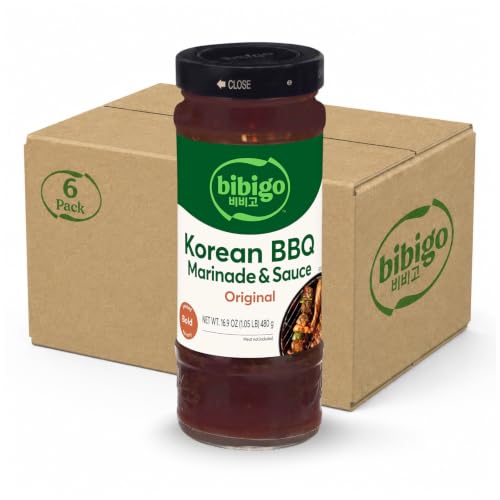
bibigo Korean BBQ Sauce, Original, Pack of 6
| Spec | Detail |
|---|---|
| Brand | bibigo |
| Flavor | Original |
| Size | 16.9 oz bottle |
| Pack count | 6 bottles |
| Key ingredients | Soy sauce, pear puree, apple puree, garlic, sesame |
| Allergens | Contains wheat and soybean |
| ASIN | B008N1QFUM |
bibigo is the grocery brand of CJ, and this Original Korean BBQ sauce is its flagship bulgogi-style blend. The listing describes a balance of sweet and savory built on soy sauce with pear puree and apple puree, the two fruits that give traditional bulgogi its gentle tenderizing effect and rounded sweetness. Onion, garlic, green onion, ginger, and black pepper complete the profile, so the sauce tastes finished straight from the bottle.
The pack format is the value story. Six bottles of 16.9 oz each give a household a deep pantry reserve, suiting families who rotate bulgogi, rib-style grilling, and Korean stir-fries through the week. The listing directions call for at least thirty minutes of marinating, and one bottle marinates about 2.2 pounds of chicken or pork. Buying in this quantity keeps the per-bottle cost low compared with single bottles, and the sauce also works as a dip and a glaze. Note that the recipe contains wheat and soybean, so gluten-free kitchens should look below instead.
J1 Korean BBQ Sauce, Kalbi and Bulgogi, 33.86 Ounce

| Spec | Detail |
|---|---|
| Brand | J1 (Jayone) |
| Flavor | Kalbi and Bulgogi |
| Size | 33.86 oz bottle |
| Pack count | 1 bottle |
| Key ingredients | Soy sauce, cane sugar, sake, pear extract, pineapple extract, sesame oil |
| Allergens | Contains soy and wheat |
| ASIN | B00FDSB7W4 |
J1, the sauce line from Jayone Foods, takes a slightly different route to the same dish. This 33.86 oz bottle is labeled for both kalbi and bulgogi, so one purchase covers short ribs and sliced beef alike. The ingredient list on the listing reads like a well-stocked Korean pantry: soy sauce, cane sugar, sake, onion powder, garlic powder, ginger, sesame oil, sesame seeds, black pepper, pear extract, and pineapple extract. Pairing pear with pineapple is practical, since both fruits bring the bright sweetness that helps a marinade soften thin cuts.
Size is the headline for budget shoppers. One bottle holds roughly double the sauce of a standard grocery bottle, stretching across many meals before a replacement is needed. Households that marinate in big batches for gatherings or meal prep will appreciate not opening a second bottle halfway through a recipe, and the large format usually brings the cost per ounce down compared with the smaller size sold under the same brand. Refrigerate after opening and use it steadily.
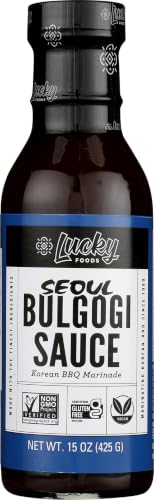
Lucky Foods Seoul Bulgogi Sauce, 15 Ounce
| Spec | Detail |
|---|---|
| Brand | Lucky Foods |
| Flavor | Bulgogi |
| Size | 15 oz bottle |
| Pack count | 1 bottle |
| Key ingredients | Tamari soy sauce, cane sugar, pineapple juice concentrate, salted mirin, sesame oil |
| Dietary notes | Vegan, gluten free, non-GMO |
| ASIN | B0BKNH5V1D |
Most traditional bulgogi sauces are brewed with wheat-based soy sauce, which puts them off limits for gluten-free kitchens. Lucky Foods builds its Seoul Bulgogi Sauce differently. The label is based on tamari soy sauce, brewed without wheat, and the brand markets the sauce as vegan, gluten free, and non-GMO. The ingredient list stays short: tamari, cane sugar, pineapple juice concentrate, dried garlic, salted mirin, dried onion, non-GMO corn starch, distilled vinegar, sesame oil, and spice. The pineapple and mirin give it a tangy sweetness that stands in well for the classic pear.
Lucky Foods is a family-run company based in Portland, Oregon, and the brand describes this recipe as inspired by a family recipe refined over decades. The 15 oz bottle is a sensible middle size: large enough for several rounds of marinating, small enough to finish while the flavor is still bright. It marinates beef, pork, and chicken, glazes vegetables and tofu, and doubles as a dipping or stir-fry sauce, making it a useful swap for mixed-diet households. Refrigerate after opening, and shake before pouring.
Chung Jung One Premium Korean BBQ Sauce and Marinade, Spicy, 2 Count

| Spec | Detail |
|---|---|
| Brand | Chung Jung One |
| Flavor | Spicy Korean BBQ |
| Size | 14.5 oz bottle |
| Pack count | 2 bottles |
| Key ingredients | Gochujang, apple puree, pear puree, soy sauce, miso |
| Label notes | No MSG, no artificial ingredients |
| Allergens | Contains soy and wheat |
| ASIN | B01N33CJ4W |
Classic bulgogi is a mild dish, but plenty of home cooks prefer their Korean BBQ with real heat. This Premium Spicy sauce and marinade from Chung Jung One, sold under its O’Food label, is built for them. The listing describes a base of gochujang, the fermented Korean chili paste, blended with apple, Korean red pepper powder, garlic, and savory miso. Under the chili warmth, the recipe keeps the bulgogi essentials: apple puree and pear puree for sweetness and tenderizing, soy sauce for depth, plus apple cider vinegar and kiwi and pineapple purees for brightness.
The two-bottle format is a sensible budget structure for a specialty flavor. Each bottle holds 14.5 oz, and the brand’s recipe guidance calls for about four to five tablespoons of marinade per pound of meat or vegetables, with at least thirty minutes of marinating and up to a day in the refrigerator. At that ratio, one bottle covers several family meals while the sealed second bottle waits in the pantry. Because the heat is baked in, households cooking for small children should choose a mild pick above instead.
Somunnan Korean Bulgogi Cooking Sauce, 5 Pouches

| Spec | Detail |
|---|---|
| Brand | Somunnan |
| Flavor | Bulgogi |
| Size | 100 g pouch |
| Pack count | 5 pouches, 500 g total |
| Key ingredients | Soy sauce, pear, apple, ginger, sesame oil |
| Use guide | About 100 g of sauce per serving |
| ASIN | B0GCLGFFLX |
Somunnan packages its Korean Bulgogi Cooking Sauce in a format none of the bottled picks can match: five individually sealed 100 g pouches, for 500 g of sauce in total. Each pouch is a single cooking session measured out in advance. The listing suggests roughly 100 g of sauce per serving, added directly to the pan with sliced meat and vegetables, so there is no half-used bottle aging in the refrigerator door. For one-person and two-person households, that portion control is a genuine budget feature, because nothing gets thrown away.
The recipe stays close to tradition, with a short ingredient list: soy sauce, pear, apple, salt, ginger, and sesame oil. Pear and apple supply the classic fruity sweetness, ginger adds warmth without chili heat, and sesame oil brings the nutty finish that defines bulgogi. Because the sauce is added during cooking rather than used only as a long marinade, it suits quick pan-cooked dishes and weeknight stir-fries. The pouches stack flat in a drawer and travel without glass to protect, making this the lowest-risk entry point in the guide for occasional bulgogi cooks.
Frequently Asked Questions
How much bulgogi sauce do I need per pound of meat?
Most brands suggest roughly four to five tablespoons of marinade for every pound of sliced meat or vegetables, and some large bottles are portioned so that one bottle seasons a little over two pounds of meat. Thin slices absorb flavor quickly, so a modest coating is enough. Start with the label ratio and add a spoonful more at the pan as a glaze rather than drowning the meat.
How long should beef marinate in bulgogi sauce?
Thirty minutes is the minimum most listings recommend, and it is enough for very thin slices. A few hours in the refrigerator gives deeper flavor, and several brands note that beef can marinate up to a full day. Because many bulgogi sauces contain pear, apple, or pineapple, very long marinating can soften the surface of the meat, so overnight is a practical ceiling for fruit-based blends.
Can bulgogi sauce be used for chicken, pork, or vegetables?
Yes. Every sauce in this guide is described by its maker as suitable for more than beef. The same sweet and savory base works on chicken thighs, pork loin, shrimp, tofu, and sturdy vegetables, and it doubles as a stir-fry sauce or finishing glaze. Used as a glaze, brush the sauce on near the end of cooking so its sugars caramelize instead of burning.
How should an opened bottle of bulgogi sauce be stored?
Refrigerate the bottle after opening and keep the cap clean so the sauce pours well. Unopened bottles and sealed pouches store in a cool pantry away from heat and sunlight. The sauce keeps its best flavor when used steadily rather than saved for months, which is another reason to match bottle size to how often your household cooks Korean food.
Product and ASIN Reference
| Product | ASIN |
|---|---|
| bibigo Korean BBQ Sauce, Original, Pack of 6 | B008N1QFUM |
| J1 Korean BBQ Sauce, Kalbi and Bulgogi, 33.86 Ounce | B00FDSB7W4 |
| Lucky Foods Seoul Bulgogi Sauce, 15 Ounce | B0BKNH5V1D |
| Chung Jung One Premium Korean BBQ Sauce and Marinade, Spicy, 2 Count | B01N33CJ4W |
| Somunnan Korean Bulgogi Cooking Sauce, 5 Pouches | B0GCLGFFLX |









Write Your Review
No reviews yet. Be the first to share your experience!