
Our Short List of 3
All 5 Picks at a Glance
| Product | Specs | Action |
|---|---|---|
 Food to Live Organic Amaranth Flour, 4 Pounds | Check price on Amazon | |
 Bob’s Red Mill Organic Amaranth Flour, 18 Ounce | Check price on Amazon | |
 Yupik Organic Amaranth Flour, 2.2 Pounds | Check price on Amazon | |
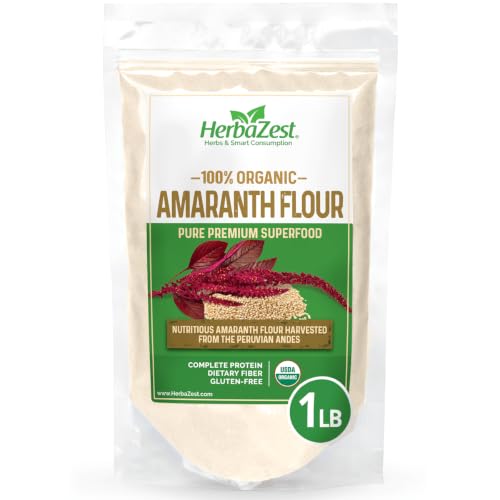 HerbaZest Amaranth Flour Organic, 1 Pound | Check price on Amazon | |
 Relative Foods Organic Amaranth Flour, 5 Pounds | Check price on Amazon |
Key takeaways
- Compare the best budget amaranth flour for gluten-free baking, flatbreads, and porridge, with pack sizes, grinds, and certifications in one place.
Amaranth flour is milled from the tiny seeds of the amaranth plant, a pseudocereal that has been grown in Central and South America for thousands of years. Because the seed contains no gluten, the flour suits gluten-free baking, flatbreads, pancakes, and warm breakfast porridge, and it brings a mild, earthy, slightly nutty flavor that wheat flour does not have. It also carries more protein and fiber than most grain flours, including lysine, an amino acid that many cereal grains lack.
For a budget pantry, the practical questions are simpler: how much flour is in the bag, how fine the grind is, which certifications the listing states, and whether the pack size matches how often the flour will actually be used. The five options below are all plain amaranth flour sold on Amazon, compared on the details their listings state, from a small one-pound bag for first-time buyers to bulk packs for regular gluten-free baking.
As an Amazon Associate, we earn from qualifying purchases.
How to Choose Budget Amaranth Flour
Start with pack size. Amaranth flour contains natural oils from the whole seed, so it stays fresh for a limited time once opened. A one-pound or eighteen-ounce bag suits occasional baking and first experiments, while two-pound and four-pound bags fit households that bake gluten-free goods every week. The largest five-pound bags reward frequent use but call for airtight storage in a cool, dark place, or in the refrigerator or freezer for longer keeping.
Next, look at the grind. Listings describe fine meal and finely milled flours, which blend smoothly into batters, porridge, and sauces. Stone-ground flours keep the whole seed in the mix and can feel slightly heartier in flatbreads and rustic loaves. Either style works in pancakes, muffins, and quick breads, where amaranth flour is usually blended with other gluten-free flours and a binder rather than used entirely on its own in risen doughs.
Certifications are the third check. Several listings state USDA organic certification, and many add kosher and non-GMO claims. Shoppers who need a flour handled as gluten-free should confirm that the listing itself states gluten-free, since wording varies by brand. Finally, match the flour to the job: fine grinds for porridge and thickening, stone-ground bags for blending into everyday baking, and sprouted or bulk options only when the recipe rotation justifies them.
Food to Live Organic Amaranth Flour, 4 Pounds
This four-pound bag is the bulk organic option in the group. The listing describes a fine meal milled from whole grain amaranth and stone-ground, with organic, non-GMO, kosher, and vegan claims stated on the product page. A bag of this size suits kitchens that bake gluten-free bread, pancakes, and muffins on a weekly rhythm and want one pantry staple instead of repeated small orders.
The fine grind is the practical draw. It stirs into porridge without grittiness, thickens soups and sauces evenly, and blends with rice flour, sorghum flour, or tapioca starch in gluten-free mixes. The brand also sells a two-pound version of the same flour, so households that bake less often can start smaller and move up if the flavor earns a permanent place in the rotation.
Because the flour is a single-ingredient whole grain product, storage matters. The brand directs buyers to keep its dry goods in a cool, dry place, and a four-pound bag is best decanted into a sealed container after opening. For shoppers comparing cost per baking session rather than sticker size, this is the straightforward bulk pick.
Bob’s Red Mill Organic Amaranth Flour, 18 Ounce
Bob’s Red Mill is the most familiar name in this roundup, and its amaranth flour comes in a modest eighteen-ounce bag that suits first-time buyers. The flour is stone-ground from organic whole grain amaranth and is labeled gluten-free, which makes it an easy starting point for anyone adding a new flour to a gluten-free shelf without committing to a bulk bag.
The smaller format also keeps the flour fresher across a slower baking schedule. An eighteen-ounce bag covers a run of pancake breakfasts, a few batches of muffins, or flatbread experiments, and the earthy, nutty flavor shows up clearly at the substitution levels gluten-free recipes usually suggest, where amaranth flour makes up part of the total flour blend.
Shoppers who bake for a household with mixed diets often keep a bag like this beside their regular flours, adding a portion to quick breads and cookies for extra protein and fiber. The brand’s long presence in the natural foods aisle also means the product is easy to find again when a second bag is needed, and a two-bag pack of the same flour is listed for buyers who settle on it.
Yupik Organic Amaranth Flour, 2.2 Pounds
Yupik’s two-point-two-pound bag sits between the trial sizes and the bulk bags. The listing states USDA organic certification along with gluten-free, non-GMO, vegan, and kosher claims, and describes a finely milled flour with a mild, nutty flavor. That middle size fits households that bake gluten-free goods a few times a month and want a bag that lasts without lingering open for too long.
The listing points the flour at two everyday jobs: baking as an alternative to wheat flour in blends, and thickening soups, stews, and casseroles. A fine grind helps on both counts, since it disperses in hot liquids without clumping and folds into batters without a coarse crumb. The brand also notes the flour as a source of iron and fiber, which matches the general nutritional profile of whole amaranth seed.
Yupik packages many of its pantry staples in the same two-point-two-pound format, so shoppers who already stock the brand’s other flours and grains will find the sizing familiar. For a budget buyer who wants organic certification and a moderate quantity in one purchase, this bag covers the middle ground of the group.
HerbaZest Amaranth Flour Organic, 1 Pound
HerbaZest offers the smallest bag in this guide, a one-pound pack of organic amaranth flour sourced from the Andean regions of Peru, where the crop has been grown for generations. The listing states USDA certified organic status along with vegan, gluten-free, and non-GMO claims, and presents the flour as a source of complete protein, dietary fiber, and iron.
A one-pound bag is the lowest-commitment way to learn how amaranth flour behaves. It is enough for porridge trials, a few pancake mornings, and small test batches of muffins or flatbreads, so a household can judge the earthy flavor before choosing a larger format. The brand suggests the flour for baked and non-baked goods, yogurt, and savory dishes, which reflects how finely milled amaranth flour is typically used at home.
Because HerbaZest sells a wider line of Andean pantry goods, shoppers building a gluten-free shelf around quinoa and similar staples may find the brand’s range convenient. On a pure cost-per-bag basis this is the entry point of the five, and for single-person households or occasional baking, the small size is a feature rather than a compromise.
Relative Foods Organic Amaranth Flour, 5 Pounds
Relative Foods sells the largest bag in the group, five pounds of organic amaranth flour. The listing states that the flour is milled from organic amaranth grain with no additives, preservatives, or synthetic ingredients, and it carries organic, non-GMO, and gluten-free claims. The brand highlights protein, fiber, iron, calcium, and magnesium among the nutrients the flour provides.
A five-pound commitment only makes sense with a plan: weekly gluten-free bread and flatbread baking, regular porridge, or a household where several people eat from the same pantry. Used steadily, a bulk bag lowers the cost of each baking session compared with repeated small purchases, and it keeps a single consistent flour on hand so recipes behave the same way from batch to batch.
The trade-off is storage discipline. A bag this size should be sealed tightly, kept cool and dry, and portioned into smaller containers for daily use so the main supply is opened less often. For committed gluten-free bakers who already know amaranth flour suits their recipes, this is the volume pick of the roundup.
Frequently Asked Questions
Can amaranth flour replace wheat flour on its own?
Not in most risen recipes. Amaranth flour has no gluten, so doughs made only from it stay dense and crumbly. It performs best as part of a blend, commonly making up a portion of the total flour alongside rice flour, sorghum flour, or starches, with a binder such as xanthan gum or psyllium husk where the recipe calls for one.
What does amaranth flour taste like?
Listings and brand descriptions consistently describe a mild, earthy, slightly nutty flavor. The taste is noticeable in plain bakes like pancakes and flatbreads and softer in spiced or sweet recipes such as muffins and cookies, where cinnamon, vanilla, or cocoa share the stage.
How should amaranth flour be stored after opening?
Move it to an airtight container and keep it in a cool, dark place away from heat and sunlight. Because the flour is milled from a whole seed with natural oils, refrigeration or freezing extends its freshness for longer storage, which matters most for the larger bags in this guide.
Is amaranth flour suitable for porridge and thickening?
Yes. Fine grinds stir smoothly into hot cereals and porridge, and the flour also thickens soups, stews, and sauces. Several listings in this roundup name thickening as a primary use, and the fine-meal options handle it without the grittiness a coarse grind can leave behind.
Product and ASIN Reference
| Product | ASIN |
|---|---|
| Food to Live Organic Amaranth Flour, 4 Pounds | B0BGF59L9G |
| Bob’s Red Mill Organic Amaranth Flour, 18 Ounce | B07X21WMW6 |
| Yupik Organic Amaranth Flour, 2.2 Pounds | B07TYZK63S |
| HerbaZest Amaranth Flour Organic, 1 Pound | B07SV5D7QY |
| Relative Foods Organic Amaranth Flour, 5 Pounds | B0DK473VRS |






Write Your Review
No reviews yet. Be the first to share your experience!