
Our Top Picks



What Are the Best Reflux Column Stills for High-Proof Spirits in 2026?
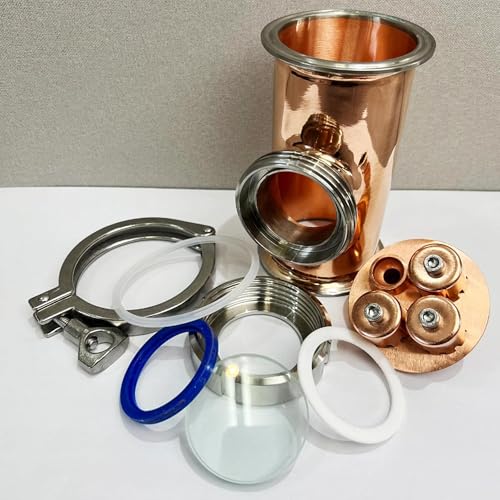
The best overall reflux column still for most home distillers is the HOOLOO 3″ Copper Distillation Column Kit, because its 3-inch diameter body, copper internals, and modular kit format handle high-proof stripping and spirit runs for small-to-mid batches without the fragility of all-glass builds or the cost of full copper flutes. If your priority is lowest entry cost and you can live with tighter throughput, the oakstills 2 Inch 4 Plate Glass Reflux Still Column is the budget pick. If you want the most capable, upgrade-ready platform and have the budget and bench space, the Titunjian 4 Inch Reflux Column Plate Stainless Moonshine Still Flute Column is the premium choice. The short version: buy stainless and copper for durability, size the column to your boiler and batch size, and treat glass columns as excellent learning tools rather than everyday workhorses.
Top 3 Picks
Best Overall: HOOLOO 3″ Copper Distillation Column Kit
A balanced 3-inch column kit with copper contact surfaces, which is the sweet spot between throughput, purity, and price for most hobbyists running 5–15 gallon boilers. It suits intermediate distillers who want repeatable high-proof output and a system they can expand with plates or packing later. Copper also helps manage sulfur compounds during the run, which is why so many home builds pair a stainless body with copper internals.
Best Budget: oakstills 2 Inch 4 Plate Glass Reflux Still Column
A 2-inch glass column with four plates that lets you visually watch reflux behavior — flooding, weeping, and plate loading — which is genuinely useful when you are learning what “correct” operation looks like. It is the cheapest way to get real reflux behavior rather than a pot-still approximation. The tradeoff is glass: slower heat-up, careful handling, and lower throughput than metal.
Best Premium: Titunjian 4 Inch Reflux Column Plate Stainless Moonshine Still Flute Column
A 4-inch stainless flute-style column section built for large boilers, fast vapor speed, and big batch throughput. It is aimed at experienced distillers with 15+ gallon boilers who want plate-based reflux and the ability to add sections or reconfigure the stack. The larger diameter pushes cost, weight, and cleaning effort upward, but the capacity ceiling is far higher than any 2-inch build.
Quick Comparison
| Product | Best For | Key Specs | Price Tier |
|---|---|---|---|
| oakstills 2 Inch 4 Plate Glass Reflux Still Column | Beginners who want to see reflux working | 2 in (51 mm) glass column, 4 plates, glass + stainless/copper internals | Budget |
| HOOLOO 3″ Copper Distillation Column Kit | All-round home use, 5–15 gal boilers | 3 in (76 mm) body, copper internals, kit format (column + condenser + fittings) | Mid-range |
| Affordable Distiller Equipment, LLC Moonshine Stills 2″ Stainless Reflux Column | Durability with modest footprint | 2 in (51 mm) stainless steel column, reflux packing class | Premium |
| YJJZM 2 Inch Still Reflux Column | Cheapest functional metal column | 2 in (51 mm) stainless, tubular distillation design | Budget |
| AGULIUM 3 Inch 10-Hole Dephlegmator Condenser | Upgrading an existing 3 in column | 3 in 304 stainless, 10-hole dephlegmator (partial condenser) | Budget |
| DUIBAII 2inch Tubular Distillation Tower | Fractioning with mesh packing | 2 in stainless tubular tower, copper mesh packing included | Mid-range |
| TENNIEX 2 inch Still Reflux Distilling Column | Large stated capacity on a 2 in column | 2 in stainless tubular tower, 100 L (26 gal) boiler class | Budget |
| 2 inch Glass Reflux Still Column with Condenser | Visual learning with condenser included | 2 in glass column + condenser, plate/glass viewing section | Mid-range |
| 3 inch Glass Bubble Plate Reflux Column with Reducers | Large glass rig with boiler adapters | 3 in glass, bubble plates, reducers for fitting different boilers | Premium |
| 3″ Glass Reflux Still Column with 4 Copper Bubble Plates | Copper plates in a 3 in glass column | 3 in glass, 4 copper bubble plates | Mid-range |
| 4″ Glass Reflux Still Distillation Column with 4 Copper Bubble Plates | High-throughput glass with copper plates | 4 in (102 mm) glass, 4 copper bubble plates | Premium |
| Titunjian 4 Inch Reflux Column Plate Stainless Flute Column | Big-batch plate reflux | 4 in (102 mm) stainless, plate/flute column section | Premium |
Price tier shorthand: budget means the lowest-cost bracket in this category; mid-range means roughly mid-market for the size and materials; premium means the top bracket, typically because of diameter, copper content, or brand/kit completeness. Listing prices change daily, so treat these as tiers, not quotes.
How We Chose
This roundup is built from what the product listings actually state — column diameter, plate count, materials, and included components — plus well-established facts about how reflux columns work and where they fail. We did not run these stills, and nothing here is a measurement or a benchmark; it is a selection based on publicly described specs and category behavior.
The core criteria were: diameter (which caps vapor throughput and therefore batch speed), plate and packing configuration (which determines achievable proof), material quality (stainless and copper versus glass, and how each ages), condenser design (a dephlegmator for reflux control versus a standard product condenser), heat-source compatibility (how the column couples to a boiler and what heat input it tolerates), and cleaning access (whether you can open, brush, and dry the interior). We also weighed the upgrade path: can you add plates, swap packing, or change column height without rebuying the whole rig? Finally, every entry was filtered for legal-use framing — home distillation is regulated differently across jurisdictions, and equipment does not change that.
We shortlisted products that fill distinct roles: a learning tool, a daily-driver metal column, a large-capacity premium build, and the accessory parts that let you fix a weak spot in an existing setup. The result is a list where each item has a clear job rather than a ranked race.
1. oakstills 2 Inch 4 Plate Glass Reflux Still Column – Best for Beginners Learning Reflux
As an Amazon Associate we earn from qualifying purchases at no extra cost to you.

This is the most instructive still on the list. A 2-inch glass column with four plates turns reflux theory into something you can watch: you see the plates load, you see liquid start to weep, and you see what flooding looks like before it ruins a run. For someone in their first year of distilling, that feedback loop is worth more than a few extra liters per hour.
Key Specs
- Column diameter: 2 inch (51 mm)
- Plate count: 4 plates (bubble/plate class)
- Materials: borosilicate-class glass column with metal internals
- Configuration: modular column section, plate-stack style
- Heat source: suited to electric and gas boilers with a compatible 2 in connection
- Cleaning access: best in class — the column comes apart visually and physically
Strengths
The 2-inch glass format is the cheapest way to get real plate behavior. Because the column is transparent, you can diagnose problems without guessing: if your take-off is slow and the plates are dry, you are underpowered; if plates are drowning and vapor is chuffing, you are flooding. That diagnostic clarity is exactly what a beginner needs, and it is impossible to get from an opaque stainless column without instrumentation.
Glass also has a practical benefit: it does not react with anything in the vapor path, and it will not hold onto odors the way porous metal or packing can if it is not dried properly. Cleaning is a rinse-and-dry job, not a scrubbing job.
Pros
- Visibly shows plate loading, weeping, and flooding
- Lowest entry cost of any real reflux column here
- Chemically inert vapor path
- Fast, obvious cleaning — no hidden interior surfaces
- Modular; add sections as you learn
Cons
- Glass is fragile — one knock ends the run and the column
- Slower heat-up and lower throughput than 3 in or 4 in metal
- Not ideal for high-volume repeat sessions
- Typically needs careful support; a tall glass stack on a hot boiler is a real risk if unsecured
How It Compares
Against the 2 inch Glass Reflux Still Column with Condenser, this unit is the leaner, cheaper starting point: same diameter, fewer extras, lower tier. If you expect to run small frequent batches and want condenser included, the bundled version saves you a separate purchase. Against the 3″ Glass Reflux Still Column with 4 Copper Bubble Plates, this one is the training wheels — same idea, more forgiving price, less capacity. Buy this to learn; buy the 3-inch glass when you already know what you are doing and want copper plates doing the work.
2. HOOLOO 3″ Copper Distillation Column Kit – Best Overall for Home Distillers

This is the pick we would hand most people: a 3-inch column kit with copper in the vapor path, sized for the 5–15 gallon boilers that dominate home setups. It is the point where throughput, purity potential, and cost stop fighting each other.
Key Specs
- Column diameter: 3 inch (76 mm)
- Materials: copper internals with stainless-compatible body/fittings
- Format: kit — column, condenser, and connection hardware
- Plate/packing class: reflux column with copper contact surface
- Heat source: compatible with standard boiler connections; handles more heat input than 2 in
- Cleaning access: good — modular kit breaks down into sections
Strengths
The jump from 2 inch to 3 inch is the single biggest practical upgrade in this category. Cross-sectional area scales with the square of diameter, so a 3-inch column has roughly 2.25x the area of a 2-inch one. That means it can handle more vapor without flooding, which in practice means faster runs and more stable plates at higher heat input.
Copper is the second advantage. Copper reacts with sulfur compounds that come off grain washes — the “rotten egg” edge that can carry into the distillate. A copper contact surface, whether in the column or as packing, is the traditional mitigation. It also conducts heat beautifully, which helps plates stabilize instead of oscillating hot and cold.
Because it is sold as a kit, you are not hunting for a condenser that matches your column’s threading or clamp. That mismatch is one of the most common beginner mistakes, and this format removes it.
Pros
- 3-inch diameter is the best balance of speed, purity, and price
- Copper vapor-path contact helps with sulfur notes
- Kit format avoids fitment mismatch
- Modular enough to add plates or swap packing later
- Far tougher than glass for regular use
Cons
- Heavier than a 2-inch build; needs solid boiler support
- Copper needs drying and occasional polishing to avoid patina buildup
- More expensive than the budget 2-inch options
- Still not a large-batch solution for 20+ gallon boilers
How It Compares
Against the DUIBAII 2inch Tubular Distillation Tower, this is simply bigger and more capable: the DUIBAII includes copper mesh packing and is a solid fractioning tower, but 2-inch diameter caps its speed. If your boiler is small and your budget tight, the DUIBAII is a fine choice; if you have a 10-gallon boiler and want throughput, the HOOLOO kit is the better long-term buy. Against the Affordable Distiller Equipment, LLC 2″ Stainless Reflux Column, the HOOLOO trades some brand-premium durability for a larger diameter at a lower tier — a straightforward win on specs for most users.
3. Affordable Distiller Equipment, LLC Moonshine Stills 2″ Stainless Reflux Column – Best for Durable Small-Batch Work
This is a 2-inch stainless reflux column from an established distilling-equipment name. It is the “buy once” option for someone who wants a compact column that will still be working in five years.
Key Specs
- Column diameter: 2 inch (51 mm)
- Material: stainless steel
- Type: reflux column, packing-class internals
- Heat source: compatible with standard boiler/column connections
- Cleaning access: moderate — stainless interiors need brushing and thorough drying
- Fragility: low — no glass in the column
Strengths
Stainless steel is the pragmatic material for a column you actually use. It dents instead of shattering, it tolerates thermal cycling, and it does not care if you bump it against the edge of a sink. For someone who runs the still on a schedule and stores it in a garage or shed, that durability matters more than a visual window.
The 2-inch format keeps the footprint small, which matters in apartments, small utility rooms, or any setup where the boiler sits on a countertop. It is also lighter than a 3-inch or 4-inch metal column, so you can mount and dismount it without help.
Pros
- Stainless construction survives real-world handling
- Compact 2-inch footprint fits tight spaces
- No glass breakage risk
- Established equipment brand in this niche
- Simple, proven reflux column design
Cons
- 2-inch diameter limits throughput
- Stainless alone gives no copper contact — consider adding copper packing
- Premium tier pricing for a 2-inch column
- Opaque; you cannot see plate behavior
How It Compares
Against the YJJZM 2 Inch Still Reflux Column, both are 2-inch stainless, but this one sits in the premium tier: you are paying for the brand’s build reputation and support rather than for a bigger column. If cost is the deciding factor, the YJJZM delivers the same 2-inch stainless format at a lower tier. Against the TENNIEX 2 inch, which states a much larger 100 L / 26 gal boiler class, this column is the more conservative, compact choice — the TENNIEX is aimed at pairing a narrow column with a big boiler, which is a specific (and sometimes awkward) combination.
4. YJJZM 2 Inch Still Reflux Column – Best Budget Stainless Reflux Column

If you want a metal column at the lowest possible cost, this is the entry point. It is a 2-inch stainless steel reflux distilling column in the 51 mm tubular class — nothing exotic, just the basic form factor done in metal.
Key Specs
- Column diameter: 2 inch (51 mm)
- Material: stainless steel
- Type: tubular distillation/reflux column
- Class: packing-compatible — pair with copper or stainless mesh
- Heat source: standard boiler connection, moderate heat input
- Cleaning access: accessible tube, brush and rinse
Strengths
The value proposition is simple: real stainless hardware at a budget tier. For a first metal column, or for someone who wants to experiment with packing materials (copper mesh, stainless scrubbers, structured packing) without investing heavily, this is a low-risk base. A bare 2-inch tube plus your choice of packing is arguably the most flexible low-cost reflux setup there is, because you control the packing density and therefore the reflux behavior.
Stainless also means you can run it hard, rinse it out, and not worry. There is no glass to crack and no thin copper wall to dent.
Pros
- Lowest-cost metal column on this list
- Stainless durability and easy maintenance
- Ideal platform for experimenting with packing types
- Compact and lightweight
- Simple design means few failure points
Cons
- Bare column — expect to buy packing and often a condenser separately
- 2-inch diameter caps vapor throughput
- No copper contact unless you add it
- Build quality varies more at this price tier; inspect seams and threads on arrival
How It Compares
Against the Affordable Distiller Equipment 2″ Stainless Reflux Column, this is the budget version of the same concept: same diameter, same material, lower tier, less brand premium. Against the DUIBAII 2inch Tubular Distillation Tower, the DUIBAII is the mid-range version with copper mesh included — if you know you want packing, the DUIBAII’s bundled mesh may cost less overall than buying this column plus separate packing and a condenser.
5. AGULIUM 3 Inch 10-Hole Dephlegmator Condenser – Best for Upgrading an Existing Column

This is not a full column — it is a component, and a very specific one. A dephlegmator (also called a reflux condenser or partial condenser) sits at the top of a column and controls how much vapor is knocked back down as reflux. It is the valve that governs your reflux ratio.
Key Specs
- Diameter: 3 inch (76 mm)
- Material: 304 stainless steel
- Type: 10-hole dephlegmator condenser for column stills
- Function: partial condensation / reflux control
- Compatibility: designed for 3 in column stacks
- Cleaning access: coolant passages and vapor path need periodic descaling
Strengths
A dephlegmator is the difference between a column that sort of refluxes and one you can actually steer. By varying coolant flow through it, you change how much condensate falls back down the column versus how much passes to the product condenser. More reflux means higher proof and cleaner separation; less means faster take-off and more flavor carryover. A 10-hole design gives generous vapor path area for a 3-inch stack, which helps avoid the pressure buildup that makes plates unstable.
It is also a smart repair-or-upgrade purchase. If you already own a 3-inch column with a weak or missing dephlegmator, swapping in a proper 304 stainless unit is far cheaper than replacing the whole rig.
Pros
- Directly upgrades reflux control on a 3 in column
- 304 stainless resists corrosion and cleans up well
- 10-hole layout suits 3 in vapor volumes
- Cheap way to fix an underperforming stack
Cons
- Not a standalone still — requires an existing column and boiler
- Must match your column’s diameter and connection exactly
- Adds a second coolant circuit to manage
- Coolant-side scale buildup degrades performance if ignored
How It Compares
Against the HOOLOO 3″ Copper Distillation Column Kit, this is a piece rather than a system: the HOOLOO gives you the whole column with condenser included, while the AGULIUM gives you one high-value component. Buy the AGULIUM if you already have a 3-inch column; buy the HOOLOO if you are starting from nothing. The distinction is whether your bottleneck is a missing part or a missing still.
6. DUIBAII 2inch Tubular Distillation Tower – Best Mid-Range 2-Inch Fractioning Tower

A 2-inch stainless tubular distillation tower that ships with copper mesh packing. This is the middle path: more complete and better equipped than a bare budget tube, without stepping up to 3-inch pricing.
Key Specs
- Column diameter: 2 inch (51 mm)
- Material: stainless steel column, copper mesh packing
- Type: tubular distillation tower / fractioning column
- Packing: copper mesh included — increases surface area for reflux
- Heat source: standard boiler connection, moderate input
- Cleaning access: mesh pulls out for cleaning; column brushes clean
Strengths
Packing is what turns a plain tube into a fractioning column. Copper mesh creates a huge surface area where rising vapor meets falling liquid, and every one of those contacts is a mini distillation step. More contacts means better separation and higher achievable proof. Because the mesh is included, this tower works as intended out of the box rather than needing a second order.
Copper mesh also gives you the sulfur-scrubbing benefit without a copper column body. It is a cheap, replaceable consumable — when it darkens and stiffens, you swap it. That is a much lower-cost maintenance path than replacing copper plates.
Pros
- Copper mesh included — usable immediately
- Mesh provides both surface area and sulfur control
- Packable, unpackable, and adjustable reflux behavior
- Stainless body is durable and easy to rinse
- Mid-range price for a more complete tower
Cons
- 2-inch diameter still limits throughput
- Mesh is a consumable that needs periodic replacement
- Packing too tightly causes flooding; too loosely reduces purity
- Requires some trial and error to tune
How It Compares
Against the YJJZM 2 Inch Still Reflux Column, this is the better-equipped buy if you want packing from day one — the YJJZM is cheaper but bare. Against the TENNIEX 2 inch, the DUIBAII is a pure 2-inch tower, whereas the TENNIEX is marketed for a much larger 100 L boiler class; a 2-inch column on a 100 L boiler will be slow, so the DUIBAII is the more coherent pairing for typical home boiler sizes.
7. TENNIEX 2 inch Still Reflux Distilling Column – Best for Large Boilers on a Budget
A 2-inch stainless tubular distillation tower that the listing associates with a 100 L (26 gal) boiler class. That combination — narrow column, big boiler — is worth understanding before you buy.
Key Specs
- Column diameter: 2 inch (51 mm)
- Material: stainless steel
- Stated boiler class: 100 L / 26 gal
- Type: tubular distillation tower, reflux class
- Heat source: standard connection; large boiler needs substantial, controllable heat
- Cleaning access: tubular interior, brush and rinse
Strengths
The value here is capacity framing at a budget tier: if you already own a large boiler, this gets you a metal reflux column without a premium price. Stainless construction means it handles repeated use and is easy to clean. As a tubular tower, it accepts packing, so you can dial in reflux behavior to suit the wash you are running.
For someone with a big boiler who mostly wants to strip fast and finish with a reflux run, a 2-inch column is a defensible, low-cost route — you just accept that the column, not the boiler, sets your run duration.
Pros
- Budget tier with stainless construction
- Pairs with large boiler volumes per the listing
- Accepts packing for adjustable reflux
- Simple, serviceable tubular design
Cons
- A 2 in column on a 100 L boiler is a throughput bottleneck
- Bare column — packing and condenser may be separate purchases
- Large boils need heavy, controllable heat input to be stable
- Opaque, so diagnosis relies on temperature readings
How It Compares
Against the Titunjian 4 Inch Reflux Column, the contrast is exactly the point: the Titunjian’s 4-inch body is built for the throughput a large boiler can deliver, while this 2-inch column will throttle it. If you genuinely run 20+ gallon batches, spend up to a 3-inch or 4-inch column. If your “large boiler” mostly sits half-full, the TENNIEX is a reasonable budget match and the savings are real.
8. 2 inch Glass Reflux Still Column with Condenser – Best for a Turnkey Glass Setup

A 2-inch glass reflux column bundled with a condenser. Where the cheaper glass column leaves you sourcing a condenser separately, this one arrives as a working pair.
Key Specs
- Column diameter: 2 inch (51 mm)
- Material: glass column with metal internals
- Included: condenser (product condenser) as part of the set
- Type: reflux column, viewing/plate section
- Heat source: compatible boiler connection; gentle, controllable heat recommended
- Cleaning access: excellent — glass rinses clean and shows residue instantly
Strengths
Bundling matters more than it sounds. Condenser matching is a common source of frustration: wrong clamp size, wrong thread, insufficient knock-down capacity for your vapor rate. A matched glass column and condenser removes that variable. You also get the teaching value of a transparent column — everything about plate loading and reflux is visible.
Cleaning is genuinely easier than metal. You can see exactly where residue sits and confirm when it is gone, which matters if you switch between different washes and do not want flavor carryover.
Pros
- Condenser included — no fitment guesswork
- Visible column behavior for learning and diagnosis
- Easy to verify cleanliness
- 2-inch footprint keeps it compact
Cons
- Glass fragility again — handle and store carefully
- Mid-range price for a 2-inch column
- Lower throughput and slower heat-up than metal
- Two glass components means two breakage risks
How It Compares
Against the oakstills 2 Inch 4 Plate Glass Reflux Still Column, this is the same core idea with a condenser included and a mid-range tier rather than budget. If you already own a suitable condenser, the cheaper option is the smarter buy; if you do not, this bundle likely costs less than buying separately and fits together correctly by design. Against the 3″ Glass Reflux Still Column with 4 Copper Bubble Plates, this one is smaller, cheaper, and less capable — the 3-inch is the upgrade when you want more throughput in glass.
9. 3 inch Glass Bubble Plate Reflux Column with Reducers – Best for Flexible Glass Setups

A 3-inch glass column with bubble plates and, crucially, reducers. Reducers let you connect a wider column to a narrower boiler port — the kind of adapter that saves you from buying a new boiler just to use a better column.
Key Specs
- Column diameter: 3 inch (76 mm)
- Material: glass column, bubble-plate internals
- Included: reducers for adapting connection sizes
- Type: bubble plate reflux column
- Heat source: boiler with compatible port after reduction
- Cleaning access: excellent — visible, rinseable glass
Strengths
Reducers are the unsung hero of this listing. In practice, the hardest part of upgrading a column is mechanical compatibility: your boiler has a 2-inch port and your new column is 3-inch. A reducer solves that in one part instead of a rebuild. That flexibility makes this a genuinely practical upgrade rather than a showpiece.
Bubble plates are the other strength. Compared with loose mesh packing, bubble plates create defined, repeatable vapor-liquid contact stages. Each plate behaves predictably, which makes runs more consistent once you learn the rig. In a glass column, you can watch each plate’s behavior individually — a level of feedback no metal column offers.
Pros
- Reducers included for boiler adaptability
- Bubble plates give repeatable, stage-based separation
- 3-inch diameter outruns 2-inch glass noticeably
- Full visibility of every plate
- Glass is chemically inert and easy to clean
Cons
- Premium tier; glass plus plates plus reducers adds cost
- Tall glass stack needs stable support
- Plates in glass are delicate and expensive to replace
- Heavier and more cumbersome than a 2-inch glass column
How It Compares
Against the 3″ Glass Reflux Still Column with 4 Copper Bubble Plates, this unit distinguishes itself mainly by the reducers and tier, which makes it the more adaptable purchase for someone whose boiler connection is uncertain. Against the 4″ Glass Reflux Still Distillation Column with 4 Copper Bubble Plates, this 3-inch is the more manageable size: the 4-inch version offers more throughput but a much larger, heavier glass assembly to support and clean. If your boiler is modest, 3-inch is the sensible ceiling.
10. 3″ Glass Reflux Still Column with 4 Copper Bubble Plates – Best for Copper Plate Performance in Glass

A 3-inch glass column fitted with four copper bubble plates. This combines the transparency of glass with the practical benefits of copper where it matters most — at the contact surfaces.
Key Specs
- Column diameter: 3 inch (76 mm)
- Material: glass column, copper bubble plates
- Plate count: 4 copper bubble plates
- Type: bubble plate reflux column
- Heat source: standard boiler connection with compatible fitting
- Cleaning access: very good — glass body plus removable plates
Strengths
Copper plates do two jobs at once. They provide defined bubble-cap contact stages, which give predictable separation, and they present copper to the vapor path, which helps with sulfur compounds. Putting copper inside a glass column means you get the sulfur benefit and the visual feedback simultaneously — arguably the best of both materials in one rig.
Four plates is a sensible middle count. More plates mean higher achievable proof and slower take-off; four gives you real reflux fractioning without turning every run into an all-day event. For high-proof spirit work in the 2–8 gallon batch range, four plates is a practical sweet spot.
Pros
- Copper plates at the contact surfaces
- Transparent column for real-time plate diagnosis
- Four plates balance proof and run speed
- Removable plates simplify cleaning
- 3-inch diameter handles more vapor than 2-inch builds
Cons
- Copper plates need drying and occasional cleaning to control patina
- Mid-range-plus to premium pricing at this size
- Glass remains a breakage risk
- Needs a stable boiler setup and careful heat control
How It Compares
Against the Titunjian 4 Inch Reflux Column Plate Stainless Flute Column, this is the glass-and-copper alternative to a metal flute: the Titunjian is tougher, larger, and better suited to heavy repeat use, while this glass rig is more instructive and easier to inspect. Against the 3 inch Glass Bubble Plate Reflux Column with Reducers, the key difference is the reducers — if boiler fit is uncertain, buy the reducer version; if your connection is known and you want copper plates, this is the cleaner choice.
11. 4″ Glass Reflux Still Distillation Column with 4 Copper Bubble Plates – Best for High-Throughput Glass

A 4-inch glass column with four copper bubble plates. This is the largest glass rig here, and the step up from 3 to 4 inches is dramatic: cross-sectional area grows by roughly 78 percent, so it can move far more vapor.
Key Specs
- Column diameter: 4 inch (102 mm)
- Material: glass column, copper bubble plates
- Plate count: 4 copper bubble plates
- Type: bubble plate reflux column
- Heat source: needs a boiler that can deliver serious, controllable power
- Cleaning access: good — large openings, visible interior, removable plates
Strengths
Diameter is throughput. A 4-inch column lets you push far more vapor per hour without flooding than a 2-inch or 3-inch build, which means larger batches finish in a reasonable time. Combined with four copper plates, it delivers real fractioning capacity for high-proof work.
Glass at this size is also a maintenance advantage: big openings make cleaning fast, and you can see the full interior without disassembly guesswork. Copper plates add the sulfur-management benefit. For a hobbyist who has moved past small test batches and wants output, this is the glass ceiling — literally and figuratively.
Pros
- Largest throughput of any glass column here
- Copper plates for contact-stage separation and sulfur control
- Easy to inspect and clean due to size and transparency
- Four plates is a practical reflux configuration
Cons
- Heavy and tall — needs robust support and space
- Expensive glass; replacement cost is significant
- Requires a powerful, well-controlled heat source
- Overkill for small 2–5 gallon batches
How It Compares
Against the 3″ Glass Reflux Still Column with 4 Copper Bubble Plates, this is the same concept scaled up: more throughput, more weight, more cost, more space required. Against the Titunjian 4 Inch Reflux Column, the trade is material: both are 4-inch, but stainless is tougher and better for frequent heavy runs, while glass is more instructive and easier to verify clean. Choose glass to learn and inspect; choose stainless to work hard.
12. Titunjian 4 Inch Reflux Column Plate Stainless Flute Column – Best Premium Large-Batch Build

A 4-inch stainless flute-style column section built for big boilers and serious throughput. This is the workhorse end of the list: no glass, no fragility, maximum capacity.
Key Specs
- Column diameter: 4 inch (102 mm)
- Material: stainless steel
- Type: plate/flute column section, stackable
- Configuration: single column section — build or extend a stack
- Heat source: requires a large boiler with high, controllable heat output
- Cleaning access: moderate — stainless interiors need brushing and thorough drying
Strengths
Stainless at 4 inches is the combination that handles real production-style workloads. It will not shatter, it tolerates thermal cycling, and it can be stacked — flute columns are modular by nature, so you add sections to increase plate count and separation. That upgrade path is the real value: you buy one section now and extend later rather than replacing the rig.
Because it is a bare column section, it also integrates with existing 4-inch hardware, condensers, and dephlegmators if you already run a large rig. For an experienced distiller with a 15+ gallon boiler, this is a component in a system rather than a starter kit.
Pros
- 4-inch stainless: maximum durability and throughput
- Modular flute design supports stacking and upgrades
- Ideal for large boilers and repeat sessions
- No glass breakage risk
- Integrates with existing 4-inch hardware
Cons
- Premium tier and typically sold as a section, not a complete still
- Heavy; requires strong support and plenty of vertical space
- Demands a powerful, precise heat source to run well
- Stainless-only vapor path means adding copper packing or plates for sulfur control
How It Compares
Against the HOOLOO 3″ Copper Distillation Column Kit, this is a step up in size and a step down in completeness: the HOOLOO is a ready-to-run kit with copper and a condenser, while the Titunjian is a large stainless section for someone building a bigger system. Against the 4″ Glass Reflux Still Distillation Column with 4 Copper Bubble Plates, this is the durability-first choice: same diameter, tougher material, no copper plates included, and a modular path to more plates later. Buy this if you run often and large; buy the 4-inch glass if you want to watch and learn.
How to Choose a Reflux Column Still for High-Proof Spirits
The column, not the boiler, decides how fast and how pure your runs are. Here is how to reason through the decision with numbers instead of marketing language.
Start With Diameter, Because It Sets Your Ceiling
Column cross-sectional area scales with the square of diameter, and area is what determines how much vapor you can move before the column floods. The practical ratios:
- 2 inch (51 mm): baseline area. Suitable for boilers up to roughly 8–10 gallons.
- 3 inch (76 mm): about 2.25x the area of 2 inch. Comfortable for 10–15 gallon boilers.
- 4 inch (102 mm): about 3.9x the area of 2 inch. Appropriate for 15+ gallon boilers and repeat production-style runs.
This is the single most common buying mistake: pairing a 2-inch column with a 25-gallon boiler. The boiler can produce far more vapor than the column can pass, so you either run at a fraction of the boiler’s capability or you flood the column repeatedly. Match diameter to boiler. If you are unsure, go one size up rather than down — an oversized column can be run gently; an undersized one cannot be run hard.
Column Height and Plate Count Determine Achievable Proof
More plates and more packed height mean more vapor-liquid contact stages, which means better separation and higher proof. As a rough guide for planning:
- 2–3 plates / modest packed height: good flavor retention, moderate proof boost — suits flavored spirits where you want character.
- 4 plates / moderate packed height: the practical middle ground for high-proof neutral-leaning spirit without marathon runs.
- 5+ plates or tall packed sections: maximum separation for very high proof, at the cost of much slower take-off.
Note the trade explicitly: every additional stage buys purity by spending time. If your goal is high-proof neutral spirit, more stages help. If your goal is a flavorful high-proof spirit, too many stages strip the character you wanted.
Condenser Design: Dephlegmator Plus Product Condenser
A reflux column needs two separate cooling jobs. The dephlegmator (partial condenser) sits at the top of the column and controls reflux ratio — how much condensate falls back down versus passes on. The product condenser knocks down whatever exits the column into liquid. Weakness in either one caps your results: an undersized dephlegmator cannot hold enough reflux for high proof; an undersized product condenser lets hot vapor escape.
If you are upgrading an existing 3-inch stack, a dedicated dephlegmator is often the highest-value single purchase you can make — it converts a column from “sort of refluxes” to genuinely controllable. If you are building from scratch, buy a kit where both are matched (like the HOOLOO kit) rather than assembling mismatched parts.
Material Quality: Stainless, Copper, or Glass
| Material | Durability | Sulfur Control | Visibility | Best For |
|---|---|---|---|---|
| Stainless steel | Excellent | None by itself | Opaque | Frequent heavy use, large batches |
| Copper | Good, patinas | Yes | Opaque | Sulfur-heavy washes, contact surfaces |
| Glass | Poor (fragile) | None by itself | Excellent | Learning, diagnosis, inspection |
The efficient combination for most people is stainless structure with copper at the contact surfaces — copper plates or copper mesh packing. You get durability where it matters and sulfur control where the vapor actually touches. All-glass is best reserved for learning and inspection, and all-copper is largely a legacy preference since copper bodies are softer, heavier, and more expensive.
Heat-Source Compatibility
Reflux work needs controllable heat far more than it needs maximum heat. Electric elements with a power controller give the steadiest input, which keeps plates stable. Gas is responsive but less precise and introduces an open flame — check that your setup and space permit it. Regardless of source, confirm three things:
- The boiler’s port size matches the column connection, or you have a reducer.
- The boiler can deliver enough power to reach and hold reflux (a big boiler with a weak element will never stabilize plates).
- You have fine-grained control — not just on/off — because reflux ratio is managed by heat input and coolant flow together.
Cleaning Access Is Not a Minor Detail
Residue accumulates in the vapor path, and copper patina, coolant scale, and wash solids all degrade performance over time. Before buying, ask:
- Can the column be opened or disassembled for brushing?
- Is the packing removable, or is it trapped inside?
- Can you inspect the interior, or are you guessing?
- Are the coolant passages accessible for descaling?
Glass wins on all four, stainless with removable plates is a close second, and sealed stainless tubes with fixed internals are the hardest to maintain. What wears first on a reflux column is almost always the consumable packing (copper mesh darkens and stiffens) and the coolant-side passages (scale buildup). Budget for replacing mesh periodically and descaling the condenser.
Legal-Use Considerations
Home distillation of beverage alcohol is regulated differently depending on where you live — some places permit it with licensing, some prohibit it outright, and rules about equipment ownership and use vary. Fuel-grade or water-distillation use may be treated differently from beverage use. Before buying any still, check your local and national rules and, if your intended use is regulated, confirm what licensing or permits apply. This article is general information about equipment, not legal advice, and the equipment itself does not change what is permitted where you are.
A Decision Matrix: Match Your Situation to a Column
| Your Situation | Recommended Pick | Why |
|---|---|---|
| First still, want to learn reflux | oakstills 2 Inch 4 Plate Glass Column | Lowest cost, visible plate behavior |
| First metal column, tight budget | YJJZM 2 Inch Stainless Column | Cheap stainless, packing-flexible |
| Daily driver, 5–15 gal boiler | HOOLOO 3″ Copper Kit | 3 in throughput + copper + complete kit |
| Compact space, want durability | Affordable Distiller Equipment 2″ Stainless | Stainless, small footprint |
| Already own a 3 in column, weak reflux | AGULIUM 3 Inch Dephlegmator | Cheapest fix for reflux control |
| Want packing included | DUIBAII 2inch Tower | Copper mesh bundled |
| Big boiler, minimal budget | TENNIEX 2 inch | Budget match for large volumes |
| Want a matched glass pair | 2 inch Glass Column with Condenser | No fitment guesswork |
| Boiler fit uncertain | 3 inch Glass Bubble Plate with Reducers | Reducers adapt connections |
| Best glass performance | 3″ Glass with 4 Copper Bubble Plates | Copper plates + transparency |
| High-throughput glass | 4″ Glass with 4 Copper Bubble Plates | Largest glass capacity |
| Large batches, heavy use | Titunjian 4 Inch Stainless Flute | Durable, modular, high capacity |
Durability and Ownership Realities
What actually fails on a reflux column, in rough order of likelihood:
- Packing: copper mesh oxidizes, stiffens, and loses surface area. It is a consumable — expect to replace it periodically.
- Coolant passages: scale accumulates, reducing dephlegmator and condenser performance. Periodic descaling keeps it honest.
- Seals and gaskets: heat cycling hardens them; leaks at joints are the most common mid-run problem.
- Glass sections: breakage from knocks, thermal shock, or an unstable stack.
- Copper surfaces: patina is normal; heavy verdigris indicates it was stored wet and needs cleaning.
Common mistakes that cost more than any part: running a 2-inch column on an oversized boiler, using on/off heat instead of proportional control, over-tightening packing until it floods, skipping drying before storage, and ignoring coolant flow as a reflux control variable. Fix those five habits and even an inexpensive column performs well.
Frequently Asked Questions
What size reflux column do I need for a 10-gallon boiler?
A 3-inch column is the right match for a 10-gallon boiler — it has roughly 2.25x the cross-sectional area of a 2-inch column, so it can pass the vapor a 10-gallon boil produces without flooding. A 2-inch column will work but will be the bottleneck, forcing slow runs. A 4-inch column is more capacity than a 10-gallon boiler can usefully feed.
Do I need copper in a reflux column?
Copper in the vapor path helps manage sulfur compounds that come off grain-based washes and can carry a harsh edge into the distillate. You do not strictly need it, but copper mesh packing or copper bubble plates are a low-cost way to get the benefit. If your column is stainless-only, adding copper packing is the simplest fix.
What is a dephlegmator and do I need one?
A dephlegmator is a partial condenser at the top of the column that controls how much vapor is knocked back down as reflux. Adjusting coolant flow through it changes your reflux ratio, which controls proof and separation. If you want genuine control over high-proof output, yes — it is the component that makes a reflux column steerable rather than fixed.
How many plates should a reflux column have?
Four plates is the practical middle ground: enough separation for high-proof spirit without making runs excessively slow. Two to three plates suit flavored spirits where you want to retain character. Five or more plates maximize purity but spend a lot of time doing it, so they suit neutral-spirit goals rather than flavorful ones.
Is a glass reflux column better than stainless?
Neither is universally better — they solve different problems. Glass is more instructive because you can see plate loading and flooding, and it cleans and inspects easily, but it is fragile and slower to heat. Stainless is tougher and better for frequent, heavy use. Many people learn on glass or use a viewing section, then move to stainless for volume.
Can I upgrade an existing reflux column instead of buying a new one?
Often yes, and it is frequently the cheaper route. Adding a proper dephlegmator to a 3-inch stack fixes weak reflux control for the price of one component. Adding packing, swapping to copper plates, or using reducers to fit a different boiler are all single-part upgrades. Replacing the whole rig only makes sense when the diameter itself is the limiting factor.
What heat source works best for reflux distillation?
Controllable heat matters more than raw power. Electric elements with a proportional power controller give the steadiest input, which keeps plates stable and makes reflux ratio easier to manage. Gas is responsive but less precise and involves an open flame. Whatever you use, make sure the boiler can reach and hold reflux on your batch size.
How do I clean and store a reflux column?
Rinse the vapor path after every run, remove and clean packing separately, descale coolant passages periodically, and dry everything thoroughly before storage — residual moisture is what drives copper patina and odor retention. Store glass sections supported and away from knocks. Replace copper mesh when it stiffens and darkens noticeably.
The Bottom Line by Reader Situation
If you are starting out and want to understand reflux before spending big, buy the oakstills 2 Inch 4 Plate Glass Reflux Still Column and learn on a rig you can watch. If you want one column that handles most home batches well, the HOOLOO 3″ Copper Distillation Column Kit is the best overall pick — 3-inch throughput, copper contact, and a matched kit that removes fitment problems. If you already own a 3-inch column that will not hold reflux, spend the least and gain the most by adding the AGULIUM 3 Inch Dephlegmator. And if you run large batches regularly and want equipment that will outlast everything else on this list, the Titunjian 4 Inch Reflux Column is the durable, modular, high-capacity endgame. Whichever you choose, match diameter to your boiler, keep your heat controllable, and check your local rules before your first run.










Write Your Review
No reviews yet. Be the first to share your experience!