
Our Top Picks
 ZeenKind Psoas Release Tool Sciatica Pain Relief DevicesLarge4.3 x 13 x 4 inches0.82 poundsCheck on Amazon
 Telyora Psoas Release Tool-Psoas Muscle Release Tool with11.5 x 3.7 x 4.4 Inches0.8 poundsCheck on Amazon
 ChiFit Multi-Level Back Stretching Device1 Count (Pack of 1)15 x 4 x 2.8 Inches0.9 KilogramsCheck on Amazon
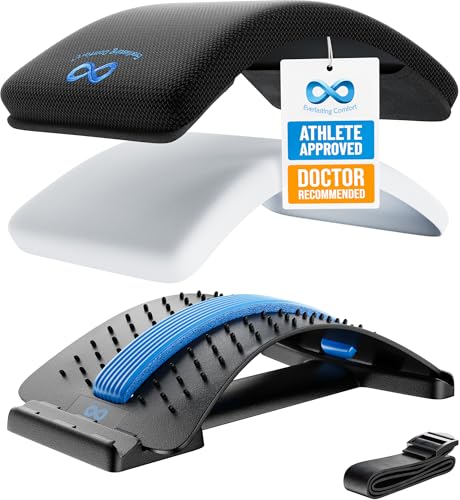 Everlasting Comfort Lumbar Support Board Back Stretcher for16.5 x 10.25 x 2.55 inches1.3 poundsCheck on Amazon


Top 3 Picks
Best overall: The ZeenKind Psoas Release Tool with 14 Massager Knobs is the most versatile single device in this roundup, combining a multi-knob psoas hook with enough shape variation to hit the piriformis, glutes and hip flexors. It suits buyers who want one tool that adapts to several trigger points rather than a dedicated single-purpose stretcher.
Best budget: The Telyora Psoas Release Tool delivers an adjustable hip release hook with a removable silicone pad at the lowest price tier here. It is the right entry point if you want to try direct psoas and piriformis pressure before committing to a premium multi-node tool.
Best premium: The PLDOULY Piriformis Stretcher is purpose-built for piriformis syndrome, with a trigger-point layout designed around the deep gluteal region rather than general lumbar traction. It is the pick for readers whose primary complaint is deep buttock and sciatic-nerve-adjacent tension rather than central lower-back stiffness.
Quick Comparison
The table below covers every device in this roundup. Price tiers are general market bands (budget, mid-range, premium) rather than fixed figures, because listing prices move daily. Specs are described by class where exact numbers vary between production runs.
| Product | Best for | Key specs | Price tier |
|---|---|---|---|
| ZeenKind Psoas Release Tool | All-round trigger-point work | 14 massager knobs; multi-node hook shape; rigid body; hip flexor and glute reach | Premium |
| Telyora Psoas Release Tool | First-time psoas release | Removable silicone pad; adjustable hip release hook; compact single-hook form | Budget |
| ChiFit Multi-Level Back Stretching Device | Lumbar traction on a budget | Multi-level arch adjustment; rigid plastic frame; portable flat profile | Budget |
| Everlasting Comfort Lumbar Support Board | Adjustable spine decompression | Adjustable arch levels; padded contact surface; flat storage | Mid-range |
| COZLOW Hip Massager for Psoas Release (Extra Firm) | Deep, firm pressure | Extra-firm density; trigger-point node layout; psoas and piriformis targeting | Mid-range |
| PLDOULY Piriformis Stretcher | Piriformis syndrome focus | Purpose-shaped piriformis cradle; trigger-point nodes; dedicated gluteal geometry | Premium |
| DMoose Fitness Foot & Calf Stretcher | Indirect sciatica support via calf and hamstring | Adjustable padded strap; angled foot plate; multi-position stretch | Budget |
| EcoEarth Hip Massager for Psoas Release (Firm) | Firm multi-node release | 14 massage nodes; firm density; psoas and piriformis coverage | Mid-range |
| RESTCLOUD Back Stretcher | Chronic lumbar support and comfort | Cushioned stretching surface; multi-level arch; dual-purpose cushion | Premium |
| MINOLL Back Stretcher | Multi-level lumbar cracking | Multiple adjustable arch levels; rigid board; portable | Mid-range |
| Yetulike Back Stretcher | Budget lumbar relief with magnets | Magnet massager nodes; upgraded multi-level arch; rigid frame | Budget |
| Maphorzene Iliopsoas Release Tool | Hip flexor and fascia work | Hip hook geometry; glute, piriformis and fascia reach; rigid build | Premium |
How We Chose
This roundup is built from published product specifications and category knowledge, not from physical use of the items. Selection rested on four filters. First, spec transparency: a device earns a place when its listing states a shape, adjustment range or material clearly enough that a reader can predict the fit. Second, category fit: we separated true piriformis-specific geometry from general lumbar traction boards, because the two solve different problems and buying the wrong one is the most common mistake in this niche.
Third, use case coverage: the list deliberately spans direct-pressure hooks (psoas and piriformis release tools), arched traction boards (back stretchers), and one indirect calf and hamstring stretcher, so a reader can match device type to symptom location rather than price alone. Fourth, upgrade path: budget entries use simple single-node or single-arch designs, while premium entries add multi-node layouts, firmer density or cushioned surfaces. Where an exact figure was not verifiable, we describe the spec by class — for example “multi-level adjustment” rather than inventing a specific number of levels — so nothing here overstates what a listing guarantees.
1. ZeenKind Psoas Release Tool – Best for All-Round Trigger-Point Work
As an Amazon Associate we earn from qualifying purchases at no extra cost to you.

The ZeenKind Psoas Release Tool is the pick for a reader who wants one device that covers the psoas, hip flexors, glutes and piriformis region without buying three separate tools. Its defining feature is the set of 14 massager knobs arranged across the tool body, which lets you change contact width and pressure angle simply by rotating the device rather than repositioning your whole body. That matters because the psoas and piriformis sit at very different depths and angles, and a single fixed node often cannot reach both comfortably.
Key specs
- 14 massager knobs distributed across the tool surface for varied contact points
- Rigid hook-style body shaped for hip flexor and glute reach
- Multi-node layout supports broad and narrow pressure depending on rotation
- Suited to floor-based release work and seated hip flexor positioning
- Premium tier: positioned above single-node hooks in build and feature count
The practical advantage of 14 knobs is pressure distribution. A single-node hook concentrates all force into one small point, which is effective but easy to overshoot — you press too hard, the muscle guards, and the release stalls. Multiple nodes spread the load, so you can apply meaningful pressure across the whole gluteal or hip flexor region and let the tissue soften progressively. For readers who find single-point tools too sharp, this is the main reason to step up in tier.
The rigid body is also a deliberate design choice. Firmer tools transmit your body weight more directly into the target tissue, which means less muscular effort from you and more consistent pressure. The trade-off is that the same rigidity makes the tool less forgiving if you misjudge positioning, so start with partial body weight and build up over several sessions rather than sinking fully onto the tool on day one.
Pros
- Fourteen knobs give genuinely different contact patterns from one tool
- Covers psoas, hip flexor, glute and piriformis regions
- Rigid build transmits pressure efficiently without much user effort
- Good long-term value for anyone working multiple trigger points
Cons
- Premium tier costs noticeably more than a basic single-hook tool
- Firm multi-node pressure can be too intense for beginners at first
- Not a substitute for a dedicated arched back stretcher if lumbar stiffness is the main issue
How it compares: Against the EcoEarth Hip Massager, which also uses 14 nodes but sits at a firmer density in the mid-range tier, the ZeenKind is the higher-spec version of the same concept — more refined shape, higher price. Against the Maphorzene Iliopsoas Release Tool, the ZeenKind favors multi-node coverage while the Maphorzene favors a classic hip-hook reach for hip flexor and fascia work. If you want maximum trigger-point versatility, take the ZeenKind; if you specifically want a hook for deep hip flexor access, the Maphorzene is the closer match.
2. Telyora Psoas Release Tool – Best Budget Entry Point

The Telyora Psoas Release Tool is the cheapest way into direct psoas and piriformis pressure work in this roundup. It pairs an adjustable hip release hook with a removable silicone pad, which is the feature that separates it from the very cheapest rigid hooks. The silicone pad softens contact against bony landmarks and sensitive spots, so the tool is far easier to tolerate during a first attempt at self-release.
Key specs
- Adjustable hip release hook for changing leverage and contact angle
- Removable silicone pad for cushioning and pressure modulation
- Compact single-hook footprint, easy to store
- Lightweight construction suits travel and small apartments
- Budget tier: lowest-cost option for direct release work here
The removable pad is the standout detail. With the pad in place, the tool behaves like a cushioned massager — good for warm-up, for sensitive days, and for learning the movement pattern. Remove it and you get direct rigid contact, which is what you want once you are chasing a stubborn psoas knot. Being able to switch between the two modes with one purchase is unusual at this price tier, and it removes the main excuse for not starting.
Adjustability is the second advantage. Hip geometry varies widely — pelvis width, hip depth and the angle at which the psoas crosses the joint all differ between body types — so a fixed hook that lands perfectly for one person can miss entirely for another. An adjustable hook lets you tune the angle to your own anatomy instead of forcing your anatomy to fit the tool.
Pros
- Lowest price tier for a functioning psoas release tool
- Removable silicone pad gives two pressure modes in one device
- Adjustable hook suits a wider range of hip geometries
- Compact and light, so storage and travel are not issues
Cons
- Single contact node rather than the multi-node coverage of premium tools
- Less rigid than premium hooks, so deep pressure takes more effort
- Build materials are simpler; expect a shorter lifespan under heavy daily use
How it compares: Against the COZLOW Hip Massager (Extra Firm), the Telyora trades extra-firm density and a trigger-point node layout for adjustability and a much lower price. The COZLOW will press deeper with less effort; the Telyora is more forgiving and more adaptable. For a first tool, or for anyone unsure whether direct pressure work suits them, the Telyora is the smarter spend. If you already know you want firm, sustained pressure, the COZLOW is the upgrade.
3. ChiFit Multi-Level Back Stretching Device – Best Budget Lumbar Traction

The ChiFit Multi-Level Back Stretching Device is an arched lumbar stretcher rather than a piriformis tool, and it belongs in this roundup because central lower-back compression and piriformis tension frequently travel together. If your sciatica is accompanied by a stiff, compressed feeling in the lower back, an arched traction board addresses that component in a way a hook tool cannot. Multiple arch levels let you start shallow and progress as tolerance improves.
Key specs
- Multi-level arch adjustment for graduated stretch intensity
- Rigid frame that holds its shape under body weight
- Flat, portable profile for storage under a bed or against a wall
- Designed for floor-based supine use, a few minutes per session
- Budget tier: entry-level pricing for arched traction
The multi-level design is the core value. A single-arch board gives you one stretch intensity, and if it is too aggressive you simply cannot use it. Adjustable depth means a beginner can begin on the shallowest setting, hold for a short period, and move up only when that becomes comfortable. This graduated approach is the single most useful feature on any back stretcher, and finding it at budget pricing is the reason the ChiFit earns a slot.
The flat profile matters more than it sounds. Back stretchers are used briefly — usually a few minutes at a time — and then put away, so a board that stores flat gets used far more often than one that occupies floor space permanently. Rigid frames also avoid the sagging that soft foam arches develop, which means the stretch intensity stays consistent over the life of the product.
Pros
- Multiple arch levels allow genuine progression from beginner intensity
- Budget pricing makes it a low-risk addition to a release routine
- Rigid frame maintains consistent stretch over time
- Flat storage profile encourages regular short sessions
Cons
- Hard plastic contact can be uncomfortable without a towel or mat
- Does not address piriformis or glute trigger points directly
- No padding, so sensitive spines need a gradual introduction
How it compares: Against the EVERLASTING COMFORT Lumbar Support Board, the ChiFit is the leaner, cheaper option — same arched-traction concept, fewer comfort features. The Everlasting Comfort adds a padded contact surface that makes longer sessions more tolerable, which is worth the step up if you plan to use a board daily. Against the MINOLL and Yetulike boards, the ChiFit competes on simplicity rather than added features; the Yetulike layers in magnet nodes, and the MINOLL emphasizes multi-level cracking. If comfort during use is your priority, upgrade to the Everlasting Comfort; if you want the lowest-cost trial of arched traction, stay with the ChiFit.
4. Everlasting Comfort Lumbar Support Board – Best for Adjustable Spine Decompression

The Everlasting Comfort Lumbar Support Board is the mid-range answer to the question every back-stretcher buyer eventually asks: how do I get the decompression benefit without the hard plastic digging into my spine? Its padded contact surface is the differentiator, and combined with adjustable arch levels it sits in the sweet spot between cheap rigid boards and premium cushioned alternatives.
Key specs
- Adjustable arch levels for controllable decompression intensity
- Padded contact surface for comfort during longer holds
- Flat storage profile, suitable for floor use at home
- Designed for short supine sessions rather than prolonged lying
- Mid-range tier: comfort features at a moderate price
Padding changes how long you can actually stay on a stretcher, and that changes results. Most people quit a hard board after 30 to 60 seconds because the contact points become painful, which means the muscles never fully relax into the stretch. A padded surface lets you hold longer, and the last portion of a hold — once the initial tension releases — is where decompression actually happens. This is the practical argument for paying mid-range rather than budget.
Adjustability complements the padding. You can begin on a shallow arch with the padding absorbing contact pressure, then increase depth as your tolerance grows. Because the padding reduces the sharpness of the contact, you can often reach deeper arch settings sooner than you would on a bare plastic board, which shortens the ramp-up period considerably.
Pros
- Padding makes longer holds genuinely comfortable
- Adjustable levels allow gradual progression
- Moderate price for a meaningful comfort upgrade
- Stores flat, so it stays accessible for daily short sessions
Cons
- Padded surface may feel less precise for those wanting deep, firm traction
- Still does not directly target piriformis trigger points
- Mid-range pricing is higher than basic budget boards for a similar core function
How it compares: Against the RESTCLOUD Back Stretcher, the Everlasting Comfort is the more affordable cushioned option. RESTCLOUD pushes into premium territory with a dual-purpose cushion design that doubles as a lumbar support pillow, so it earns its price through versatility rather than pure stretching. If you want a stretcher that also serves as a chair or car seat support, RESTCLOUD is the better buy; if you want comfortable floor traction at a moderate price, the Everlasting Comfort is the efficient choice. Against the budget ChiFit, it is simply the same idea executed with more comfort.
5. COZLOW Hip Massager for Psoas Release (Extra Firm) – Best for Deep, Firm Pressure

The COZLOW Hip Massager is the tool for readers who have already tried softer release methods and found them insufficient. Its defining characteristic is extra-firm density: it does not compress much under body weight, so your mass transfers almost directly into the target tissue. For dense, chronically tight psoas and piriformis muscles, that directness is exactly what moves the needle.
Key specs
- Extra-firm density for minimal give under body weight
- Trigger-point node layout for psoas, glute and piriformis targeting
- Shaped for floor-based hip and glute release positioning
- Mid-range tier: firmness and node design at a moderate price
- Best suited to users with some prior release experience
Firmness is the whole story with this tool. Softer massagers and foam rollers deform before the pressure reaches deep tissue, which is fine for surface-level work but frustrating when the knot sits under layers of glute and hip muscle. An extra-firm tool barely deforms, so a modest amount of body weight produces substantial pressure at depth. The benefit is that you need less force and fewer repetitions to achieve the same release, which reduces the strain on the rest of your body while you work.
The node layout supports that firmness by spreading contact across the muscle rather than concentrating it into one point. That combination — high pressure plus distributed contact — is what allows sustained work on dense tissue without the sharp pinpoint pain that makes single-node firm tools hard to tolerate. The trade-off is clear: extra firmness is not beginner-friendly, and this is a tool to grow into rather than start with.
Pros
- Extra-firm density reaches deep tissue with less user effort
- Node layout distributes pressure across the muscle
- Effective on chronically tight psoas and piriformis
- Mid-range price for near-premium firmness
Cons
- Too intense for beginners or sensitive areas without a gradual build-up
- Not adjustable — firmness is fixed, so there is no softer mode
- Firm tools demand careful positioning to avoid pressing on bony landmarks
How it compares: Against the EcoEarth Hip Massager (Firm), the COZLOW is the firmer of the two. EcoEarth offers 14 nodes at a firm-but-not-extreme density, making it the more accessible multi-node option; COZLOW is the one to choose when you specifically want maximum pressure. Against the Telyora budget tool, the COZLOW trades adjustability and a removable pad for raw firmness. If you are unsure about tolerance, start with EcoEarth; if you know you want deep pressure, go straight to COZLOW.
6. PLDOULY Piriformis Stretcher – Best for Piriformis Syndrome Focus

The PLDOULY Piriformis Stretcher is the only device in this roundup designed from the ground up for the piriformis rather than adapted from a general-purpose hook or board. Its geometry cradles the deep gluteal region and its trigger-point nodes are positioned around the piriformis, which is the muscle most directly implicated when sciatic symptoms originate in the buttock rather than the lower back.
Key specs
- Purpose-shaped piriformis cradle geometry
- Trigger-point nodes positioned around the gluteal region
- Designed for seated or supine release of the deep hip rotators
- Rigid construction for consistent pressure
- Premium tier: specialist design at the top price band
Targeting the right muscle is the entire value proposition here. A generic back stretcher decompresses the lumbar spine but leaves the piriformis untouched, and a generic hook can reach the glute but requires you to hunt for the right spot. A dedicated piriformis stretcher places the contact points where the muscle actually sits, which shortens the learning curve dramatically. For someone whose sciatica is clearly gluteal — aching in the buttock, tenderness when sitting, discomfort with crossing the legs — this focus is worth the premium.
The trigger-point node design also supports a more clinical approach to release: locate the tender band, apply sustained pressure, hold until the discomfort fades, then move. That sequence is far easier to execute when the device naturally lands on the right tissue. The rigid build ensures the pressure you apply is the pressure the muscle receives, without the cushioning loss that plagues soft tools.
Pros
- Purpose-built for the piriformis rather than adapted from another category
- Node placement reduces the time spent hunting for the right spot
- Rigid build delivers consistent, direct pressure
- Strong choice when symptoms are clearly gluteal
Cons
- Premium pricing is the highest in this roundup
- Specialist design is less useful if your primary issue is central lower-back stiffness
- Firm pressure requires careful, gradual introduction
How it compares: Against the Maphorzene Iliopsoas Release Tool, the PLDOULY is the piriformis specialist while the Maphorzene is the hip flexor and fascia specialist. Both sit at premium pricing, but they solve different problems: PLDOULY for deep gluteal and sciatic-adjacent tension, Maphorzene for hip flexor and iliopsoas work. Against the COZLOW extra-firm massager, the PLDOULY adds piriformis-specific geometry for a higher price. If your symptoms point clearly to the piriformis, the specialist tool is the justified spend; if you need broad hip work, the multi-node massagers cover more ground for less.
7. DMoose Fitness Foot & Calf Stretcher – Best for Indirect Sciatica Support
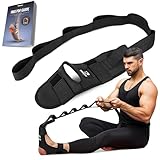
The DMoose Fitness Foot & Calf Stretcher is not a piriformis tool, and it is included because tight calves and hamstrings frequently contribute to the posterior chain tension that aggravates sciatic symptoms. Its angled foot plate and adjustable padded strap create a controlled stretch through the calf and hamstring, which can reduce the pull that radiates upward into the glutes and lower back.
Key specs
- Angled foot plate for calf and plantar fascia stretching
- Adjustable padded strap for graded stretch intensity
- Multi-position use for calf, hamstring and foot angles
- Compact and light, suitable for home or travel
- Budget tier: low-cost addition to a broader routine
The adjustable strap is what makes this device useful across body sizes. Stretch intensity in any calf stretcher is governed by how far you can pull your toes toward you, and a fixed-strap design forces everyone into the same range. An adjustable strap lets a stiffer or taller user dial the angle back to a tolerable point, then progress as flexibility improves. That adjustability is the difference between a stretcher that gets used and one that gets abandoned.
The padded element matters for the same reason it does on back boards: an unpadded strap cuts into the foot and forefoot, which makes longer holds unpleasant. Padding allows the gradual, sustained stretch that actually lengthens tissue rather than triggering a protective contraction. Used consistently, calf and hamstring work is one of the most reliable low-risk habits for people managing posterior-chain tightness.
Pros
- Adjustable strap accommodates different body sizes and flexibility levels
- Padded design supports longer, more effective holds
- Very low price relative to the benefit
- Compact and travel-friendly
Cons
- Does not address the piriformis or psoas directly
- Indirect benefit only — it is a supporting tool, not a primary solution
- Requires consistent daily use to produce noticeable change
How it compares: There is no direct equivalent in this list, because every other device targets the hip, glute or lumbar region. The DMoose is a complement, not a competitor. The most sensible pairing is the DMoose for calf and hamstring work plus a piriformis or psoas tool for the hip — the two together cover both ends of the posterior chain. If you can only buy one device and your symptoms are gluteal, skip this and choose the PLDOULY instead.
8. EcoEarth Hip Massager for Psoas Release (Firm) – Best for Firm Multi-Node Release

The EcoEarth Hip Massager sits between the budget single-hook tools and the extra-firm COZLOW, offering 14 massage nodes at a firm-but-not-extreme density. It is the most balanced multi-node option in this roundup: enough firmness to reach deep tissue, enough give to remain tolerable for readers who are not ready for maximum pressure.
Key specs
- 14 massage nodes for distributed trigger-point contact
- Firm density — deeper than soft foam, more forgiving than extra firm
- Covers psoas, glute and piriformis regions
- Suited to floor-based release positioning
- Mid-range tier: balanced spec at a moderate price
The 14-node layout is the same approach used by the premium ZeenKind tool, and it delivers the same core benefit: pressure spread across the muscle rather than concentrated at one point. For readers who find single-node tools too sharp but extra-firm tools too intense, this middle ground is often the practical answer. You get multi-point coverage without the punishing density.
The firm density is also the reason this tool works on the psoas, which sits deep in the abdomen and hip and is notoriously hard to reach with surface-level pressure. Softer tools simply cannot transmit enough force to that depth; extra-firm tools can, but at a cost in comfort. EcoEarth’s firm setting is the compromise position, and for many buyers it will be the most sustainable long-term choice because it is easy enough to use regularly.
Pros
- 14 nodes distribute pressure across a wide contact area
- Firm but tolerable density suits most intermediate users
- Covers psoas, glute and piriformis in one tool
- Moderate price for a multi-node design
Cons
- Less firm than the COZLOW for users who want maximum depth
- Fixed density — no adjustment mechanism
- Multi-node surface can feel broad if you want pinpoint precision
How it compares: Against the COZLOW Extra Firm, the EcoEarth is the more approachable multi-node tool; COZLOW wins on raw pressure, EcoEarth wins on everyday usability. Against the ZeenKind premium tool, EcoEarth offers a similar node count at a lower price with somewhat simpler shaping. Against the Telyora budget hook, it adds multi-node coverage and firmness at the cost of adjustability. For most readers, EcoEarth is the safe middle pick; move up to ZeenKind or COZLOW only if you have a specific reason.
9. RESTCLOUD Back Stretcher – Best for Chronic Lumbar Support
The RESTCLOUD Back Stretcher is a stretching cushion that doubles as a lumbar support pillow, and that duality is what justifies its premium tier. Readers with chronic lower-back discomfort often need both a short daily stretch and ongoing seated support, and buying one product that serves both roles is more practical — and more likely to be used — than buying two.
Key specs
- Cushioned stretching surface for comfortable floor sessions
- Multi-level arch adjustment for graduated intensity
- Dual-purpose design: back stretcher and lumbar support cushion
- Suitable for chair and seat support between stretch sessions
- Premium tier: comfort and versatility at the top price band
The dual-use design is the real argument. A back stretcher used for a few minutes a day has limited cumulative exposure; a lumbar support used for hours at a desk has far more. Combining them means the arch benefits reach you during ordinary sitting as well as during dedicated stretch sessions. For anyone whose discomfort builds through the working day, that continuous low-level support is often more valuable than a brief intense stretch.
The cushioned surface reinforces the same point. Comfortable devices get used; uncomfortable ones get shelved. RESTCLOUD’s padding means it can serve as a chair cushion without digging into the spine, and the same padding makes floor stretching sessions longer and more relaxing. Adjustable levels let you tune the arch, and the premium build is intended to hold its shape through frequent, long-duration use.
Pros
- Serves as both a stretcher and a lumbar support cushion
- Cushioned surface supports longer, more comfortable sessions
- Adjustable arch levels allow progression
- Premium build suited to daily, long-duration use
Cons
- Highest price band for a back stretcher here
- Does not target the piriformis or psoas directly
- Padding may reduce the precise, firm traction some users prefer
How it compares: Against the Everlasting Comfort Lumbar Support Board, the RESTCLOUD adds the dual-purpose cushion function, which is what justifies the higher price. If you only want floor stretching, Everlasting Comfort delivers most of the comfort for less. Against the MINOLL and Yetulike boards, RESTCLOUD is the comfort and versatility leader; those two compete on adjustment range and magnet features at lower prices. If your back trouble is chronic and desk-related, RESTCLOUD’s sit-and-stretch versatility is the strongest fit in this category.
10. MINOLL Back Stretcher – Best for Multi-Level Lumbar Cracking

The MINOLL Back Stretcher focuses on multi-level adjustment with an emphasis on the audible release many users associate with lumbar cracking. Multiple arch levels let you find the depth that produces a comfortable stretch and, for some users, the joint release that follows. It sits at mid-range pricing, offering more adjustment than budget boards without the comfort premium of the padded specialists.
Key specs
- Multiple adjustable arch levels for graduated stretch depth
- Rigid board construction that holds shape under load
- Portable flat profile for easy storage
- Designed for short supine sessions on the floor
- Mid-range tier: adjustment range at a moderate price
Adjustment range is the core spec to evaluate on any arch board, and the MINOLL offers several levels, which matters because the right depth changes over time. Beginners need a shallow setting; as flexibility improves, the same person needs a deeper arch to get the same stretch. A board with only one or two levels becomes useless once you outgrow the deepest setting. More levels means a longer useful life from a single purchase.
The rigid construction supports consistent results. Soft or flexible arches deform under body weight, which reduces the effective stretch and makes the intensity unpredictable. A rigid board gives you roughly the same stretch every session, so progress is measurable and you can trust the setting you chose. Flat storage keeps the board accessible, and accessibility is the main driver of whether a daily stretching habit survives the first month.
Pros
- Multiple adjustment levels extend the board’s useful life
- Rigid construction delivers consistent stretch intensity
- Mid-range price for good adjustment range
- Flat profile stores easily and encourages regular use
Cons
- Unpadded surface can be uncomfortable without a mat or towel
- No piriformis or glute targeting
- Mid-range pricing for a function budget boards also provide
How it compares: Against the Yetulike budget board, the MINOLL trades the added magnet massager nodes for a stronger emphasis on multi-level adjustment — a straightforward spec-for-spec trade. Against the ChiFit, the MINOLL generally offers more adjustment depth for a higher price. Against the Everlasting Comfort and RESTCLOUD, it gives up padding to keep the price moderate. If adjustment range is your priority and you are happy to add your own padding with a towel, MINOLL is a sensible mid-range pick.
11. Yetulike Back Stretcher – Best Budget Lumbar Relief with Magnet Nodes
The Yetulike Back Stretcher combines the standard multi-level arch design with built-in magnet massager nodes, giving budget buyers a little extra sensory feedback along the spine. It is the cheapest way to get both adjustable arch traction and an added massage element, which makes it a reasonable first purchase for readers who want to explore whether arched stretching helps them at all.
Key specs
- Magnet massager nodes along the contact surface
- Upgraded multi-level arch adjustment
- Rigid frame for consistent stretch
- Portable flat design for storage
- Budget tier: lowest-cost arched traction option
The magnet nodes are a comfort and sensory feature rather than a structural one. They create localized contact points along the spine, which some users find pleasant and which adds a mild massage sensation during a stretch. It does not change the mechanics of traction, but it can make sessions feel more purposeful and therefore easier to repeat daily. The upgraded multi-level adjustment is the more practical spec, since it determines how usable the board remains as your flexibility changes.
Rigid construction and a flat profile round out the package: consistent stretch intensity plus easy storage. At budget pricing, this is a low-risk trial of the arched-traction concept. If it works, you can later step up to a padded mid-range board; if it does not, you have spent the least possible amount to find out.
Pros
- Lowest price tier for a multi-level arch board
- Magnet nodes add a pleasant massage sensation
- Upgraded adjustment range for progression
- Rigid frame and flat storage profile
Cons
- Unpadded surface needs a mat or towel for comfort
- Magnet nodes offer limited therapeutic value beyond sensation
- No piriformis or psoas targeting
How it compares: Against the MINOLL, the Yetulike swaps some adjustment emphasis for added magnet nodes at a lower price — a fair trade for budget buyers who want features over refinement. Against the ChiFit, it offers a similar core function with a different feature set. Against the padded Everlasting Comfort and RESTCLOUD boards, it is the most affordable entry into arched traction but the least comfortable. Choose Yetulike if you want to test arched stretching cheaply; choose Everlasting Comfort if you already know you need comfort to stick with it.
12. Maphorzene Iliopsoas Release Tool – Best for Hip Flexor and Fascia Work

The Maphorzene Iliopsoas Release Tool is a classic hip hook, purpose-shaped for reaching the iliopsoas and hip flexors with glute, piriformis and fascia coverage as secondary functions. Where multi-node massagers spread pressure broadly, the Maphorzene concentrates it through hook geometry that reaches into the hip crease — an area that broad tools frequently cannot access at all.
Key specs
- Hip hook geometry designed to reach the iliopsoas and hip flexors
- Secondary coverage for glute, piriformis and fascia work
- Rigid build for direct pressure transmission
- Suited to floor-based and seated hip flexor positioning
- Premium tier: specialist hook design at the top price band
Hook geometry exists because the iliopsoas is one of the hardest muscles in the body to reach from the outside. It sits deep in the hip, behind the abdominal contents and under layers of muscle. A flat massager or foam roller simply cannot get to it; the force is absorbed before it arrives. A hook lets you approach from a different angle, applying pressure that reaches into the hip crease where the muscle passes. For anyone with hip flexor tightness that resists general stretching, this geometry is the enabling feature.
The rigid build is the second requirement. Because the target is deep, the tool must transmit force without deforming, or the effort is wasted. Maphorzene’s premium construction is aimed at exactly this — sustained, efficient pressure into a hard-to-reach region. The fascia and glute coverage is a useful bonus, but the hip flexor reach is the reason to buy this tool rather than a general-purpose massager.
Pros
- Hook geometry reaches the iliopsoas and hip flexors where flat tools cannot
- Rigid construction transmits depth pressure efficiently
- Bonus coverage of glutes, piriformis and fascia
- Strong choice for persistent hip flexor tightness
Cons
- Premium price for a single-purpose hook design
- Deep pressure demands careful positioning and gradual introduction
- Less useful than a multi-node tool if your symptoms are gluteal rather than hip flexor
How it compares: Against the ZeenKind premium multi-node tool, the Maphorzene wins on hip flexor reach while the ZeenKind wins on overall trigger-point variety. Against the PLDOULY Piriformis Stretcher, the division is anatomical — Maphorzene for the front of the hip, PLDOULY for the back of the glute. Against the budget Telyora hook, the Maphorzene adds rigidity and premium build at a higher price; the Telyora is the sensible starting point, and the Maphorzene is the tool to move to once you know you want deep hip flexor work.
How to Choose
Choosing among these devices comes down to matching the tool to where your symptoms actually sit, then checking three practical specs: shape, adjustment range, and padding. This section walks through the decision criteria with concrete guidance so you can narrow the list without buying three tools to find the right one.
Start with location, not price
The single most common buying mistake in this category is purchasing a back stretcher for a gluteal problem. If your discomfort is central — a stiff, compressed feeling in the mid or lower back — an arched traction board is the right category. If your discomfort is in the buttock, with tenderness when sitting or crossing your legs, you need a piriformis-specific tool or a firm multi-node massager, not an arch board. If your tightness is in the front of the hip, at the crease where the leg meets the torso, you need a hip hook. Buying across categories wastes money, because the mechanism that helps one region does not transfer to another.
Match body size to shape and adjustment range
Adjustment range is where body size and flexibility translate directly into usability. A fixed single-arch back board suits a buyer whose flexibility already matches that arch height; anyone else needs multiple levels. As a rule of thumb, three or more adjustment levels give enough range to accommodate most body types and to remain useful as flexibility changes. On hooks and massagers, look for adjustable geometry if your hip depth or pelvis width differs notably from average, because a fixed hook that lands perfectly for one user can miss entirely for another. The Telyora’s adjustable hook and the multi-level boards are the examples here worth noting.
Understand what padding buys you
Padding does not change the mechanics of a stretch or a release — it changes how long you can tolerate the session, and duration drives results. Unpadded boards and straps (ChiFit, MINOLL, Yetulike, DMoose strap without padding) are perfectly functional if you add a towel or mat. Integrated padding (Everlasting Comfort, RESTCLOUD) removes that friction point and typically results in longer holds, especially for beginners and for anyone with a sensitive spine. If you know from experience that you abandon uncomfortable devices, spend the extra on padding up front; it is the feature most likely to determine whether you use the thing at all.
Density: how firm is right for you?
Density on a massager controls how deep the pressure travels. Soft tools deform before reaching deep tissue; extra-firm tools barely deform and transmit almost all force to the target. For the psoas and deep gluteal muscles, some firmness is required, because surface-level pressure simply does not reach. The practical spectrum in this roundup runs from the COZLOW Extra Firm at the top, through the EcoEarth Firm, to the adjustable Telyora with its removable pad at the most forgiving end. Beginners should start at the forgiving end and build up; experienced users chasing a stubborn knot should go firm immediately. If you are uncertain, the EcoEarth Firm is the middle ground most people settle into.
Confirm the loading method suits your space
Every device here is floor-based. Back stretchers need a hard, flat surface with room to lie down; hooks and massagers need floor space to position your body weight over the tool. The practical check is not just whether you have the space but whether you have a surface you are willing to lie on. Carpet works for stretchers but can make hooks unstable; hard floors are ideal for hooks but hard on the spine for stretching. A yoga mat solves both, and it is worth factoring into your setup. If your only available space is a small apartment floor you must clear each time, prioritize devices with flat storage profiles — which in practice means any of the boards, plus the compact hooks.
Portability and storage
Portability matters more for some categories than others. Back boards are flat and light but bulky enough that they usually live at home; the ones here all store flat against a wall or under a bed. Hooks and multi-node massagers are small enough to travel, and the Telyora and DMoose are the lightest and most packable. If you travel frequently and want to maintain a routine on the road, choose a compact hook or the DMoose over a board. If your routine is home-based, storage is a minor concern and you should weight comfort and adjustment range higher.
Decide between specialty and versatility
The final fork is specialist versus generalist. Specialist tools (PLDOULY for the piriformis, Maphorzene for the hip flexors) are shaped for one region and do that job better than anything general-purpose, but they are near-useless for other regions. Generalist tools (ZeenKind, EcoEarth, COZLOW with 14 nodes) cover the entire hip and glute area and adapt to multiple trigger points, but they do not reach as precisely into any single one. If you have a clearly identified problem area, buy the specialist. If you have diffuse tightness or are unsure where the problem originates, buy the generalist first — it will help you identify which region responds, and you can add a specialist later.
Build your minimum effective setup
Most readers do not need one device — they need one or two that cover the relevant chain. A sensible minimal setup for posterior-chain sciatic symptoms is a firm multi-node massager for gluteal and piriformis work plus a calf and hamstring stretcher for the lower end of the chain; the DMoose plus an EcoEarth or COZLOW covers that ground. For central lower-back compression, a single padded adjustable board (Everlasting Comfort or RESTCLOUD) is enough. For hip flexor tightness, the Maphorzene hook plus a general massager covers front and back of the hip. Avoid buying three tools at once; start with the one that matches your primary symptom, use it consistently for a few weeks, and add a second only if a distinct second region remains unaddressed.
Safety and positioning basics
All of these devices are tools for self-directed soft-tissue work and general mobility, not treatments for a diagnosed condition. Position yourself so you can control how much body weight loads the tool at all times — on a hook, that means keeping one hand or foot free to take weight off instantly; on a board, it means starting on the shallowest setting and keeping your knees bent so you can roll off. Never press directly onto the spine itself or onto bony landmarks; contact should sit on muscle. Sessions should be short and frequent rather than long and occasional. If pain radiates, increases during use, or is accompanied by numbness, weakness or changes in bowel or bladder function, stop and consult a qualified health professional — those symptoms need assessment, not a stretcher.
Frequently Asked Questions
What is the difference between a piriformis stretcher and a back stretcher?
A piriformis stretcher is shaped to place pressure on the deep gluteal muscles in the buttock, where the piriformis sits. A back stretcher is an arched board that decompresses the lumbar spine when you lie over it. They address different regions: one targets the hip rotators, the other the lower back. Some people with sciatica benefit from one, some from the other, and some from both.
Can self-release tools replace physical therapy?
No. These devices are for general mobility and soft-tissue comfort, and many people find them useful alongside professional care. If you have a diagnosed condition such as a herniated disc or confirmed piriformis syndrome, use any tool as an adjunct to a plan set by a qualified professional rather than as a replacement for it. Stop and seek advice if symptoms worsen.
How firm should a psoas release tool be?
Firm enough to reach the muscle, which sits deep in the hip. Soft tools deform before the pressure arrives, so some firmness is essential. Beginners should start with an adjustable or firm-not-extreme tool and progress toward extra-firm density as tolerance builds. The COZLOW Extra Firm is the firmest option here; the Telyora with its removable pad is the most forgiving.
How many adjustment levels do I need on a back stretcher?
Three or more is the practical minimum. You need a shallow setting for your first sessions and progressively deeper ones as flexibility improves; a board with only one or two levels becomes useless once you outgrow the deepest. More levels also accommodate different body types and make the device last longer.
Is padding on a back stretcher worth the extra cost?
Usually yes, because padding determines how long you can stay on the board, and the release happens in the last part of a hold. Padded boards like the RESTCLOUD and Everlasting Comfort support longer sessions, especially for beginners and sensitive spines. Unpadded boards work fine if you are willing to add a towel or mat.
Can I use these tools every day?
Yes, short frequent sessions are generally better tolerated than long occasional ones. Most people use a back board for a few minutes at a time and a release tool for brief targeted work. Build up gradually, keep sessions short, and take a break if an area feels irritated rather than improved.
What if my symptoms are in the front of the hip rather than the buttock?
Then you likely need a hip hook rather than a piriformis tool, because the iliopsoas and hip flexors sit at the front of the hip and require hook geometry to reach. The Maphorzene Iliopsoas Release Tool is the specialist option here, and the ZeenKind multi-node tool offers broader coverage if you are unsure which region is involved.
Do I need both a stretcher and a massager?
Only if you have tightness in two distinct regions. If your symptoms are gluteal, a firm multi-node massager is enough. If they are central lower-back, one adjustable board is enough. If you have both gluteal tension and lower-back compression, pairing one of each covers both. Start with the device that matches your primary symptom and add a second only if needed.
Closing Recommendation by Situation
If your sciatica is clearly gluteal, with tenderness in the buttock and discomfort when sitting, choose the PLDOULY Piriformis Stretcher for specialist targeting or the COZLOW Extra Firm for deep pressure across the whole gluteal region. If your tightness is in the front of the hip, the Maphorzene Iliopsoas Release Tool is the hook designed for that region, with the ZeenKind as the more versatile alternative. If your problem is central lower-back compression, an adjustable board is the right category: the ChiFit at budget, the Everlasting Comfort for padded comfort, and the RESTCLOUD if you also want seated lumbar support through the day. If you are brand new to self-release work and want the lowest-risk starting point, the Telyora or the Yetulike lets you test the concept cheaply, and if you want one tool that covers the most ground, the ZeenKind with its 14 knobs is the strongest all-round pick.
Whichever device you choose, buy the one that matches your primary region rather than the most feature-rich option, use it in short sessions consistently, and consult a qualified professional if your symptoms are severe, worsening, or accompanied by numbness or weakness.





Write Your Review
No reviews yet. Be the first to share your experience!