
Key takeaways
- Shore fishing: A compact shoulder bag or backpack holding one or two removable utility trays. It keeps a working selection accessible without making you carry your whole collection.
- Boat fishing: A rigid, high-capacity box with a reliable gasket, secure latches, and room for both trays and larger tools. Check that it fits your boat’s storage compartment before choosing the largest option.
- Travel: A soft-sided bag with removable standard-size trays is easy to pack and lets you take only the tackle needed for a trip. Add a separate waterproof case for valuables or spare terminal tackle.
- Small budget or first setup: Start with a basic single-tray box and movable dividers. It is easier to organize and replace than a large system filled with gear you rarely use.
Best Fishing Tackle Boxes for Shore, Boat, and Travel
The best fishing tackle box depends on where you fish: choose a compact, easy-access tray system for shore fishing, a large waterproof box with secure storage for a boat, and a modular, packable setup for travel. Before buying, compare usable capacity, sealing, divider flexibility, carry comfort, and how quickly you can reach the lures you use most.
Quick picks by fishing situation
- Shore fishing: A compact shoulder bag or backpack holding one or two removable utility trays. It keeps a working selection accessible without making you carry your whole collection.
- Boat fishing: A rigid, high-capacity box with a reliable gasket, secure latches, and room for both trays and larger tools. Check that it fits your boat’s storage compartment before choosing the largest option.
- Travel: A soft-sided bag with removable standard-size trays is easy to pack and lets you take only the tackle needed for a trip. Add a separate waterproof case for valuables or spare terminal tackle.
- Small budget or first setup: Start with a basic single-tray box and movable dividers. It is easier to organize and replace than a large system filled with gear you rarely use.
Compare box styles before choosing
Capacity figures are useful only when the storage layout suits your gear. A box divided into many small compartments may hold a lot of hooks and sinkers but leave little room for bulky lures. The figures below are representative dimensions for common formats, not specifications for a particular model; confirm the exact product measurements before buying.
Our top picks
 Plano Guide Series StowAway 4-By Rack System
- Designed to hold our 3700 series utility tackle…
- A built-in upper storage compartment and top-access compartment…
- Featuring our rack storage system, this fishing organizer…
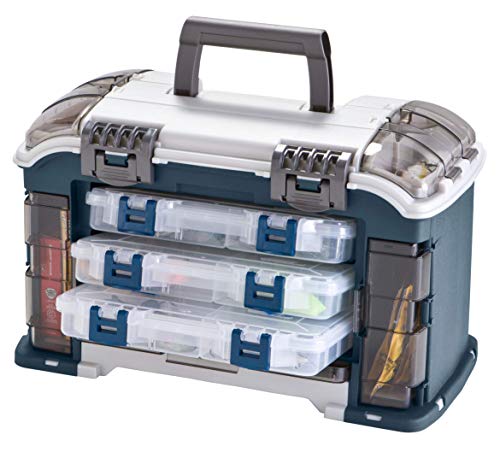 Plano Angled Tackle System with Three 3560
- Fishing equipment tackle bags and boxes
- Main compartment presents utility boxes at a 15…
- DuraView covers and doors
As an Amazon Associate we earn from qualifying purchases at no extra cost to you.
| Format | Typical exterior size | Typical capacity | Best use | Main trade-off |
|---|---|---|---|---|
| Compact utility tray | About 9 × 6 × 1.5 in | Roughly 10–20 adjustable compartments | Shore sessions and a focused lure selection | Limited room for bulky lures and tools |
| Deep utility tray | About 14 × 9 × 2 in | Roughly 15–30 compartments | Boat storage or larger hard baits | Heavier and less convenient to carry all day |
| Soft bag with two trays | About 12 × 8 × 8 in | Two trays plus pockets for tools and accessories | Travel and mobile fishing | Fabric and zippers need more care around water |
| Large hard box | About 18 × 12 × 10 in | Multiple trays, bulk storage, or both | Boat compartments and organized home-to-water storage | Can take up too much space and become cumbersome |
Measurements and compartment counts vary by design. For a fair comparison, check the box’s usable internal dimensions, not just its outside footprint. Also check whether dividers are included: some tray designs use fixed slots, while others let you adjust partitions to fit specific lures.
What matters most for each use
Shore: prioritize portability and lure access
When walking a bank, beach, or river path, a heavy box can become a burden before the fishing starts. A small sling bag or compact box with a handle is usually more practical than carrying spare tackle for every possible condition. Keep the current day’s lures in a top-access tray, and use a separate compartment for pliers, line cutters, and a small amount of terminal tackle.
Choose dividers that prevent hooks from sliding between slots when the box tilts. Test the layout with your largest lure first: long crankbaits, spinnerbaits, and rigs with exposed hooks may need a longer bay or a deeper tray. A dense grid of small compartments is not helpful if it forces lures to overlap.
Boat: prioritize storage fit, sealing, and secure closures
For boat use, a rigid box protects gear from being crushed and is easier to stack in a locker. A gasket and positive-locking latches can reduce the chance of spray or brief splashes reaching the contents, but “water-resistant” is not the same as submersible. If a box goes overboard or sits in standing water, assume water can get in unless the manufacturer specifically rates it for immersion.
Measure the intended storage opening in three directions, then leave clearance for handles and latches. A box that fits only when forced into place is difficult to remove and more likely to have its closures knocked open. For boat gear, arrange high-use trays near the top and less-used backups below; that reduces rummaging on a moving deck.
Travel: prioritize modularity and manageable weight
A soft tackle bag with removable trays makes it easy to pack for a weekend or move gear between vehicles. The bag’s pockets can hold tools and line, while trays keep lures separated. However, a fabric exterior alone will not protect tackle from a downpour or a wet deck. Look for coated fabric and covered zippers, and keep anything that must stay dry in a sealed case inside the bag.
For flights or long-distance trips, check the carrier’s current baggage and fishing-gear rules. Sharp hooks should be secured, and a checked bag may be more suitable for a large tackle load than a carry-on. Do not choose a bag by tray count alone: trays add weight, and extra capacity can encourage you to pack more than the trip requires.
A practical way to size your setup
Match the box to the tackle you actually use, then leave a little room for changes. This simple process helps avoid paying for capacity that stays empty—or cramming gear into a layout that damages it.
- Gather your regular gear. Separate frequently used lures, terminal tackle, tools, and occasional backups.
- Measure the awkward items. Check the length and depth of the biggest hard bait, tool, or rigged lure. Those items often determine the tray size.
- Plan for access, not just storage. Put the day’s likely choices in one tray or pocket. Keep spares separate so you can find a lure without opening every compartment.
- Check the carry limit. Load the box as you would for a typical trip and lift it. If it is uncomfortable before adding water, food, or clothing, scale down or split the load.
- Verify the fit. Compare the loaded box’s exterior dimensions with your backpack, boat locker, or travel bag, allowing room for handles and closures.
Materials, maintenance, and common failure points
Hard boxes are commonly made from molded plastic; soft bags typically use synthetic fabric, zippers, and sewn seams. Neither format is maintenance-free. With hard trays, thin divider walls and latch hinges are common stress points—avoid forcing a divider into a slot or overfilling a compartment until the lid bows. With soft bags, inspect zipper teeth, stitching, and base panels, especially if the bag is frequently dragged across rough ground.
- After saltwater use: Remove wet lures and rinse tackle separately with fresh water. Salt left on hooks and metal tools can promote corrosion, and damp lures stored in a closed box can transfer moisture to neighboring gear.
- Before storing: Let trays and bag pockets dry fully. Keep soft-plastic lures in their original packaging when their materials may react with other plastics.
- Protect the seal: Wipe gasket surfaces clean and check for grit, twists, or cracks. A clean gasket cannot compensate for a damaged latch or a box that is not closed evenly.
- Review the layout: Remove tackle you have not used for several trips and replace it with the gear suited to the next location and season.
For a general-purpose choice, a medium rigid box with adjustable dividers is a sensible starting point if it fits your storage space. If you move often, choose a bag-and-tray system; if you fish from shore, keep the load smaller than your maximum capacity. The best box is the one that protects your tackle and lets you reach the right item without carrying unnecessary gear.








Write Your Review
No reviews yet. Be the first to share your experience!