
Key takeaways
- Hygrometer accuracy: Digital sensors can drift. Compare the display with a trusted independent hygrometer every few months.
- Door gasket: Dust, compression, and age can create a slow leak. Close a sheet of paper in the door; if it slides out easily at several points, inspect the seal.
- Fans: Dust buildup causes noise and lower airflow. Unplug the cabinet before cleaning vents with a soft brush or vacuum.
- Water reservoirs and wicks: Mineral deposits and biofilm reduce performance. Use only the water type specified by the manufacturer and replace consumables on schedule.
- Interior odors: Avoid household cleaners, perfume, and scented wood. Wipe spills promptly with a barely damp, clean cloth and allow the cabinet to air out.
- Power interruptions: Keep the door closed during an outage. Opening it repeatedly causes more damage than the short outage itself.
The best electric cigar humidors for most buyers are temperature-controlled thermoelectric cabinets with Spanish cedar shelving, a digital hygrometer, and a separate electronic humidification system; choose a compressor model only when your room routinely becomes hot.
An electric humidor is not automatically better than a well-sealed traditional humidor. Its advantage is repeatable temperature control, easier monitoring, and larger capacity. Its risks are fan noise, calibration drift, dry airflow, power dependence, and the temptation to trust a digital display without verifying humidity with a second instrument.
Our top picks
 KingChii 16L Electric Cigar Humidors with Temperature
- 【Temperature Control】Using semiconductor electronic technology, constant temperature range:64-74℉,low…
- 【360° Air Circulation & Frost-Free】: The 360° circulation…
- 【Natural conservation environment 】Using high-quality Spanish cedar wood…
 Tylza Cigar Humidor Cabinet 25L
- 【Low-E Triple Tempered Glass Door】We add Low-E composite…
- 【One Touch Control of Temp and Humidity】Our cigar…
- 【220-counts Capacity & Safety Lock】This humidor cabinet has…
 KingChii 23L Electric Cigar Humidors with Temperature
- 【Temperature Control】Using semiconductor electronic technology, constant temperature range:64-74℉,low…
- 【360° Air Circulation & Frost-Free】: The 360° circulation…
- 【Natural conservation environment 】Using high-quality Spanish cedar wood…
| Product | Key specs | |
|---|---|---|
| KingChii 16L Electric Cigar Humidors with Temperature | 【Temperature Control】Using semiconductor electronic technology, constant temperature range:64-74℉,low… 【360° Air Circulation & Frost-Free】: The 360° circulation… 【Natural conservation environment 】Using high-quality Spanish cedar wood… | Check price |
| Tylza Cigar Humidor Cabinet 25L | 【Low-E Triple Tempered Glass Door】We add Low-E composite… 【One Touch Control of Temp and Humidity】Our cigar… 【220-counts Capacity & Safety Lock】This humidor cabinet has… | Check price |
| KingChii 23L Electric Cigar Humidors with Temperature | 【Temperature Control】Using semiconductor electronic technology, constant temperature range:64-74℉,low… 【360° Air Circulation & Frost-Free】: The 360° circulation… 【Natural conservation environment 】Using high-quality Spanish cedar wood… | Check price |
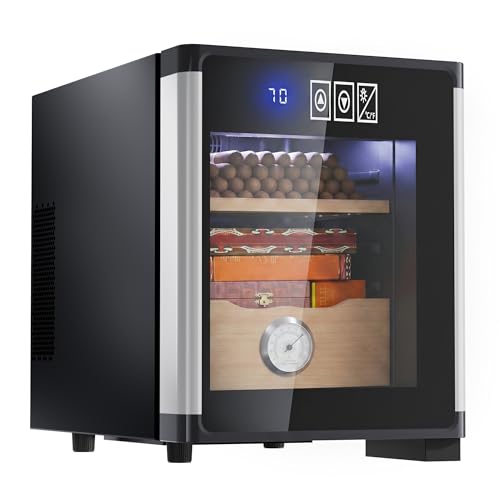 KingChii 8L Electric Cigar Humidor with New | 【Temperature Control】Using semiconductor electronic technology, constant temperature range:64-74℉,low… 【360° Air Circulation & Frost-Free】: The 360° circulation… 【Natural conservation environment 】Using high-quality Spanish cedar wood… | Check price |
As an Amazon Associate we earn from qualifying purchases at no extra cost to you.
Best electric cigar humidors by situation
| Buyer situation | Best choice | Why it fits | Main compromise |
|---|---|---|---|
| Under about $250, occasional smoker | Compact thermoelectric cabinet, 20–50 cigars | Low power use, small footprint, usually quiet | Limited shelf spacing and less stable performance in a hot room |
| Regular smoker with 50–150 cigars | Mid-size thermoelectric humidor, 100–150 advertised capacity | Good balance of capacity, noise, and operating cost | Advertised capacity assumes mixed small cigars packed tightly |
| Large collection or frequent entertaining | Large cabinet, 250–400 advertised capacity | More shelves and better separation by size or blend | Higher purchase price and more wasted interior space around boxes |
| Room regularly above 75°F | Compressor cigar cooler with electronic humidity control | More effective cooling in warm conditions | More noise, vibration, weight, and energy consumption |
| Quiet office, bedroom, or study | Thermoelectric cabinet rated around 35–45 dB | Fan noise is usually less intrusive than a compressor | Cooling performance depends heavily on ambient temperature |
Head-to-head: thermoelectric versus compressor
Thermoelectric cabinets
Thermoelectric humidors use a solid-state cooling module and fans rather than a refrigerant compressor. They are generally lighter, quieter, and less expensive to run. They suit a stable indoor room where the cabinet only needs to hold cigars near cellar temperature rather than overcome substantial heat.
Their weakness is limited cooling power. A unit advertised as cooling 12–18°F below room temperature may not achieve that difference when placed beside a sunny window or in a room above 78°F. Fans also move air continuously or intermittently, so an underfilled cabinet can dry cigars faster than a well-sealed traditional humidor if the humidification system is undersized.
Compressor cigar coolers
Compressor models, including larger cigar-cooler lines such as the Whynter CHC series, are better suited to hot rooms and larger collections. They can remove heat more decisively and tend to maintain a narrower temperature band under changing conditions.
The trade-off is a startup hum, periodic compressor cycling, vibration, and greater depth. A compressor cabinet may draw roughly 60–120 watts while actively cooling, whereas a thermoelectric unit often uses roughly 40–70 watts, although actual consumption depends on room temperature and duty cycle. Neither figure is the same as continuous 24-hour use.
What the important specifications really mean
Humidity stability
Look for a sealed door, adjustable electronic humidification, and a circulation fan that does not blow directly onto the cigars. A practical target for many premium cigars is approximately 65–70% relative humidity, but the preferred level varies by wrapper, construction, and personal smoking preference.
Capacity claims are usually optimistic. If a cabinet claims 150 cigars, a realistic mixed collection may hold closer to 90–120 without blocking airflow or crushing ring gauges against shelves. Box storage reduces usable capacity further. Stability matters more than the lowest displayed number: a cabinet oscillating between 60% and 75% is less desirable than one holding steadily near your chosen set point.
Temperature control
Choose a model with a settable range rather than a single “cool” mode. A useful operating range is approximately 60–68°F, provided the cabinet can maintain it in your room. Avoid placing any electric humidor directly against a wall; leave the clearance specified by the manufacturer so heat can escape.
Spanish cedar shelving
Spanish cedar shelves help separate cigars, absorb and release moisture, and contribute aroma. Confirm whether the shelves are solid Spanish cedar, cedar veneer over another material, or merely cedar-colored wood. Slatted shelves improve airflow, while solid shelves provide better support for boxes but can create stagnant zones.
Do not assume every cedar accessory belongs inside the cabinet. Strongly scented trays, untreated wood, or construction lumber can impart odors. Remove shelves that are warped, splintered, or difficult to clean.
Noise and vibration
Manufacturers may quote sound levels around 35–45 dB, but fan speed, room acoustics, and compressor cycling change the experience. A quiet thermoelectric cabinet is normally the safer choice for a bedroom. For a compressor unit, adjustable feet and a hard, level surface reduce vibration transmitted to shelves and boxes.
Power needs
These are mains-powered appliances, not battery humidors. A brief outage is usually harmless if the door stays closed, but repeated outages can create temperature and humidity swings. Keep the cabinet away from overloaded extension cords, and use surge protection where appropriate. A battery-powered hygrometer inside remains useful even when the cabinet display is dark.
Calibration and setup: the step many buyers skip
- Position the empty cabinet. Let it run for 24–48 hours in its final location. This reveals whether the room is too warm and allows the temperature to settle.
- Verify the hygrometer. Place a calibrated digital hygrometer inside. For a salt-test check, seal the instrument with a salt slurry in an airtight container for about eight hours; the reference environment is approximately 75% relative humidity. Record the instrument’s error rather than assuming it is perfect.
- Condition the cedar slowly. Wipe only according to the manufacturer’s instructions. Do not soak shelves or place dripping humidification packs inside. Over-wetting cedar can cause swelling, mold, and false humidity readings.
- Run the cabinet empty again. Allow another 24 hours after conditioning. Adjust the humidification setting in small steps.
- Load loosely. Keep cigars off the rear cooling surface, leave gaps around boxes, and avoid blocking the fan. Fill in stages rather than adding a full collection at once.
- Check both ends of the cabinet. Measure humidity near the top and bottom for several days. A difference greater than about 5 percentage points suggests poor circulation, overcrowding, or a leaking seal.
A realistic capacity calculation
Suppose a cabinet advertises 150 corona-size cigars. If you want each cigar to remain easy to remove and reserve 20% of the space for airflow, dividers, and larger ring gauges, the practical estimate is:
150 × 0.80 = 120 cigars.
If one-third of the collection consists of boxes or robustos, reducing that estimate by another 15% gives approximately 102 cigars. This is why a nominal 150-count cabinet often feels full well before it reaches 150 cigars.
Long-term ownership: what wears out first
- Hygrometer accuracy: Digital sensors can drift. Compare the display with a trusted independent hygrometer every few months.
- Door gasket: Dust, compression, and age can create a slow leak. Close a sheet of paper in the door; if it slides out easily at several points, inspect the seal.
- Fans: Dust buildup causes noise and lower airflow. Unplug the cabinet before cleaning vents with a soft brush or vacuum.
- Water reservoirs and wicks: Mineral deposits and biofilm reduce performance. Use only the water type specified by the manufacturer and replace consumables on schedule.
- Interior odors: Avoid household cleaners, perfume, and scented wood. Wipe spills promptly with a barely damp, clean cloth and allow the cabinet to air out.
- Power interruptions: Keep the door closed during an outage. Opening it repeatedly causes more damage than the short outage itself.
Which electric humidor should you buy?
Choose a compact thermoelectric model if you own fewer than about 75 cigars, want low noise, and can keep the room below roughly 75°F. Choose a mid-size thermoelectric cabinet if your collection is growing and you value efficient, quiet operation. Consider a compressor cigar cooler when the room is consistently hot, the cabinet will be heavily loaded, or temperature recovery matters more than silence.
Whichever type you select, prioritize a dependable seal, real cedar shelving, an independently verifiable hygrometer, and serviceable fans over decorative lighting or an inflated cigar-count label. Stable conditions, sensible loading, and regular calibration protect cigars far more effectively than a premium-looking control panel.




Write Your Review
No reviews yet. Be the first to share your experience!