
Key takeaways
- Compare the best budget work boots for jobsites, warehouses and farms, with steel and composite toe options, waterproof styles and wide widths.
A work boot has to do two jobs at once: meet the safety rules of the site and stay comfortable through a full shift on concrete, gravel, mud or warehouse floors. Budget-friendly boots can do both, but only if you match the toe type, the safety ratings and the fit to the work you actually do. The five boots below cover the main budget categories: classic steel toe lace-ups, a lighter composite toe waterproof boot, a pull-on style for farm work, and a waterproof steel toe.
As an Amazon Associate, we earn from qualifying purchases.
How to Choose Budget Work Boots
Start with your employer’s requirements
Safety footwear rules are set by the workplace, not by preference. Before ordering anything, check what your employer or site contract requires: a steel or composite safety toe, an electrical hazard (EH) rating, a slip-resistant outsole, or a specific ASTM standard. Boots in this guide list their ratings plainly, such as ASTM F2413 impact and compression codes for the toe and EH for electrical hazard protection in dry conditions. Those ratings describe what the boot was tested and certified to do under the standard; they are not a promise that a boot makes any job completely safe. Match the boot to the employer’s written requirements, and ask a supervisor when in doubt.
Steel toe versus composite toe
Steel toe caps are the traditional option: strong, widely available at budget prices, and usually slimmer in profile. The trade-off is weight: steel adds noticeable heft over a long shift, and metal conducts cold in winter work. Composite toes use non-metal materials such as carbon fiber or reinforced plastics. They are lighter, do not conduct cold the same way, and will not set off metal detectors, which matters in some warehouses and secure facilities. Both types can meet the same ASTM F2413 impact and compression ratings, so the choice is mostly about weight, temperature and workplace rules.
Waterproofing and wet work
Farm work, outdoor construction and loading docks in the rain all push water into a boot. Waterproof models use a membrane or sealed construction plus waterproof leather to keep water out, while plain leather boots without a membrane will soak through in sustained wet conditions. If your work is mostly indoors or in dry weather, a non-waterproof leather boot breathes a little better and usually costs less. If you regularly step through mud, slush or standing water, choose a waterproof model from the start.
Outsoles and slip resistance
Warehouse floors and machine shops can be slick with water or oil. Listings describe outsoles as slip resistant, oil resistant or abrasion resistant, and some name the test standard used. Deep lugs suit mud, gravel and uneven outdoor ground, while flatter tread patterns suit smooth indoor concrete. Read the listing’s own wording for the rating, and remember that worn tread loses grip over time.
Fit, sizing and break-in
Fit decides whether a boot survives the first week. Try boots with the thick socks you will actually wear at work, and shop later in the day when feet are at their largest. You want a thumb’s width of space in front of your toes, a heel that does not lift with every step, and no pinching across the toe cap. Many budget boots come in medium and wide widths, and wide options matter because a safety toe cap does not stretch. Leather boots, especially welted ones, need a break-in period: wear them for short periods at first and expect the leather to soften over the first week or two.
CAT Second Shift Steel Toe Work Boot
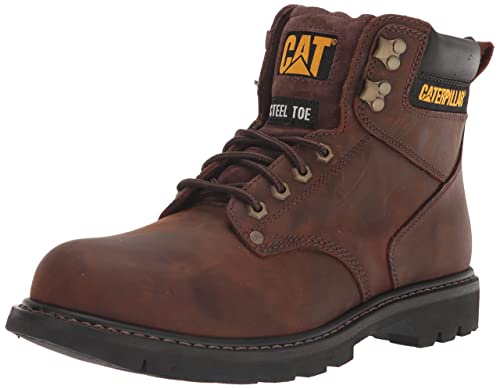
The Second Shift is the classic budget steel toe: a six-inch leather lace-up from Caterpillar with Goodyear welt construction, which means the sole is stitched on and can be replaced by a cobbler when it wears down. That resoleable build is rare at this end of the market.
| Spec | Detail |
|---|---|
| ASIN | B000AYWPJU |
| Toe type | Steel toe |
| Safety rating | ASTM F2413-18 impact and compression; EH rated for open circuits up to 600 volts in dry conditions |
| Upper | Oiled full-grain leather or nubuck |
| Construction | Goodyear welt |
| Outsole | T3 rubber, slip resistant |
| Shaft height | 6 inches |
| Water resistance | Not water resistant |
The steel toe meets the ASTM F2413-18 standard for impact and compression, and the boot carries an electrical hazard rating as listed. A nylon mesh lining and the Climasphere insole help manage heat and moisture during long indoor shifts.
This is a strong pick for dry construction sites, workshops and general trades where a welted leather boot is the norm. It is not the boot for wet work: the listing states plainly that it is not water resistant, so regular exposure to rain or standing water calls for a waterproof model instead. Allow a real break-in period before judging the fit.
EVER BOOTS Tank S Steel Toe Work Boots

The Tank S is the steel toe version of EVER BOOTS’ long-running Tank line, built around nubuck leather uppers and Goodyear welt construction at one of the lowest entry points for a welted safety boot. A steel shank under the arch adds support on ladders and uneven ground, and the insoles are removable.
| Spec | Detail |
|---|---|
| ASIN | B07T8D42SB |
| Toe type | Steel toe |
| Safety rating | ASTM F2413-11 I/75 C/75 as listed |
| Upper | Nubuck leather |
| Construction | Goodyear welt |
| Shank | Steel shank |
| Insole | Removable |
| Style | Lace-up with speed hooks |
The listing highlights anti-slip grip and shock-absorbing cushioning, and the welt construction means the boot can be resoled rather than discarded when the tread wears out. That repairability is the Tank S’s main argument: the upper and welt can outlast the first outsole.
Budget welted boots often run roomy, so check the listing’s size guidance and consider your sock thickness before ordering. The Tank S suits construction, warehouse and yard work where a certified steel toe is required and the budget is tight. One caution: the standard Tank without the S is a non-safety soft toe model, so confirm you are ordering the Tank S listing before checkout.
Wolverine Overpass 6 Inch Composite Toe Waterproof Work Boot

The Overpass answers the two biggest complaints about budget steel toes: weight and wet feet. Its composite safety toe keeps the boot lighter and avoids a metal cap, and the premium leather upper is waterproof, suiting outdoor trades and farm chores in damp conditions. Wolverine’s ContourWelt construction flexes at key points, so the boot bends more like an athletic shoe than a stiff welted boot.
| Spec | Detail |
|---|---|
| ASIN | B0DB2FFGQT |
| Toe type | Composite toe (CarbonMAX) |
| Safety rating | ASTM F2413 M I/75 C/75 EH as listed |
| Upper | Premium waterproof leather with abrasion-resistant toe |
| Construction | ContourWelt |
| Footbed | Removable OrthoLite cushioned footbed |
| Outsole | Rubber lug, slip, oil, water, abrasion and chemical resistant as listed |
| Widths | Medium and extra wide listed |
The composite toe meets the same ASTM impact and compression codes as steel, and the boot is EH rated as listed. Because the toe cap is non-metal, the Overpass suits sites with metal detectors and cold-weather work where a steel cap can feel colder against the foot.
Inside, a moisture-wicking mesh lining and the removable OrthoLite footbed handle comfort duties, and the footbed can be swapped if you use orthotics. Widths run to extra wide in the listing, which helps buyers who find standard safety toes cramped.
Ariat Groundbreaker Steel Toe Work Boot

The Groundbreaker is a pull-on western-style work boot, and the slip-on format is exactly why it belongs in a guide that includes farms. There are no laces to clog with mud or retie with gloves on, and the taller shaft keeps debris and straw out better than a six-inch lace-up. Ariat builds it on its 4LR comfort platform with a cushioned insole and a stabilizing shank.
| Spec | Detail |
|---|---|
| ASIN | B00IMNB58S |
| Toe type | Steel toe |
| Safety rating | ASTM F2413 rated steel toe as listed |
| Upper | Full-grain leather |
| Closure | Pull-on with wide calf fit |
| Style number | 10014241 |
| Footbed | 4LR cushioned insole |
| Outsole | Duratread rubber, oil and slip resistant as listed |
The square toe profile gives toes more room than a pointed western boot, and the listing notes a wide calf fit, which matters for pull-ons because the shaft has to pass the heel and settle around the calf without a struggle.
Choose the Groundbreaker for ranch, farm and outdoor work where you are in and out of the boot during the day, or where laces are a nuisance. It is a taller boot than the six-inch lace-ups here, so for warehouse aisles and ladder-heavy construction, a lace-up usually gives a more adjustable fit.
CAT Threshold Waterproof Steel Toe Work Boot

The Threshold is Caterpillar’s waterproof answer in the budget steel toe category. A waterproof membrane and sealed construction keep rain and puddles out, while the steel toe and EH rating cover the standard jobsite checklist. Its ERGO midsole is a lighter, more flexible foam build than a traditional welted boot, giving it a softer step out of the box.
| Spec | Detail |
|---|---|
| ASIN | B06ZYJ9VGL |
| Toe type | Steel toe |
| Safety rating | Steel toe and EH protection as listed; slip-resistant outsole exceeds ASTM requirements as listed |
| Upper | Full-grain leather |
| Waterproofing | Waterproof membrane construction |
| Style number | P90935 |
| Midsole | ERGO lightweight flexible midsole |
| Closure | Lace-up |
For wet jobsites, delivery routes, farmyards and winter slush, the Threshold is the natural pick in this group. The trade-off for the membrane is warmth: waterproof boots breathe less than unlined leather, so in hot indoor work a non-waterproof boot may feel better across a long shift.
Because it is a cement-style build rather than a welted one, break-in is shorter and the boot feels lighter, but it cannot be resoled like the Second Shift or Tank S. Pick it when keeping water out matters more than repairability.
Frequently Asked Questions
How do I know which safety ratings my job requires?
Ask your employer or check the site safety policy before buying. Requirements usually name a safety toe meeting ASTM F2413 impact and compression codes, and may add electrical hazard or slip resistance. Buy the boot whose listing states the ratings your job names, and keep in mind that ratings describe certified test performance, not a guarantee against every accident.
Is a composite toe as protective as a steel toe?
Both can be certified to the same ASTM F2413 impact and compression ratings, and the boots in this guide list those ratings. Composite toes are lighter, do not conduct cold like metal and will not trigger metal detectors. Steel toes are slimmer and dominate the budget end of the market. The right choice depends on your employer’s rules and your working conditions.
Should I size up in work boots?
Start with your normal size, but fit the boot wearing your actual work socks, and consider a wide width if the toe area feels tight, since safety toe caps do not stretch. Some heel movement is normal in a new pull-on boot and settles as the leather breaks in. If between sizes with heavy winter socks, take the larger size.
How long do budget work boots last?
It depends on the work surface, hours and care. Cement-construction boots on concrete often wear their tread within a year of daily use, while welted boots like the Second Shift and Tank S can be resoled and kept in service longer. Drying boots between shifts and cleaning mud off leather extend the life of any boot on this list.
Product and ASIN Reference
| Product | ASIN |
|---|---|
| CAT Second Shift Steel Toe Work Boot | B000AYWPJU |
| EVER BOOTS Tank S Steel Toe Work Boots | B07T8D42SB |
| Wolverine Overpass 6 Inch Composite Toe Waterproof Work Boot | B0DB2FFGQT |
| Ariat Groundbreaker Steel Toe Work Boot | B00IMNB58S |
| CAT Threshold Waterproof Steel Toe Work Boot | B06ZYJ9VGL |








Write Your Review
No reviews yet. Be the first to share your experience!