
Key takeaways
- Egyptian toes: The big toe is longest. A tapered toe box can feel natural, but check that the second toe is not crushed.
- Roman toes: The first two toes are similar in length. A squarer toe box often distributes pressure better.
- Greek toes: The second toe projects farther than the big toe. Look for a shape with enough length over the second toe rather than simply sizing up.
- Wide forefoot: Seek a wide-specific version or a rounded last. A shoe that is long enough but painfully narrow will not become wider in a useful way.
- Low-volume heel: Excess space behind the heel causes movement on heel hooks. Look for adjustable straps, a narrower heel cup, or a low-volume model.
The best climbing shoes are the ones that fit closely without sharp pain, use rubber suited to your terrain, and match your climbing style: comfortable moderate shoes for long sport routes, precise downturns for steep bouldering, and adaptable closure systems for the way you actually climb.
Our top picks
 La Sportiva Mens Tarantulace Rock Climbing Shoe
- Selected Size: EU 42, US 9
- Fit & Sizing - Shoe runs BIG
- Breathable & Durable - The all-leather upper is…
 CLIMBX Ravestrap Climbing Shoe
- Rubber sole
- Please refer to the Sizing Chart for Recommended…
- Padded Collar and Heel for Comfort
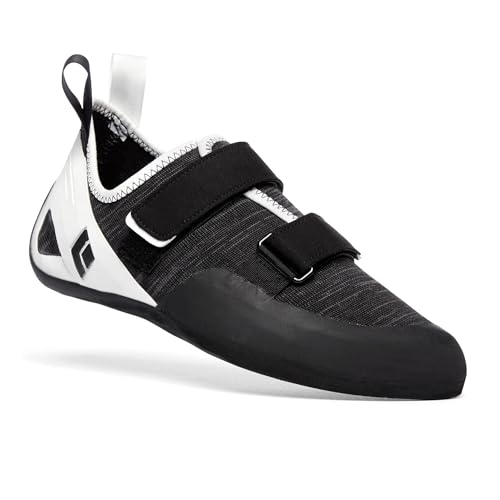 BLACK DIAMOND Men's Momentum Climbing Shoes
- Built with Engineered Knit Technology, these climbing shoes…
- Features a 4.3mm rubber sole that balances grip…
- Equipped with two hook-and-loop straps that allow fast…
| Product | Key specs | |
|---|---|---|
| La Sportiva Mens Tarantulace Rock Climbing Shoe | Selected Size: EU 42, US 9 Fit & Sizing - Shoe runs BIG Breathable & Durable - The all-leather upper is… | Check price |
| CLIMBX Ravestrap Climbing Shoe | Rubber sole Please refer to the Sizing Chart for Recommended… Padded Collar and Heel for Comfort | Check price |
| BLACK DIAMOND Men's Momentum Climbing Shoes | Built with Engineered Knit Technology, these climbing shoes… Features a 4.3mm rubber sole that balances grip… Equipped with two hook-and-loop straps that allow fast… | Check price |
 La Sportiva Mens Tarantula Rock Climbing Shoes La Sportiva Mens Tarantula Rock Climbing Shoes | Selected Size: EU 43, US 10 Fit & Sizing - Shoe runs BIG Breathable & Durable - The all-leather upper is… | Check price |
As an Amazon Associate we earn from qualifying purchases at no extra cost to you.
Best climbing shoes by situation
| Climbing situation | What to prioritize | Strong choices | Typical market range |
|---|---|---|---|
| First pair or indoor beginner | Moderate downturn, flat-to-slightly curved fit, durable rubber, hook-and-loop closure | La Sportiva Tarantula, Scarpa Origin, Black Diamond Momentum | $90–$130 |
| Long sport-climbing routes | Comfortable moderate shape, breathable upper, reliable edging rubber | La Sportiva Miura VS, Scarpa Vapor V, Tenaya Tarifa | $140–$200 |
| Steep bouldering and overhangs | Downturn, toe-hook rubber, soft or medium-soft midsole, secure heel | La Sportiva Solution, Scarpa Instinct VS, Evolv Shaman | $170–$220 |
| Smearing and slabs | Flat or mildly curved profile, soft forefoot, sensitive rubber | Tenaya Oasi, Scarpa Drago, La Sportiva Finale | $130–$200 |
| Wide feet or broad toes | Roomier toe box, less aggressively tapered shape, stretch-friendly upper | Butora Acro Wide, Scarpa Origin, Evolv Kronos | $100–$190 |
How climbing shoe fit should feel
A climbing shoe should hold your foot firmly enough that it does not slide inside the shoe, but it should not cause numbness, throbbing, or concentrated pressure on one toe. Your toes may be gently curled in an aggressive shoe, while a beginner or multipitch shoe can allow a more natural position. “Painfully tight” is not a performance feature; it usually reduces precision and makes you take the shoes off between every attempt.
Fit is more important than nominal street size. Climbing-shoe sizing varies between brands, models, and upper materials. A synthetic upper tends to change little, while leather can relax noticeably with use. Try shoes late in the day, when feet are slightly larger, and test both feet while standing. Walk, crouch, press the toe against the floor, and stand on a small edge if possible.
Match the shape to your foot
- Egyptian toes: The big toe is longest. A tapered toe box can feel natural, but check that the second toe is not crushed.
- Roman toes: The first two toes are similar in length. A squarer toe box often distributes pressure better.
- Greek toes: The second toe projects farther than the big toe. Look for a shape with enough length over the second toe rather than simply sizing up.
- Wide forefoot: Seek a wide-specific version or a rounded last. A shoe that is long enough but painfully narrow will not become wider in a useful way.
- Low-volume heel: Excess space behind the heel causes movement on heel hooks. Look for adjustable straps, a narrower heel cup, or a low-volume model.
Rubber hardness: grip versus support
Climbing-shoe rubber is a compromise between friction, sensitivity, edging support, and lifespan. Softer rubber generally conforms well to small irregularities and feels sensitive on smears, but it wears faster and can feel less stable on tiny edges. Harder rubber supports precise edging and usually lasts longer, although it can feel less sticky on polished or slabby footholds.
| Rubber category | Approximate hardness range | Best use | Main trade-off |
|---|---|---|---|
| Soft | Approximately 4–5 mm outsole with a flexible midsole | Smearing, volumes, steep toe hooks, indoor bouldering | Faster wear and less support on tiny edges |
| Medium | Approximately 4–5 mm outsole with moderate structure | All-round bouldering and sport climbing | Does not maximize either sensitivity or durability |
| Hard or edging-focused | Approximately 4.5–5.5 mm outsole with a supportive midsole | Vertical walls, limestone edges, long routes, crack climbing | Less sensitive and sometimes less comfortable when new |
Rubber compound names are useful but not directly interchangeable. Vibram XS Grip2, Vibram XS Edge, FriXion, Trax, Stealth, and other compounds have different formulas and are used in different shoe constructions. The same compound can feel different depending on thickness, midsole stiffness, edging geometry, and temperature. For general use, medium rubber is the safest choice. Choose softer construction when sensitivity matters more than mileage, and firmer rubber when you repeatedly stand on small edges or want longer resole intervals.
Bouldering versus sport climbing
For bouldering
Bouldering rewards precision on small footholds, toe hooks, heel hooks, and steep terrain. An aggressively downturned shoe can keep the toes engaged on overhangs, while a rubber-covered upper improves toe-hook security. Hook-and-loop closures make it easy to remove shoes between attempts, which is valuable during repeated falls and rests.
La Sportiva Solution is a highly downturned, aggressively shaped option with a substantial toe-hooking area. Scarpa Instinct VS offers a similarly performance-oriented approach with a strap closure and a balance of sensitivity and edging support. Evolv Shaman is another aggressive choice, particularly for climbers who prefer a more structured toe box. These shoes are not automatically better for every climber: on vertical slabs, their curved shape can feel less natural than a moderate shoe.
For sport climbing
Sport climbing often involves wearing shoes for longer periods, so comfort and repeatable edging matter more than maximum downturn. A moderately asymmetric shoe with medium or firm rubber is usually easier to tolerate on long routes. Lace-up shoes allow fine adjustment across the foot; hook-and-loop shoes are faster to remove but may create pressure in one area if the strap geometry does not match your foot.
La Sportiva Miura VS, Scarpa Vapor V, and Tenaya Tarifa are examples of moderate-to-performance-oriented shoes that suit many vertical and slightly overhanging routes. For a first pair, La Sportiva Tarantula, Scarpa Origin, or Black Diamond Momentum typically offers a friendlier fit and simpler break-in than an aggressively downturned model.
Closure systems compared
- Hook-and-loop: Fast to put on and remove, making it practical for bouldering and gym sessions. Multiple straps can improve adjustment, but straps may rub or wear first.
- Lace-up: Offers the most precise tension from toe to ankle and works well for long sport routes, cracks, and feet that need uneven adjustment. It takes longer to remove.
- Slip-on: Gives excellent sensitivity and minimal bulk. It can be comfortable for training, but fit must be exact because there is little adjustment once the shoe is on.
A practical buying decision matrix
| Your priority | Recommended shape | Rubber and closure | Why |
|---|---|---|---|
| Lowest reasonable cost | Flat or mildly curved | Medium rubber; hook-and-loop | Durable, easy to fit, and less punishing while technique develops |
| One pair for gym and outdoor routes | Moderate downturn | Medium rubber; lace or two-strap closure | Balances sensitivity, edging, comfort, and versatility |
| Several short bouldering sessions weekly | Aggressive downturn | Soft-to-medium rubber; hook-and-loop | Prioritizes steep climbing, hooks, and quick changes between attempts |
| Long routes or multipitch climbing | Flat-to-moderate, low asymmetry | Medium or firm rubber; lace-up | Reduces hot spots and improves adjustment during extended wear |
| Wide feet | Rounded, wide, or high-volume last | Stretch upper; adjustable closure | Prevents side pressure without buying an excessively long shoe |
Ownership, durability, and resoling
The toe rubber usually wears first, especially when climbers drag their toes, stand with the heel down, or use the shoe to lever against the wall. Walking on concrete, brushing holds with the shoe, and leaving shoes in a hot car also shorten their useful life. Let shoes air-dry between sessions and keep them away from direct heat. A damp cloth can remove surface dirt; avoid soaking leather or putting climbing shoes in a washing machine.
Inspect the toe before the outsole becomes completely smooth. A climbing-shoe repair shop can often resole shoes while the rand—the rubber wrapping around the upper—still has sound structure. Waiting until the rand is badly damaged can make a repair more expensive or impossible. As a simple ownership calculation, a $180 pair used twice weekly for six months receives roughly 52 uses, or about $3.46 per use before resoling. A comfortable pair that you wear consistently can therefore be better value than a cheaper pair that causes pain or stays unused.
Common buying mistakes
- Choosing a dramatic downturn when most climbing is on vertical or slab terrain.
- Sizing down so far that numbness is mistaken for a performance fit.
- Buying a narrow model and hoping the upper will stretch enough for a wide foot.
- Assuming the softest rubber is always the stickiest choice; wall texture, temperature, and footwork also matter.
- Ignoring heel volume and discovering that heel hooks lift the shoe away from the foot.
For most climbers, the best climbing shoes are a moderate, well-fitting pair with medium rubber and a closure you can adjust easily. Add an aggressive soft pair when steep bouldering becomes a major focus, or choose a firmer, comfortable lace-up model when long sport routes and precise edging take priority.




Write Your Review
No reviews yet. Be the first to share your experience!