
Key takeaways
- Pro: Cellular connectivity sends fault alerts and runtime data directly to your phone, so you catch maintenance issues before they become failures during an outage.
- Pro: Runs on natural gas or liquid propane, giving you two fuel paths when one supply line is disrupted.
- Con: Professional installation and the required transfer switch add meaningful cost on top of the listed price.
What's inside
When a storm knocks out your neighborhood’s power for the third time this year, the question shifts from “should I own a generator?” to “which one actually keeps my house livable?” The jump from a few hours of inconvenience to spoiled food, a dead well pump, and a furnace that won’t restart is the reason thousands of homeowners finally buy a backup unit. Yet the market splits sharply between permanent standby generators that fire up in seconds without you lifting a finger and portable units that demand manual labor, fuel hauling, and extension cords strung across the yard.
What separates a good purchase from a regret is sizing accuracy, fuel flexibility, and whether the unit matches your actual daily load rather than a theoretical worst case. A generator too small to run your central air conditioning during a July heat wave is almost as useless as no generator at all. On the flip side, an oversized standby unit means paying for capacity you never draw while still spending on annual maintenance visits. Below, we compare eight models that span the full range of solutions—from whole-home standby systems to dual-fuel portables that fit a tighter budget or a home where permanent installation isn’t an option.
As an Amazon Associate we earn from qualifying purchases at no extra cost to you. Product prices and availability are accurate as of the date shown and are subject to change.




Quick Picks
| Product | Best For | Price |
|---|---|---|
| Generac 18kW Whole Home Generator | Large homes with moderate AC needs | $5,039.10 |
| Generac 10kW Whole Home Generator | Small homes on a tighter budget | $3,701.30 |
| Generac 22kW Whole Home Generator | Homes running two AC units or electric heat | $5,570.10 |
| Generac 26kW Whole Home Generator | Largest whole-home loads and rural properties | $6,317.10 |
| Oxseryn 4400W Inverter Generator | Apartment dwellers and light emergency power | $289.99 |
| Westinghouse 14500W Dual Fuel Portable | Whole-home backup via portable, dual-fuel flexibility | $1,349.00 |
| Westinghouse 12500W Dual Fuel Portable | Best value for serious portable backup | $999.00 |
| DuroStar DS13000MX 13000W Portable | Largest portable wattage per dollar | $899.00 |
How We Picked
We evaluated published wattage ratings against typical household appliance loads, compared fuel options (natural gas, propane, gasoline) for availability during extended outages, and weighed owner feedback on startup reliability, noise levels, and long-term service costs. Automatic transfer capability and cellular monitoring appeared as meaningful differentiators for standby units, while portable models were judged on dual-fuel flexibility, transfer-switch readiness, and real-world run time at rated load.
The 8 Best Stationary Home Generators in 2026
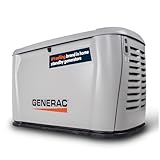
Generac 18kW Whole Home Generator, Cellular Capability
This unit targets homeowners with roughly 2,500–3,500 square feet who need central AC, a well pump, refrigerator, and a handful of circuits running simultaneously. The 18kW output hits a practical sweet spot—enough to avoid brownouts during compressor startup without the premium of a 22kW model.
- Pro: Cellular connectivity sends fault alerts and runtime data directly to your phone, so you catch maintenance issues before they become failures during an outage.
- Pro: Runs on natural gas or liquid propane, giving you two fuel paths when one supply line is disrupted.
- Con: Professional installation and the required transfer switch add meaningful cost on top of the listed price.
Skip this model if your home draws less than 12kW under full load—a smaller unit saves you money and fuel without any functional compromise.
Generac 10kW Whole Home Generator, Transfer Switch & Cellular Capability
Designed for compact homes and apartments where a single split-system AC unit, furnace blower, refrigerator, and a few circuits need to stay alive. It ships with a transfer switch included, which removes one sourcing step that catches many first-time buyers off guard.
- Pro: Transfer switch bundled in the box simplifies installation planning and reduces total project cost.
- Pro: Cellular monitoring keeps you informed on engine health even when you aren’t home to hear the unit run.
- Con: At 10kW, running central AC and electric heat simultaneously will push it to its ceiling, leaving zero headroom.
Pass on this generator if you have electric baseboard heat, a second AC unit, or any future plans to add electric vehicle charging to your backup circuits.
Generac 22kW Whole Home Generator, Cellular Capability
The 22kW Generac handles two AC compressors, electric ranges, well pumps, and standard lighting in one automatic start. It suits families in regions where storms knock power for multi-day stretches and running two units on alternating circuits is a real burden.
- Pro: Output is generous enough to avoid manual prioritization of circuits during an outage.
- Pro: Cellular capability enables remote diagnostics, which matters when a unit sits on a secondary property.
- Con: Higher fuel consumption means propane tanks or natural gas meters size up, adding to long-term operating cost.
Not ideal for smaller homes where the oversized unit cycles at low load and wastes fuel on each monthly exercise run.
Generac 26kW Whole Home Generator, Cellular Capability
The top-capacity standby option here covers large homes, rural properties with multiple outbuildings, or anyone whose household includes electric heating, a hot tub pump, and a two-ton-plus AC system.
- Pro: Runs essentially any standard residential load without circuit prioritization or load-shedding anxiety.
- Pro: Cellular monitoring and Generac’s service network provide peace of mind for remote or vacation properties.
- Con: Highest purchase price in this lineup, and installation requires a larger gas line and potentially upgraded electrical panel work.
Skip it unless your actual running load genuinely approaches 20kW; the price premium over the 22kW model is hard to justify for average-size homes.
Oxseryn 4400-Watt Inverter Generator
A portable inverter unit aimed at renters, apartment dwellers, and anyone who cannot install a permanent generator. At 4,400 watts it handles a small window AC, refrigerator, and basic lighting. The EPA compliance note matters for state-level registration requirements.
- Pro: Price under $300 makes it accessible to buyers who would otherwise own nothing at all during an outage.
- Pro: Inverter design delivers clean power safe for electronics like routers and medical devices.
- Con: Open-frame construction means noticeable noise, and 30A outlet is the ceiling for what you can draw at once.
Not a fit if you need to run central air, a well pump, and multiple appliances simultaneously—this unit will trip its breaker.
Westinghouse 14500 Peak Watt Dual Fuel Portable Generator
This unit bridges the gap between portable convenience and standby-level output. Dual-fuel operation lets you switch between gasoline and propane, and remote electric start removes the shoulder-wrenching pull-cord step at 3 AM during a winter outage.
- Pro: 14,500 peak watts can run a home’s full essential load including central AC and electric heat when paired with a transfer switch.
- Pro: Propane operation extends shelf life of fuel and reduces engine wear compared to sitting gasoline.
- Con: Open-frame portables are loud—expect noise comparable to a leaf blower running for hours.
Skip it if you lack a garage or covered outdoor space; storing a unit this size in the open invites theft and weather damage.
Westinghouse 12500 Watt Dual Fuel Portable Generator
For homeowners who want serious portable backup without the premium of the 14,500-watt model, this 12,500-watt unit covers most single-AC-home scenarios with dual-fuel flexibility and remote start.
- Pro: Price sits well under $1,000 while still offering transfer-switch-ready wiring for whole-home connection.
- Pro: Dual-fuel capability lets you use existing propane tank inventory without hunting for gasoline during a post-storm shortage.
- Con: Wattage dip from 14,500 means less margin when multiple high-draw appliances start simultaneously.
Not suitable for homes with electric furnaces and central AC running at the same time—you’ll hit the ceiling quickly.
DuroStar DS13000MX 13,000-Watt Dual Fuel Portable Generator
The DuroStar competes directly on raw wattage per dollar, delivering 13,000 watts of output with a 500cc engine. It appeals to buyers who prioritize capacity and are less concerned about noise or refinement.
- Pro: 13,000 watts at $899 makes it the highest-output portable in this roundup per dollar spent.
- Pro: Remote electric start and dual-fuel capability match more expensive competitors on key features.
- Con: DuroStar’s service network is narrower than Generac’s, which can mean longer wait times for parts or warranty support.
Walk away if your HOA enforces strict noise ordinances or if you need quiet operation for nighttime use near neighbors.
Buying Guide
Match Wattage to Your Real Load, Not Your Hopes
Start by listing every appliance you genuinely need during an outage. A central AC unit draws 1,500–3,500 watts at running load but can spike to nearly double that at startup. Your well pump, refrigerator compressor, and furnace blower each add hundreds of watts. Total the running loads, then add roughly 50% headroom for simultaneous startup surges. This number tells you whether you need a 10kW standby or a 22kW model, and whether a 13,000-watt portable is sufficient or will trip its breaker the first time the AC and pump kick on together.
Fuel Type Determines Your Outage Duration
Natural gas connects to your existing utility line and never runs out during an outage, which makes standby units on NG essentially maintenance-free from a fuel perspective. Propane offers the same continuous-supply advantage if you have a large tank, but a 100-gallon tank will deplete faster than a gas meter. Portable gasoline units face a real problem during extended outages: gas stations are closed, and stored gasoline degrades in 30–60 days without stabilizer. Dual-fuel portables hedge this risk, but you still need to fill or swap propane tanks manually.
Automatic Transfer Switches Are Not Optional for Standby Units
A standby generator is only useful if it starts without you being present. The automatic transfer switch is the component that senses grid loss, commands the generator to start, and isolates your home from the utility line for safety. The Generac 10kW ships with one; the 18kW, 22kW, and 26kW require it as a separate purchase and installation step. For portables, a manual transfer switch is still essential if you want to wire the generator into your home’s circuits rather than dragging extension cords through windows.
Our Verdict
The Generac 18kW Whole Home Generator stands as the overall top pick for most homeowners: the cellular monitoring, dual-fuel operation, and 18kW capacity cover the widest range of typical household needs without the overkill of a 22kW or 26kW model. For buyers who want maximum essential-home backup under $1,000, the Westinghouse 12500 Watt Dual Fuel Portable delivers dual-fuel flexibility and transfer-switch readiness at a price that undercuts the nearest competitor by a meaningful margin. If your defining condition is a large home with electric heat and two AC units running concurrently, the Generac 26kW wins—no portable in this group can match its seamless, unattended, continuous operation at that load level.
FAQ
What is the difference between a stationary and a portable generator for home backup?
A stationary (standby) generator is permanently installed outdoors, connected to your home’s electrical panel via an automatic transfer switch, and starts without your intervention when grid power fails. A portable generator requires you to manually start it, run cords or use a manual transfer switch, and refuel it yourself during an outage.
Can I run a portable generator indoors?
No. Gasoline and propane portables produce carbon monoxide, which can kill in a closed or partially enclosed space within minutes. Even units marketed as “home backup” must sit outdoors, at least 20 feet from windows and doors, regardless of weather.
How long do standby generators last before needing replacement?
With regular oil changes, air-filter swaps, and annual exercise cycles, a well-maintained standby generator typically reaches 20–30 years of service. Neglecting maintenance or running the unit at very low loads for extended periods shortens engine life significantly.
Do I need a permit to install a stationary home generator?
Most municipalities require an electrical permit and often a building permit for standby generator installation, and local codes may mandate a minimum setback distance from property lines and windows. Check with your local building authority before purchasing to avoid fines or a failed inspection that voids your home insurance coverage.







Write Your Review
No reviews yet. Be the first to share your experience!